Munich fire, Slovak drone plot: one network?
Two arson cases raise questions that investigators have yet to answer.
Image composition · tobriefTwo arson investigations, one in Germany and one in Slovakia, involve businesses serving Ukraine. On 25 September the Frankfurter Allgemeine Zeitung (FAZ) reported that both were directed by a single Russian military-intelligence network run from Slovakia. The paper cited unnamed security sources and published no charge, message log or forensic finding (FAZ). If the link holds, two local criminal cases become one campaign across EU borders. So far, no prosecutor or intelligence chief has confirmed it on the record.
A small fire with an unclear target
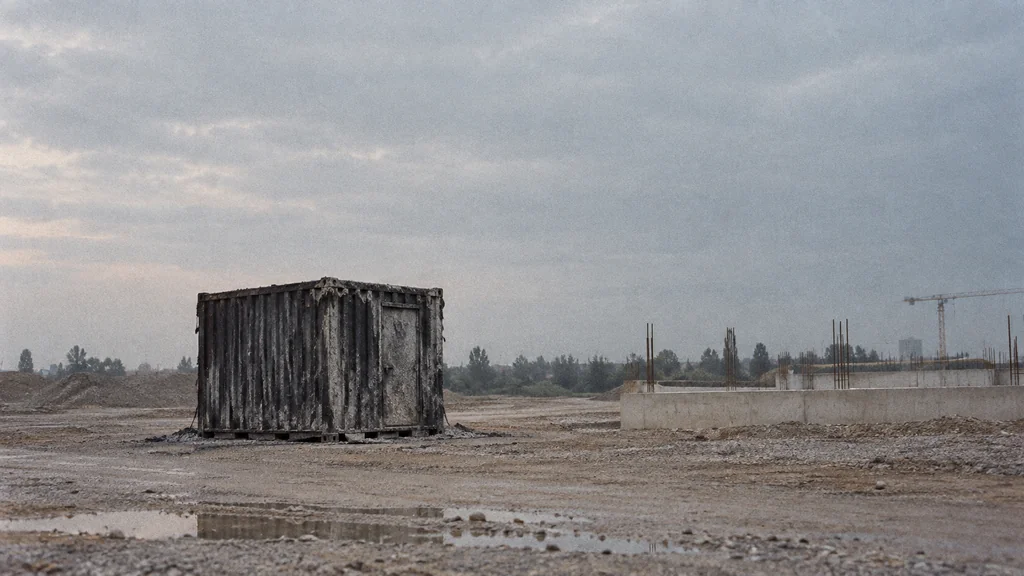
Around midnight on 2–3 September, a witness saw incendiary devices thrown from a moving car onto a construction site in Munich's Berg am Laim district. The site is near the headquarters of two defence firms, Rohde & Schwarz and Helsing (BR). One device set construction containers alight. Police put out the fire, nobody was hurt, and Rohde & Schwarz said its own premises were untouched.
Officers detained a 28-year-old Bulgarian woman and a 38-year-old Bulgarian man at a nearby filling station. On 4 September a judge remanded both in custody on suspicion of attempted arson and property damage (Tagesschau).
Bavaria's state criminal police, known by its German initials LKA, took over the case. It suspects a political motive because Helsing builds drones for Ukrainian forces (BR). An LKA spokesman also cautioned that the attack may not have been aimed at Rohde & Schwarz, since other defence businesses share the complex. The intended target is still unsettled.
A foiled plot in eastern Slovakia
On 25 August, Slovak police said they had stopped a planned arson attack on a drone plant in Haniska, near Prešov. The plant belongs to Skyeton, a Ukrainian maker of reconnaissance drones (SITA). Court orders obtained by the Slovak news site Aktuality quote a Latvian suspect describing his instructions, received on Telegram: smash windows, pour in petrol, set the hall alight and film the blaze (Aktuality).
German officers arrested the Latvian in Hamburg on a Slovak European Arrest Warrant, the EU tool that lets one member state detain someone wanted by another (SITA). That arrest shows Germany and Slovakia cooperating on the Slovak case. It says nothing about Munich.
The Latvian told investigators that a Russian speaker had contacted him and threatened his family (Aktuality). Russian-language contact gives investigators a lead, but it does not establish who issued the orders.
What officials have said, and when
The official statements came at different moments and answer different questions. On 28 August, almost a month before the FAZ report, Slovak police chief Jana Maškarová said police had no evidence that Russia was behind the Skyeton plot (SITA). She was describing the Slovak evidence as it stood then. She was not responding to FAZ.
After the report appeared, Munich's general prosecutor was asked about it. The prosecutor declined to confirm it, citing the ongoing investigation (Abendzeitung).
On 26 September, Slovak intelligence director Pavol Gašpar said attribution to Russia was unconfirmed and that Germany had not publicly confirmed the link (STVR). He said investigators were examining several possibilities. One was a false flag, meaning an operation staged so that blame falls on someone else. He offered no public evidence for that theory either.
The stakes for Europe depend on whether FAZ's sources are right. If they are, a network operating from one member state recruited people from other member states to strike defence-linked sites in more than one country. That would make sabotage against Ukraine's supply chain a shared European security problem, handled by several national police forces at once.
For now, the public record contains three things. There was a small fire in Munich with an unsettled target. There was a foiled plot against a drone plant in Slovakia. And there was one arrest that belongs to the Slovak case alone. No public evidence yet connects the Munich suspects to the Slovak plot or shows that Russia directed either one. Official silence does not rule out a link, because the Munich prosecutor tied the refusal explicitly to an open investigation. Whether the link exists will be shown by the case files held by the Munich general prosecutor and Slovak police, and they have not yet released that evidence.
Details about this article
- Model:
- claude-opus-5-5
- Generated:
- 9/27/2026, 1:43:57 AM
- Pipeline run:
- eu_pipeline_20260927_005007
- Watermark:
- SynthID (Google's invisible watermark)
- Human review:
- None before publication