Black Sea attacks leave ships unescorted
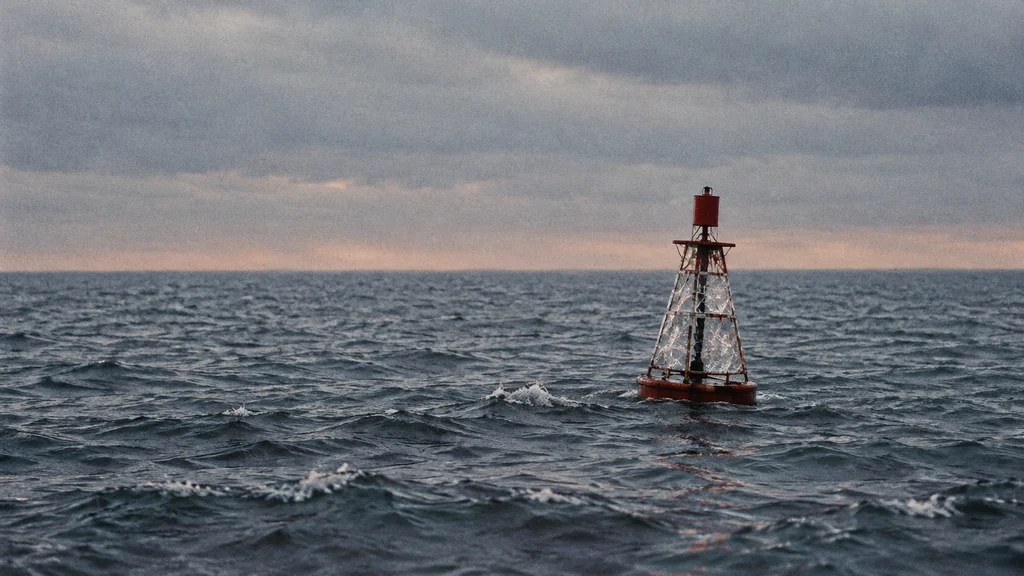
Merchant crews cross the Black Sea before any allied protection arrives.
Image composition · tobriefSeven sailors from the tanker Wine Trader were still missing when Romanian rescuers resumed their search on 16 October (Reuters). Since early October, merchant ships have been sunk or set on fire off Romania and Bulgaria, both EU and NATO members. The evidence of what hit them differs from ship to ship, and neither NATO nor the EU has announced a plan to protect the traffic.
What Bulgaria documented, and what Romania has not
The first loss came on 5 October, when a corn carrier sank off Romania's coast. Romania's Interior Ministry recorded two dead and 11 rescued but did not establish a cause (MAI).
Bulgaria's record is firmer because its own government names the weapon. On 6 October, Sofia said aerial and sea drones had hit two merchant ships in its exclusive economic zone, the stretch of sea beyond its territorial waters where it controls resources but not passing traffic (BTA). One of the two sank.
A second pair of strikes followed on 13 October, logged by Bulgaria's transport ministry (Bulgarian transport ministry). One of those ships, the HS Dignity, went down. Five of its sailors were pulled out and 11 were reported missing (AFP).
Romania's cases are murkier. Two tankers, Yara J and Wine Trader, caught fire near the port of Sulina in mid-October. The Romanian Naval Authority's first notice described a fire on Wine Trader, with five of 12 crew rescued, but gave no cause (Romanian Naval Authority via AGERPRES).
President Nicușor Dan said drones hit both tankers. His own government did not fully back him up. Acting defence minister Radu Miruță said military radar showed no drone heading toward Yara J (AGERPRES).
Blaming Russia is not the same as proving it
Romania's foreign minister, Oana Țoiu, holds Russia fully responsible for making the Black Sea dangerous. That is a political judgment about who created the risk, and it is the easier case to make. Proving who launched each drone is harder, and nobody in government has done it.
Bulgarian Prime Minister Rumen Radev says Russia benefits from the attacks but that Sofia lacks solid evidence to name the attacker (BTA). Dan himself said on 16 October it was too early to prove the attacks were Russian (DC News). The most direct link so far is a single unnamed NATO military source, who told Reuters the drones that hit the Sulina tankers came from Russia (Reuters).
Allies are holding the same line. France condemned the attacks on 15 October while saying it had not attributed the series to Moscow (French foreign ministry). Bulgaria has asked the EU and NATO for technical help to trace the drones.
Who could protect the ships
Dan and Radev met NATO Secretary General Mark Rutte on 15 October (To Brief). Rutte pointed to counter-drone defences already deployed on NATO's eastern edge. He announced no patrol or escort for merchant ships (NATO).
Any alliance operation would need the member governments to agree. Their ambassadors are due to discuss the Black Sea (Radio Romania International). Bulgaria has asked for NATO combat aircraft and anti-drone systems.
EU leaders met on 16 October and demanded safe passage for all merchant vessels (European Council). They condemned the attacks off Bulgaria and Romania without saying who carried them out. In a separate judgment, they blamed Russia for its wider campaign against Ukraine's ports. They launched no naval mission.
What Romania has in hand is an offer. Dan says a French technical team has offered help, while Romania's EU-financed air defences are 1½ to 2½ years away (Radio România Actualități). An offer of help is not yet a ship or a radar on station.
The record supports a precise verdict. Bulgaria has reported direct drone strikes on four ships (BTA, Bulgarian transport ministry). The cause of the Romanian tanker fires is less certain. Neither NATO nor the EU has announced an operation to protect the ships. Until allied governments decide on one, the crews sailing toward Ukraine's ports and the Danube carry the risk on their own.
Details about this article
- Model:
- claude-opus-5-5
- Generated:
- 10/17/2026, 1:32:18 AM
- Pipeline run:
- eu_pipeline_20261017_005006
- Watermark:
- SynthID (Google's invisible watermark)
- Human review:
- None before publication