Ukraine intercepts four of 39 ballistic missiles
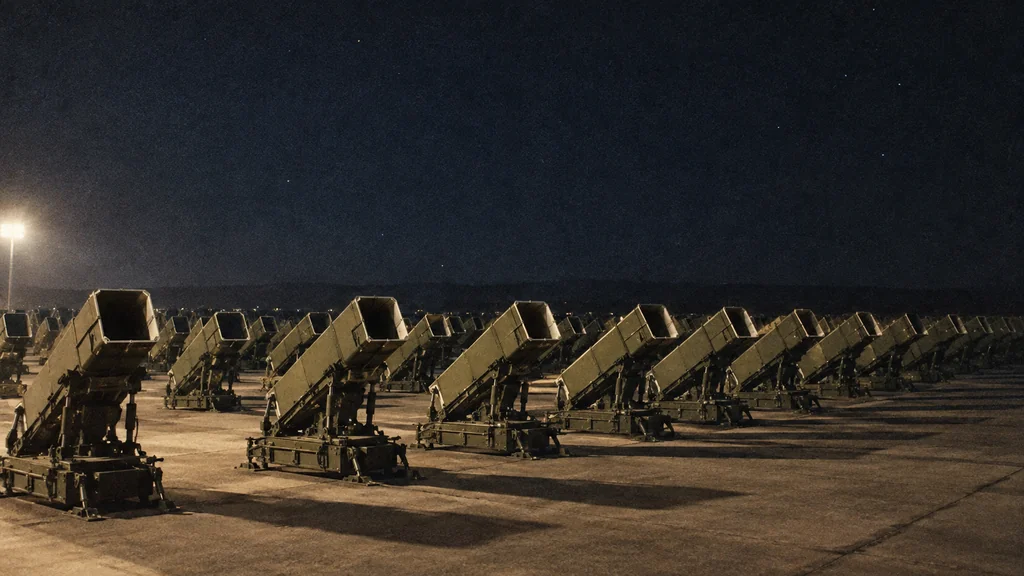
Ukraine’s air defences await interceptors as ballistic attacks continue.
Image composition · tobriefUkraine's air defences stopped four of the 39 missiles Russia fired on ballistic trajectories, the Air Force said, in an attack that ran from the evening of 13 October into the next morning (General Staff, Ukrinform). On 15 October CNN, citing one unnamed source, reported that Ukraine has used up the interceptors for its US-made Patriot systems (CNN), and no Ukrainian, US or NATO official has confirmed that. The tally shows a serious gap against ballistic attack without proving every battery is empty, and the allies who could close the gap have given no timetable.
A Patriot battery combines a radar that spots incoming missiles, a command post that picks targets, launchers and trained crews. The interceptor is the part that flies up and destroys the incoming warhead. Without interceptors, the radar still sees the attack and the crews still stand by, but nothing stops it.
Some of the missiles that got past the defences did not reach their targets. Others hit power plants in Kyiv and energy sites in Kharkiv, and civilians in the capital were killed (CNN). The barrage capped a week of strikes on the grid after a proposed energy ceasefire collapsed (To Brief).
What the tally can and cannot show
CNN's report gives no inventory, no battery-by-battery account and no breakdown by missile type. The type matters because Patriots fire more than one kind of interceptor. The newer PAC-3 MSE is the one built to destroy ballistic missiles by direct impact (Lockheed Martin).
"Out of Patriots" could therefore mean out of the right missile at some sites. The Air Force numbers make CNN's report plausible. They cannot show that a shortage caused every miss.
Who decides on resupply
Two routes could deliver missiles that already exist. In the first, European allies pay for US equipment Ukraine needs and Washington supplies it. When NATO Secretary General Mark Rutte spoke about that channel on 14 October, he gave no Patriot quantity or arrival date (NATO). Europeans pay, but the missiles and the decision to ship them are American.
The second route runs through European arsenals. Patriot rounds are US-origin weapons, so an ally that wants to hand its own to Ukraine needs American approval (US State Department). That approval gives Washington a second lever. The offer itself remains a choice for each European capital.
Kaja Kallas, the EU's foreign-policy chief, can urge governments to release rounds. She cannot commit their stocks for them. She proposed that countries send PAC-2 or PAC-3 missiles now and get replacements later, and after a 28 September meeting she said no new pledges had followed (TVP World).
Germany is the one government on record as a donor. On 8 September, Defence Minister Boris Pistorius's ministry pledged PAC-2 interceptors, but it gave neither a number nor a delivery date (German Defence Ministry).
Holding back has a reason. Donors use their Patriots for their own missions. In May 2026 the Netherlands extended its Patriot deployment protecting the NATO hub in Poland that moves aid into Ukraine, keeping it there until early December 2026 (Dutch Defence). A round sent to Kyiv is a round that hub no longer has.
France and Italy run a separate system, the SAMP/T, which fires Aster 30 missiles. In July 2026 they pledged more Aster missiles to Ukraine by October without naming a quantity, and no official has confirmed delivery (Élysée).
Europe is paying for much of Ukraine's defence against ballistic missiles, but it does not control the supply. Ukraine has documented a serious interception gap. CNN's claim that its Patriots are exhausted remains unconfirmed, and its allies have announced no dated, quantified resupply that answers that gap. The next move belongs to Washington, which ships and approves, and to the European governments sitting on stocks, starting with Berlin, which still owes a number and a date.
Details about this article
- Model:
- claude-opus-5-5
- Generated:
- 10/16/2026, 1:33:23 AM
- Pipeline run:
- eu_pipeline_20261016_005006
- Watermark:
- SynthID (Google's invisible watermark)
- Human review:
- None before publication