G7’s 100 million barrel plan leaves diesel unclear
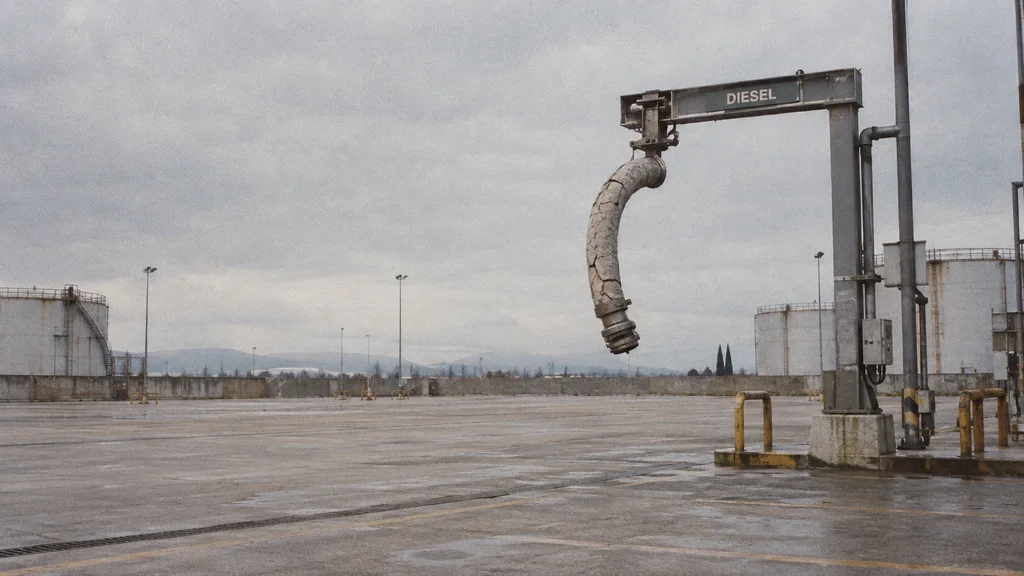
Europe’s diesel supply depends on more than opening the reserves.
Image composition · tobriefOil-importing countries have released about 325 million barrels from emergency stocks since March, just over 80% of what they pledged, according to the International Energy Agency (IEA, the body that coordinates those stocks) (IEA). On 2 October the G7 promised a further 100 million barrels over four months (G7 statement). Neither figure says how much additional diesel will reach Europe, and diesel is the fuel in short supply.
Two figures that count different things
On 11 March the IEA's 32 members agreed to make 400 million barrels available, the agency's largest coordinated release (IEA). An emergency stock is crude oil or finished fuel that a government holds, or orders companies to keep, for a supply shock. Set against October's tally, that leaves roughly 75 million barrels of the March offer not yet counted as released (IEA March, IEA October).
The two figures also use different verbs. In March, governments promised to make oil available. In October, the IEA counted oil released. Neither is a published record of fuel sold to buyers or delivered to depots.
The G7, the group of large rich democracies that includes the US, Japan, Germany and France, then added its own plan. It schedules 100 million barrels over four months and brings a substantial diesel share forward into the first 20 days (G7 statement). The statement says the plan takes account of commitments already fulfilled. It does not say how many of its barrels are new, and it gives no diesel volume.
Le Figaro asked the obvious question: does the March balance sit inside the new plan or on top of it (Le Figaro)? Until someone answers it, the October tally and the G7 plan cannot simply be added together (Franceinfo, Élysée).
Why diesel is the bottleneck
Middle Eastern crude exports have recovered significantly, IEA executive director Fatih Birol told G7 leaders. Refined-product flows, meaning shipments of fuels already processed in refineries such as diesel, remain severely constrained, and attacks on Russian refineries have made the squeeze worse (IEA). Crude has to go through a refinery before it can fill a truck. Stored diesel skips that step and can go straight to distributors.
That makes the product mix of a release as important as its size. In March, the IEA's provisional breakdown said Europe's contributions would be mainly refined products (IEA). Neither the October tally nor the G7 plan comes with a published diesel figure.
G7 members also promised not to restrict fuel exports to each other (G7 statement). That matters to Europe, since Washington had earlier threatened to curb diesel shipments across the Atlantic (To Brief).
Offered, sold, and cheaper at the pump
National reporting shows how far apart "available" and "sold" can be. The Dutch government counts nearly 4.7 million of its pledged 5.4 million barrels as "released or made available", and says its stock agency, COVA, began offering 50,000 tonnes of diesel on 2 October (Dutch government). An offer is not a sale. Buyers still have to take the fuel.
Germany shows the same gap. Berlin assigned 2.6 million tonnes from a stock of about 20 million tonnes (German government). It has confirmed only that buyers took up a first tranche, or batch, and has not said how large it was. European stock agencies count fuel by weight while the IEA counts barrels, which makes national figures even harder to add up.
Diesel that does get sold is still not the same as cheaper diesel. Handelsblatt judged the G7 move more useful as a short-term signal to markets than as a lasting cut in diesel prices (Handelsblatt). Poland's energy minister, Miłosz Motyka, made the sceptical case on 2 October. With supply uninterrupted, he saw no reason to release Polish diesel and argued that doing so would not lower pump prices much (XYZ).
His point rests on how fuel is priced. A pump price includes the wholesale price (what traders pay each other), plus distribution margins and tax, so a wholesale fall reaches drivers only in part. If diesel stays expensive, its heaviest users feel it first: road hauliers and firms running diesel machinery. The longer the squeeze lasts, the more of that cost they are likely to pass on.
The G7 asked the IEA for a report within 20 days (G7 statement). Until then, the record supports one conclusion. The cumulative reserve release is substantial, but the G7 has not identified how much additional diesel its plan will put on Europe's market, because it has published neither the overlap with the March pledge nor a product breakdown.
Details about this article
- Model:
- claude-opus-5-5
- Generated:
- 10/4/2026, 2:02:05 AM
- Pipeline run:
- eu_pipeline_20261004_005006
- Watermark:
- SynthID (Google's invisible watermark)
- Human review:
- None before publication