Trump’s Russian gas pitch meets EU ban
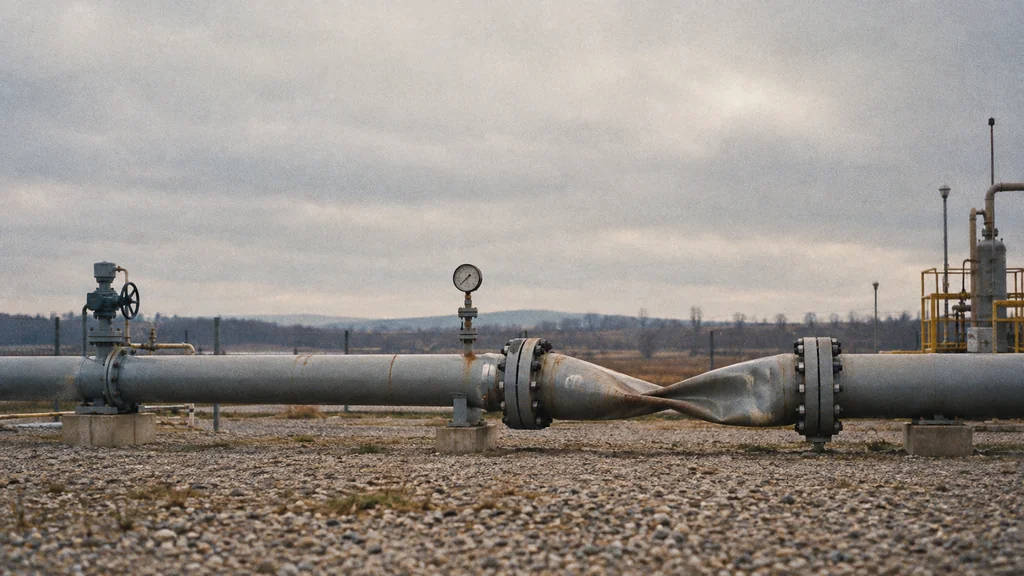
Washington raises a gas restart Europe’s existing law does not permit.
Image composition · tobriefDonald Trump's envoys Steve Witkoff and Jared Kushner urged Ukraine to consider restarting the pipelines that once carried Russian gas to Europe, as an incentive in a settlement of the war, The New York Times reported. The EU has already legislated an end to that trade. New Russian gas contracts are banned, and the old ones are running out on a fixed schedule. Washington can put the idea on the table, but only European institutions decide whether anyone in Europe may buy that gas.
The Times relies on unnamed people familiar with the talks. They describe conversations with Volodymyr Zelensky in Kyiv in September, and with Ukrainian and European officials in Miami in early October (New York Times). The report names no volume, pipeline, buyer or timetable.
Official reactions stayed vague. The White House said only that it was building a peace plan with economic incentives for both sides, while Kremlin spokesperson Dmitry Peskov called renewed energy cooperation good for Russia and possibly for Europe (New York Times). European officials reportedly recoiled, according to the same report.
German broadcaster n-tv reported that Chancellor Friedrich Merz's security adviser criticised the idea sharply. That is an account of the talks. Berlin has published no position.
Neither Zelensky nor the European Commission has answered on the record. The pitch follows Trump's suspension of new US sanctions on Russian energy revenue just before they took effect (To Brief).
The law already on the books
The practical rule is simple. Europe may sign no new deals for Russian gas, whether it arrives by pipeline or by tanker as liquefied gas, and existing deals get an end date. Regulation (EU) 2026/261 has applied directly in every member state since 3 February. Contracts signed after 17 June 2025 get no transition period, and the last long-term pipeline contracts expire on 30 September 2027 (EUR-Lex).
So some Russian gas still flows legally. Old contracts delivered 36 billion cubic metres in 2025, 12% of EU gas imports, mostly through the TurkStream pipeline into southeastern Europe (European Commission). Those contracts are winding down. Any extra gas offered in a peace deal would need new contracts, and those are exactly what the law forbids.
Changing that would take three institutions. The Commission, the EU's executive, would have to propose an amendment. The European Parliament and the Council of the EU, where national governments vote, would both have to approve it.
Both voted the other way this year. In January, 24 governments backed the ban, Hungary and Slovakia voted against, and Bulgaria abstained (Council of the EU). That vote ran under qualified majority, where no single government can block alone, so two objectors could not stop it. Parliament approved the ban 500 to 120 (European Parliament).
The law leaves one narrow opening. During a declared gas-supply emergency, the Commission can suspend the ban for up to four weeks at a time, for short-term contracts only (EUR-Lex). The clause is built for a supply crisis. Steady imports written into a peace settlement would not fit its terms.
Who would actually buy it
Reopening the pipes would also need a customer, and Europe's former customers have walked away. Austria's energy company OMV ended its supply contract with Gazprom Export in December 2024, a deal originally due to run until 2040 (OMV).
A restart would therefore need a Russian supply deal, a transit agreement with Kyiv, reserved space in the pipelines and a European company willing to sign. That company would be signing the kind of new contract the regulation bans.
The costs and gains would fall unevenly. Kyiv could earn transit fees and Moscow would regain export revenue. Europe would take back the dependence it spent years and money escaping. Germany's network regulator has documented how Russia cut Nord Stream deliveries in stages during 2022 before stopping them entirely (Bundesnetzagentur).
As reported, this is an American bargaining idea without a named European buyer or a plan to change EU law. The power to make it real sits with the Commission, the Parliament and the Council of the EU, and none of them has asked to use it.
Details about this article
- Model:
- claude-opus-5-5
- Generated:
- 10/19/2026, 1:33:05 AM
- Pipeline run:
- eu_pipeline_20261019_005005
- Watermark:
- SynthID (Google's invisible watermark)
- Human review:
- None before publication