Greece rewrites the Cyprus cable’s returns
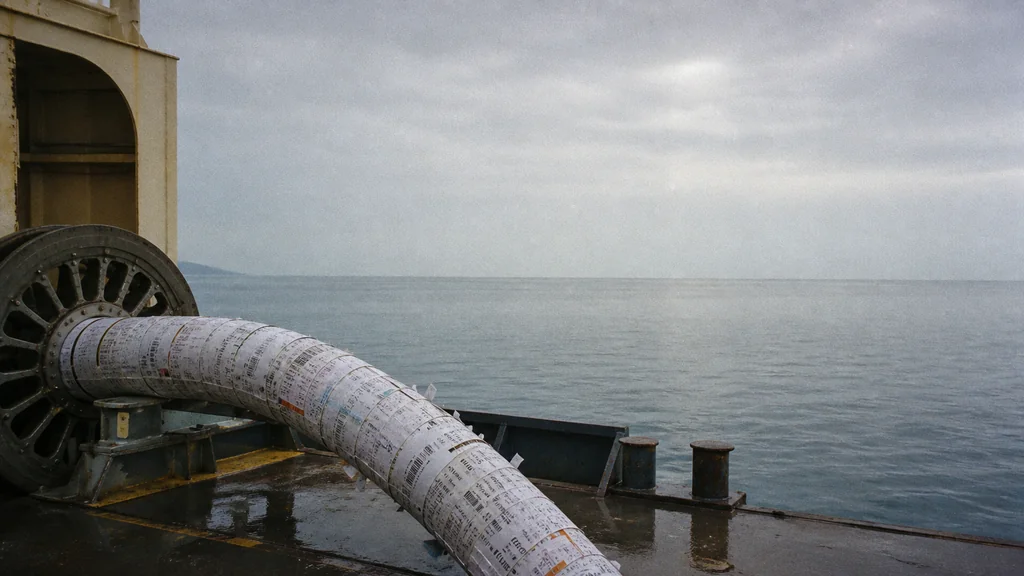
Electricity users become the cable’s strongest financial insulation.
Image composition · tobriefGreece's energy regulator opened a consultation on how much revenue the Great Sea Interconnector can collect from electricity bill payers. The change sounds technical. It is not. By lowering the assumed share of debt in the project's financing mix, the operator wants to make the planned undersea cable between Cyprus and Greece easier to finance with bank loans. The tradeoff: a formula friendlier to lenders can mean higher costs passed to consumers, especially if the project runs late or disputed spending gets approved later.
What gearing changes and why it matters for bills
The consultation, opened on 21 August by RAAEY (Greece's energy and water regulator), covers the revenue formula for the Greek share of the cable (iEnergeia). Responses are due by 11 September. The cable itself is a 1,208 km, 1,000 MW undersea electricity link that would end Cyprus's status as the EU's last electrically isolated member state (European Commission).
The variable at stake is gearing: the assumed share of debt in a project's financing. Regulators use gearing to calculate a blended financing cost (the weighted average cost of capital, or WACC), which sets the annual revenue ceiling the operator may collect through grid charges on electricity bills.
ADMIE, Greece's grid operator, wants gearing set at 50–60% during construction and 40–50% during the years afterward when the asset's cost is gradually written down. The existing formula reportedly assumed 60–80%, well above the 45–60% used for ADMIE's ordinary grid business (Sigmalive). Lower assumed debt means a larger assumed equity share. Equity costs more than debt because investors carry more risk. So a higher equity assumption raises the allowed return, which raises what the project may collect each year.
That annual revenue stream is what lenders examine before signing loan agreements. For ADMIE and its new majority shareholder Meridiam, which acquired a 66% stake in August, a more lender-friendly formula brings financial close closer (Politis, iEnergeia). For Greek and Cypriot electricity users, it means the bill left after the project's EU grant of roughly €657m is recovered through grid charges (CINEA).
Cyprus disputes the bill
Greece can refine its own formula. But the cable's economics depend on both sides agreeing. Under the existing cost split, Cyprus bears 63% of the residual costs on the Greece-Cyprus section, despite having a far smaller consumer base (Cyprus Mail).
The gap between what ADMIE claims and what Cyprus accepts is wide. Cyprus's regulator CERA has reportedly recognised only about €82m of the roughly €251m ADMIE says it has spent so far, around 32% (Proto Thema). The Cypriot government has withheld the first of five promised €25m annual advance payments, saying it will pay only once a NAVTEX (a maritime notice authorising seabed surveys) is issued and physical work resumes (Philenews). No such notice has been publicly confirmed (Cyprus Mail).
Who gains, who is exposed
If the cable gets built on time, Cyprus wins most. Connection to a larger grid means better supply security and access to cheaper power. ADMIE and Meridiam win a long-life regulated asset. Greece gains a strategic grid-bridge role.
If delays pile up and approved costs grow, bill payers are the backstop. Former CERA chairman Andreas Poullikkas has argued that grants and market revenues should be deducted before anyone talks about bill increases (Cyprus Mail). That is correct as accounting, but the European Court of Auditors has warned that cross-border electricity projects repeatedly suffer delays, which push back revenue, raise financing costs and reopen the question of who pays (European Court of Auditors).
Greece can improve the bank model. It cannot finance away Cyprus's refusal to accept the cost base. Until both regulators agree on what has been spent and what may be collected, the cable is more bankable on paper than in cash.
Stocks in this story
Details about this article
- Model:
- claude-opus-4-6
- Generated:
- 8/23/2026, 1:52:15 AM
- Pipeline run:
- eu_pipeline_20260823_005006
- Watermark:
- SynthID (Google's invisible watermark)
- Human review:
- None before publication