Moscow raid exposes Europe’s interceptor gap
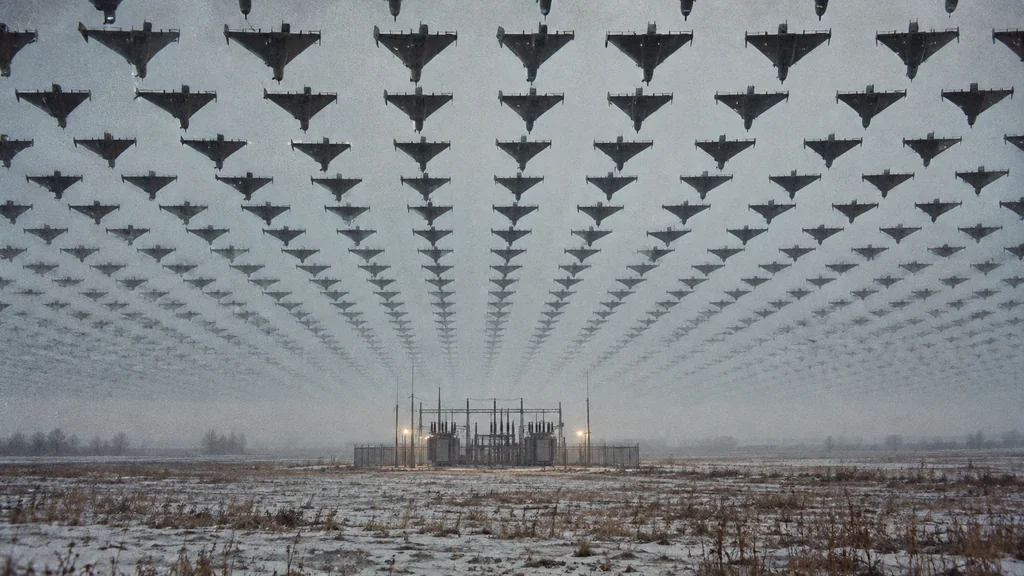
Europe’s interceptors cannot multiply as quickly as the threats above Ukraine.
Image composition · tobriefOn the night of 19–20 September, Ukraine launched its largest long-range drone operation against Russia, reaching Moscow and more than a dozen other regions. Russian officials called it the biggest attack ever directed at the capital (ABC News, NPR). Fires broke out at the Kapotnya oil refinery roughly 15 kilometres from the Kremlin. Four Moscow airports temporarily closed. Two people were killed, and about 400 residents were evacuated after a drone struck an apartment building in the Moscow region (The Irish Times).
The operation showed Ukraine's growing ability to strike deep inside Russia with weapons it builds itself. But the most dramatic claim circulating since the raid — that a ballistic missile penetrated Moscow's air defences — remains unproven. What the verified damage does expose is a problem Europe has not solved: the gap between the interceptors it can produce and the attacks Ukraine must absorb before winter.
Sorting the verified from the viral
Moscow's mayor, Sergei Sobyanin, said 450 drones were destroyed approaching the capital. Russia's Defence Ministry claimed 1,110 were intercepted nationwide. The two figures count different places and periods, and neither has been independently audited (ABC News, NPR). President Volodymyr Zelenskyy listed ten weapon systems used in the operation, including domestically produced drones and missiles, but did not say which weapon hit which target (Los Angeles Times).
Ukraine's General Staff claimed hits on specific refinery processing units at Kapotnya. No operator confirmation has followed, so how badly output was affected remains unknown.
The ballistic-missile claim is where reporting outpaced evidence. Secondary accounts inferred that Zelenskyy's mention of "Pelican" referred to Fire Point's FP-7 short-range ballistic missile and attached it to the Moscow result. According to Charter97, the FP-7's reported range of roughly 200–350 kilometres cannot cover the approximately 500 kilometres from Ukrainian-held territory to the capital. No geolocated debris, satellite imagery or official Ukrainian statement confirmed a ballistic missile struck Moscow. A supposed "blind corridor" opened by suppressing Russian air defences near Voronezh likewise lacks verified wreckage or radar evidence. The evidence establishes a mass drone attack, not a successful ballistic strike on Moscow.
Europe's interceptor shortage is the real story
The raid matters to Europe less for what it proved about Ukrainian offence than for what it illuminated about defence. Germany has supplied three complete Patriot air-defence systems and additional launchers to Ukraine, but Defence Minister Boris Pistorius has conditioned further transfers on rapid US replacement to preserve NATO coverage (Bundesregierung, Deutschlandfunk). Germany and allies pooled roughly 35 Patriot interceptors, about what a single saturation attack can consume (Tagesschau).
France and Italy have committed SAMP/T batteries (their jointly built air-defence system) and Aster interceptor missiles. But MBDA, the manufacturer, still needs under 18 months per order even after accelerating production (MBDA). Advanced interceptors take years to build. Attack drones take weeks.
That contrast explains why German-based production is gravitating toward the cheaper end. Near Munich, Auterion and Ukrainian partner Airlogix began serial production of over 5,000 combat drones under a contract worth approximately €300 million earlier this month (Die Zeit). Production started on 3 September; whether any of these drones reached Ukraine in time for the Moscow raid is unknown. The available reporting does not identify who commissioned or financed the contract beyond the two companies.
What winter will test
Russia does not need to match Ukraine's headline strikes to inflict greater damage. The Institute for the Study of War (ISW) recorded mixed salvos of 108 and 149 drones and missiles in early September alone (ISW). Russia's winter targeting has already shifted toward smaller electrical substations that are harder to defend (OSW). Ukraine can import roughly 2.1 GW through the synchronised grid that connects it to its European neighbours, but imports cannot replace destroyed generation capacity (Green Deal Ukraina).
Ukraine demonstrated it can assemble a large, multi-type strike and reach defended targets deep inside Russia. Europe's practical stake sits in the mismatch on the other side: between how many interceptors it can deliver and how many attacks Ukraine will face over the months ahead.
Details about this article
- Model:
- claude-opus-4-6
- Generated:
- 9/21/2026, 1:42:19 AM
- Pipeline run:
- eu_pipeline_20260921_005007
- Watermark:
- SynthID (Google's invisible watermark)
- Human review:
- None before publication