Romania’s wage deadlock puts €770m at risk
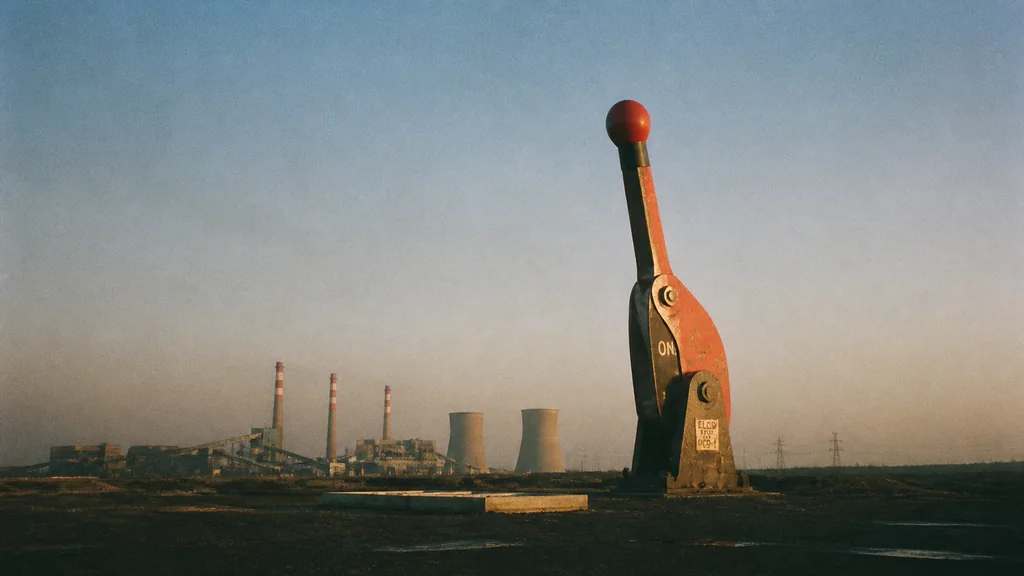
Romania reaches the deadline before its replacement power is ready.
Image composition · tobriefInterim Prime Minister Ilie Bolojan put a number on Romania's failures. The country has lost €770 million because politicians could not agree on a public-sector wage law, he said on 31 August, and faces losing up to €100 million more because coal plants that were supposed to shut down are still running (HotNews). He added that his interim government bore no responsibility for either.
The 31 August date mattered because it was the last day Romania could complete the reforms promised in its PNRR, the national plan under the EU's post-Covid Recovery and Resilience Facility (the programme that lent and granted money to member states in exchange for proven reforms) (Commission closure guidance). From here, the European Commission assesses what Romania actually delivered and decides how much to cut.
Three losses, three levels of certainty
The numbers need sorting, because they are not all the same kind of loss.
The clearest is €458.7 million, definitively cut from Romania's third payment request earlier this year after milestones went unfulfilled and a suspension period expired (Agerpres, Radio Romania International). That money is gone.
The €770 million is a political admission, not yet a Commission decision. President Nicușor Dan said the four former coalition parties had all failed to agree on a unified pay law and had accepted the loss (Agerpres, Spotmedia). Euronews and Bloomberg treated the money as expected to be lost, not formally booked. The Commission had not published a payment decision by the time the deadline passed.
The coal estimate is weaker still. Bolojan said Romania could lose up to €100 million because lignite plants at Turceni and Craiova were not closed as the plan required (Digi24). That is a government guess at a penalty the Commission has not set.
The coal file is about more than money
The wage law failed because politicians would not agree. UDMR's Kelemen Hunor argued a bad law should not be adopted just to secure funds (Kronika). The coal file is a different problem: sequencing. Romania promised to close plants before replacement generation and district heating were built.
Bolojan's own explanation was that the alternatives around Craiova and the Jiu Valley were not ready (HotNews). Closing coal before replacement heat and power exist shifts real costs onto local households and municipal heating systems. The Commission can price the missed milestone as a fiscal penalty. But premature closure would have been an economic penalty paid by the people living next to those plants.
Parliament made the tension explicit. A PSD amendment now conditions coal closures on equivalent replacement capacity being built first. The Commission warned that this could undermine the decarbonisation milestone already cleared in Romania's plan (Agerpres, Romania Insider). A national government wrote an aggressive closure timeline into an EU-approved plan. Later governments inherited it when the physical infrastructure was not there.
Romania is not alone. The RRF endgame is exposing missed promises across the EU. The EU did not promise blank cheques. Under Article 24 of the RRF regulation, the Commission can make partial payments, suspend amounts tied to unmet conditions, and eventually reduce what a country gets if proof never arrives (EUR-Lex, Council explainer). Reform promises became enforceable checklists.
Who pays when grants disappear
When EU grants do not arrive, a government borrows to replace them or delays the projects they fund. One analysis of Romanian finance-ministry data found that more than 70% of public investment in the first half of 2026 came from EU grants and PNRR loans (Friendship Bridge). Fitch holds Romania at BBB- with a negative outlook (Fitch Ratings). For a BBB- borrower, replacement money is no longer free.
The RRF did what it was designed to do: turn reform commitments into fiscal consequences. The Commission can price every missed milestone. Romanian governments still owe voters an explanation for why they promised coal closures before replacements were ready.
Details about this article
- Model:
- claude-opus-4-6
- Generated:
- 9/1/2026, 2:05:57 AM
- Pipeline run:
- eu_pipeline_20260901_005007
- Watermark:
- SynthID (Google's invisible watermark)
- Human review:
- None before publication