Ukraine’s grid loses power delivery capacity
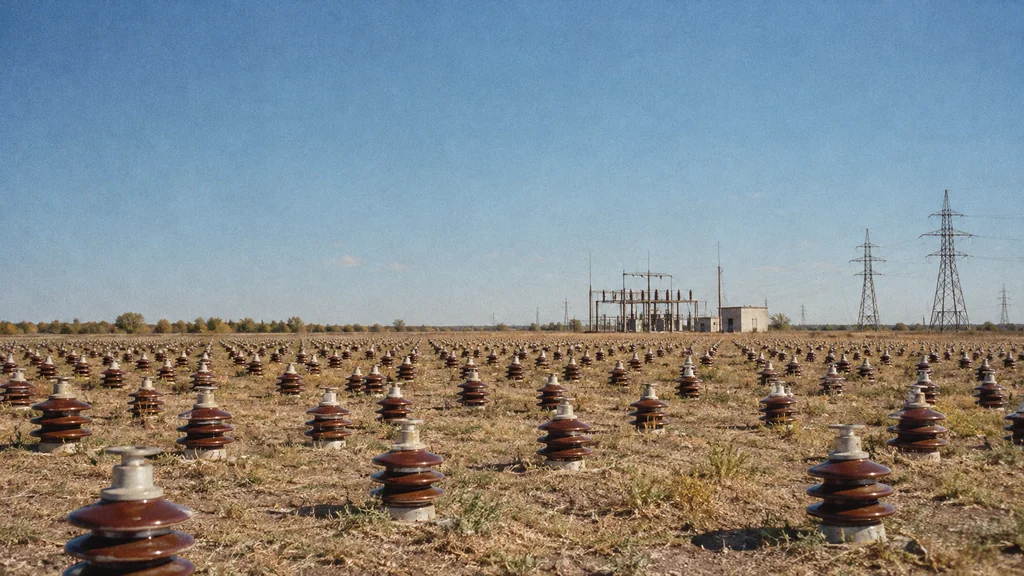
Ukraine needs power from abroad, but damaged connections leave delivery uncertain.
Image composition · tobriefRussian attacks on 9 October cut power in Kyiv and seven Ukrainian regions, and Ukrenergo, the state company that runs the high-voltage grid, suspended its published outage schedules wherever emergency cuts took over (Ukrinform). The energy ministry says the damage temporarily reduced the system's ability to get electricity to consumers (Fakty ICTV). It has not said by how much. That missing number matters, because Ukraine heads into a winter in which it depends on electricity imported from the rest of Europe.
What the strikes hit
The cuts reached Chernihiv, Kharkiv, Donetsk, Zaporizhzhia, Dnipropetrovsk, Odesa and Kyiv regions, as well as the capital itself. The most detailed account comes from the private energy group DTEK. According to its own report, drones struck two of its distribution sites in Dnipropetrovsk region within ten hours, damaging electrical equipment and starting an oil fire (DTEK).
Distribution sites sit at the local end of the network. They are the substations that feed towns and neighbourhoods, not the long-distance lines that move power across the country.
The government describes wider damage but names none of it. The Cabinet said several facilities supplying Kyiv and central Ukraine were severely damaged or destroyed (Cabinet of Ministers). No official has identified the stations, estimated the lost capacity or counted the households left without power.
President Volodymyr Zelenskyy said repair crews were working around the clock. He added that Kyiv had updated its requests to partners for energy equipment and air defence (Ukrinform).
Why a damaged grid can leave regions dark
A country can produce enough electricity overall and still leave a region in the dark. If the substations and lines that carry power into a city are knocked out, the electricity has no way in. That is the problem the ministry is describing: it has power to send, but less ability to deliver it.
For households, the difference shows up as cuts they cannot plan around. A scheduled cut comes in a published window, so people can charge phones and cook beforehand. An emergency cut overrides the timetable whenever the grid demands it, which is why Ukrenergo dropped the schedules this week.
The winter gap imports must fill
Ukraine's own power plants cannot cover winter demand. In January 2026, demand peaked at 18 GW (gigawatts, the amount of power the grid must supply at a single moment), while domestic plants could produce only 11.1 GW (IEA). Imports, small generators and rationing made up the difference.
Imports have become a real lifeline. In February, Ukraine brought in a record 1.266 TWh (terawatt-hours, a measure of total electricity over a period), according to the energy regulator (NEURC). That power arrives at the western borders and still has to cross Ukraine's own network. Nobody has said whether this week's damage limits that flow.
The government's winter plan came with a condition. In August, Energy Minister Denys Shmyhal said about 15 GW was available for the evening peak, counting imports. He set a target of 19.6 GW by 1 November, provided that repaired facilities were not struck again (Cabinet of Ministers). It is not yet clear whether this week's targets were among those repaired sites. Either way, the attacks make his target less secure, and the ministry has not published a revised estimate.
Replacement equipment is arriving. The Energy Community, an international body that runs a fund buying grid equipment for Ukraine, says it delivered €102.5 million of equipment between June and September. It has €221.4 million more scheduled by February 2027 (Energy Community). Equipment that has been delivered still has to be installed, and none of it has yet been linked to the sites hit this week.
The government says the strikes temporarily reduced its ability to deliver electricity, but it has not said by how much. Shmyhal's ministry owes the public a revised figure for what the grid can supply at the evening peak. Until it publishes one, nobody outside the ministry can tell how much of Ukraine's winter now rests on power from its European neighbours.
Details about this article
- Model:
- claude-opus-5-5
- Generated:
- 10/10/2026, 1:36:34 AM
- Pipeline run:
- eu_pipeline_20261010_005006
- Watermark:
- SynthID (Google's invisible watermark)
- Human review:
- None before publication