Russian diesel gets a licence, not a landing
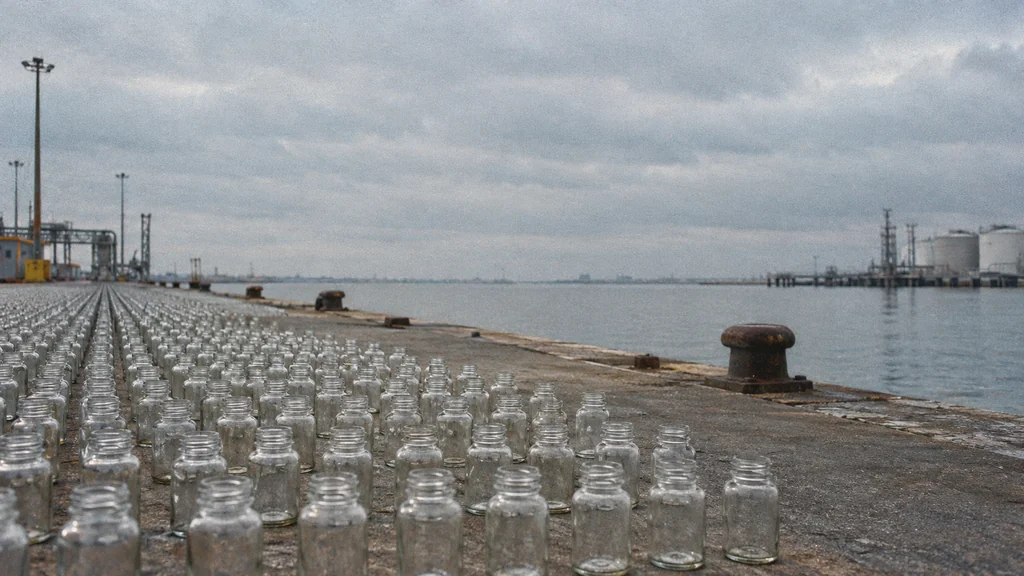
Diesel promises multiply while no verified cargo reaches an American port.
Image composition · tobriefDonald Trump promised Russian diesel for America, and Washington and Moscow have each opened part of the route. No shipment has been independently verified, yet US diesel futures fell almost 5% on his announcement (Reuters). Europe's ban on Russian diesel remains in force, and US import law may still block the American route.
The first "shipment" shows how far the story has run ahead of the fuel. A tanker billed online as the deal's first Russian diesel delivery was carrying fertiliser, according to a correction attributed to its owner (Actualno). That report also says its voyage began before the deal was announced.
Pledges, a licence and an export quota
On 9 October Trump pledged more than 300,000 tonnes immediately and 500,000 tonnes in November (Trump's post). Those figures are pledges, not signed contracts. We covered the announcement and Europe's first reaction earlier (To Brief).
The same day, the US Treasury's sanctions office, OFAC, issued a licence allowing Russian-origin diesel to be sold, delivered and imported until 7 April 2027 (OFAC licence). The licence names no seller, buyer, ship or volume.
Moscow had to open its own side. Russia had stopped producers from exporting diesel after refinery damage and strong demand at home. On 10 October the government allowed up to 500,000 tonnes out in a first stage, while companies were only starting to arrange contracts (Russian government).
Even with both permissions in place, the fuel will not arrive quickly. Analysts cited by the Guardian expect chartering ships and sailing them across to take weeks (Guardian).
A licence that may collide with the law
The Treasury licence runs into a 2022 statute, the Ending Importation of Russian Oil Act, which bans Russian petroleum imports into the United States (Public Law 117-109). A president can lift that ban only by meeting conditions Congress wrote into it.
One condition is a Russian withdrawal from Ukraine on terms Ukraine accepts. Separately, the president must consult Congress before lifting the ban.
Seven senators from both parties, led by Jeanne Shaheen, say the administration skipped that process and is handing Putin a financial lifeline (Senate statement). Treasury Secretary Scott Bessent replied that the administration would proceed under its existing authority (Reuters).
The conflict remains unresolved. If an importer tried to land a cargo, US customs officials at the port would face the question first, and a challenge would most likely end up before a federal judge. Neither has ruled, because no verified cargo has yet tested the licence.
Europe's rules have not moved
EU law is unchanged. Regulation 833/2014, the EU's core Russia sanctions act, still bars buying or importing Russian diesel into the Union (EUR-Lex). An American licence cannot amend it.
The EU's rules also reach European service firms. EU insurers, brokers and banks may help carry Russian diesel to a non-EU country only if the fuel is sold at or below a price cap of $100 a barrel (Commission guidance). An EU-insured cargo bound for America would be legal under that cap and a breach above it.
Voyages handled entirely by non-EU firms fall outside EU rules altogether. Europe's leverage over this trade therefore depends on whether its own firms take part, and at what price.
The money at stake for Moscow is still hypothetical. One Financial Times scenario assumes 3 million tonnes a month for six months and still puts the extra gain to Russia's federal budget at only around $100 million (Financial Times). That gain shrinks further if Russia merely redirects cargoes it would have sold elsewhere.
What Europe can observe today is narrow. Its ban stands, its price cap still governs its own firms, and the only measurable effect so far is a market move driven by expectations. Any real change in fuel prices or Russian revenue depends on a cargo that has not been verified, and on a US legal route that Bessent must defend to the senators before that cargo reaches an American port.
Details about this article
- Model:
- claude-opus-5-5
- Generated:
- 10/12/2026, 1:36:04 AM
- Pipeline run:
- eu_pipeline_20261012_005007
- Watermark:
- SynthID (Google's invisible watermark)
- Human review:
- None before publication