Europe is outside the Abu Dhabi talks
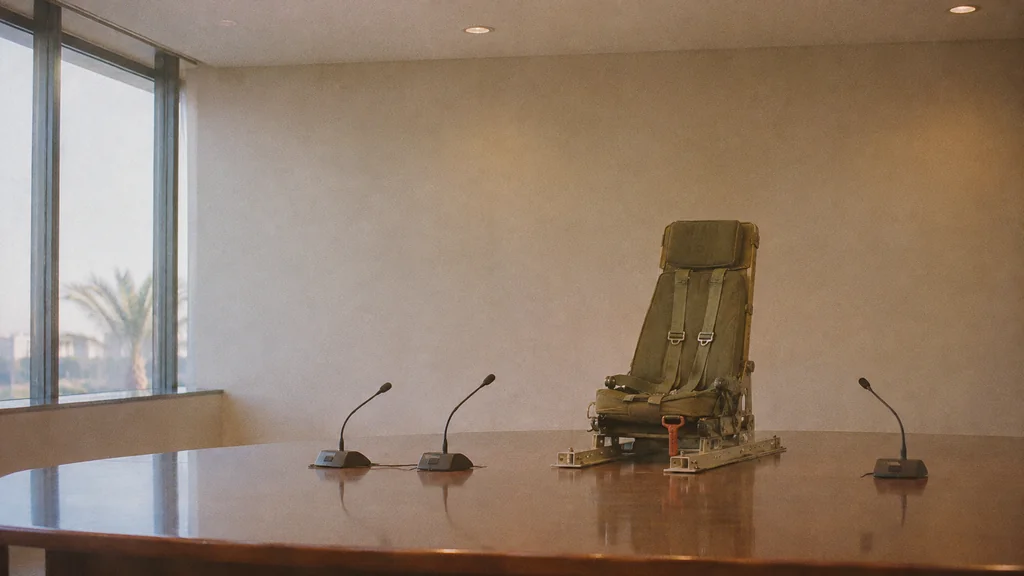
Europe may supply the soldiers, but has no seat at the opening talks.
Image composition · tobriefTalks on ending Russia's war against Ukraine open in Abu Dhabi on 10–11 November, with Washington, Kyiv and Moscow at the table (Kushner's post). Washington says it will consult European partners "on the sidelines" and open a broader format only "if progress is made" (RFE/RL).
That exclusion runs into a simple problem: the force meant to keep any settlement standing is European. France and the United Kingdom jointly command the headquarters of the Multinational Force Ukraine, planned for the period after hostilities stop, at Kyiv's request (French defence ministry). The Netherlands is preparing to take part, but has told its parliament that real deployment stays a later political decision because the peace terms are still unclear (Dutch government). Whatever the draft says, soldiers move only when national parliaments say so.
An outline without guarantees
What the White House has published is a list of goals, not a plan. Kushner's text lists five aims, from reliable crisis communication to an "enduring framework" for European security, plus a NATO that remains central and a rule that no country holds a veto over another's alliances (Kushner's post, RFE/RL). It does not say which forces "reciprocal measures" would constrain, who would verify them, what happens after a violation, or how Europe's share of enforcement would work (Le Grand Continent).
On 5 November Trump received Vladimir Putin's envoy Kirill Dmitriev at the White House and predicted a "big" agreement involving "more than Ukraine" (Politico). Volodymyr Zelenskyy answered by demanding written guarantees naming who would respond to a renewed Russian attack, with what means and when (Ukrinform). The outline published this week answers none of that, and Zelenskyy says he knew little of its details in advance (CNN).
Who speaks for Europe
Europe's first problem is deciding who negotiates on its behalf. In a letter dated 5 November, Italian Prime Minister Giorgia Meloni asked António Costa, the president of the European Council, where the EU's leaders meet, to settle "who sits at the negotiating table on behalf of the European Union, and with what mandate", calling it urgent that Europe speak with one voice on Ukraine (Corriere della Sera). Costa replied that European interests should be represented through the EU's institutions and put the question on the agenda of the leaders' meeting in Dublin on 13 November (La Stampa). He named no envoy.
After a Baltic Sea ministers' meeting in Warsaw, EU foreign policy chief Kaja Kallas said any agreement touching security guarantees, sanctions or Ukraine's EU accession will need the Union's participation to be implemented (EEAS). Poland's Radosław Sikorski set a sharper condition: a ceasefire before any discussion of Europe's security architecture. He warned western capitals against negotiating "over the heads" of the roughly 120 million people on the eastern flank (Euronews).
Moscow's published demands explain Warsaw's insistence on that order. Russia still claims Crimea, four Ukrainian regions, a Ukraine outside NATO and a smaller Ukrainian military (AP). Its December 2021 draft treaties went further, proposing to block NATO enlargement and to restrict alliance posture in states that joined after 1997 (NATO). Refusing to redesign Europe's security before the war ends is a hedge against those terms returning in a later draft. Those are the terms eastern capitals hear in the phrase "more than Ukraine".
Europe's absence from the opening round is real, but narrower than it looks. European governments may be absent from the first talks, yet Washington cannot commit European troops or EU decisions on their behalf. Nothing published so far creates legal obligations; whoever fills in the details will write the real agreement. Europeans still control the commitments a deal would need, the troops and the EU decisions behind implementation. Two separate obstacles remain: agreeing who speaks for the Union, and persuading Washington to seat that speaker. Meloni's letter puts the first before the leaders in Dublin. The second is a choice only the United States can make.
Details about this article
- Model:
- deepseek-v4-pro
- Generated:
- 11/7/2026, 2:26:15 AM
- Pipeline run:
- eu_pipeline_20261107_005008
- Watermark:
- SynthID (Google's invisible watermark)
- Human review:
- None before publication