Ukrainian strike capsizes Russian corvette in Libya
AI Daily Synthesis
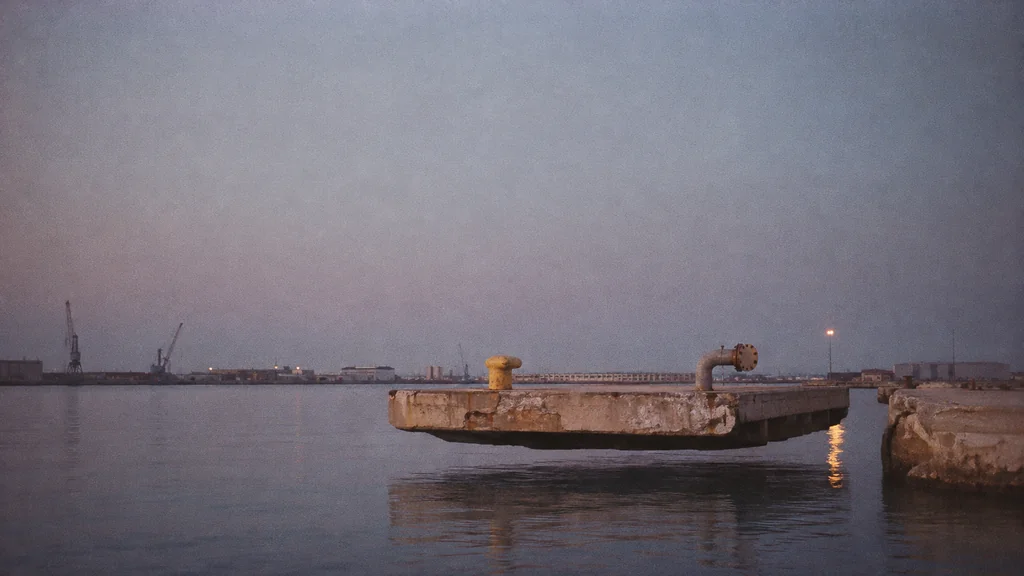
Image composition · tobriefThe Russian corvette Merkury appears in satellite images moored at the port of Benghazi, Libya. After the attack, it is capsized, with only its bow above water (AP, DW). On Monday, Ukrainian President Volodymyr Zelenskyy publicly claimed responsibility for Sunday’s strike (Zelenskyy on X). The naval war between Russia and Ukraine had reached a port in a third country controlled by the forces of Khalifa Haftar, the military leader who dominates eastern Libya.
The ship was there for a reason. The Haftar-backed government in eastern Libya said it had stopped for fuel and supplies on its way back to Russia (LANA).
Haftar’s relationship with Moscow is military. Wagner, the Russian mercenary group, had supported his forces since 2018. Africa Corps, its successor under the Russian Defence Ministry, has now taken its place (DPA). Khaled Haftar signed a military agreement in Moscow in May 2025, and Russian ships were recorded near Tobruk, a port in eastern Libya, in September (Misbar). The stop in Benghazi shows that Russia has practical access to the port, though it has no permanent base there. That is where the corvette was struck.
Libya, however, has two governments. The Benghazi government ordered an investigation “in coordination with the Russian authorities” (LANA). The internationally recognised government in Tripoli warned that hosting foreign forces outside official state structures threatens the country’s sovereignty (Al Jazeera).
The confirmed damage is severe. Two Libyan military officials spoke anonymously about the initial investigation. According to them, four sea drones, small uncrewed boats, were intercepted and two struck the corvette, injuring at least ten Russians and Libyans (NPR/AP, DW). No full account of casualties among the Merkury’s crew has been released.
Kremlin spokesman Dmitry Peskov neither confirmed nor denied the damage. He referred questions to the Defence Ministry, which would speak “if deemed appropriate” (RBC). Asked whether there would be a military response “both in the Baltic and in Libya”, he said only that daily strikes on Ukrainian military infrastructure were continuing (Interfax).
The Baltic was mentioned for a reason. In the Black Sea, no one claimed responsibility for attacks on merchant ships in recent weeks. On 11 November, Finland confirmed an attack on the Russian warship Naro-Fominsk in the Gulf of Finland, though the extent of the damage remained unclear (BBC). Eleven days later, the target was a Russian warship in a third country’s port, and this time Kyiv claimed responsibility.
Kyiv’s account
The Security Service of Ukraine (SBU) says there were seven drones, rather than six. According to the SBU, a “mother ship” carried them close to the target and launched them there (SBU). Zelenskyy added that the corvette sank along with a Ka-27 naval helicopter aboard it (Zelenskyy on X). The images support that the ship capsized and sank almost entirely. No independent source has confirmed the number of drones or the helicopter.
The SBU did not name the mother ship or say where it set out from. The Libyan officials said their initial investigation pointed to a base in western Libya, the half of the country where Tripoli is located. That claim has not been independently confirmed (AP). Social media posts placed the departure point near Vlorë, a port in Albania. Albania’s Foreign Ministry said the country’s territory had neither been used nor made available for the attack (A2News).
The SBU named a second target, the Russian cargo ship Angara. It claims the ship was carrying weapons through Russia’s supply network to Syria and Libya (SBU). Zelenskyy said the ship was “hit”, but did not say it sank. Shipping documents for the voyage have not been released.
Libyan sources described a different vessel: an unnamed merchant ship off the city, said to be flying the Maltese flag, whose crew was rescued (Maritime Executive). Malta’s Home Affairs Minister Glenn Bedingfield disputed the flag. He said the ship, the Ascalon, was Russian-registered (Times of Malta). The Ascalon is a different vessel from the Angara. It has a similar design but its own permanent identification number. No one has yet officially linked a specific ship to the rescue.
The United Nations Support Mission in Libya (UNSMIL) called for an immediate, independent and transparent investigation without naming a perpetrator (UNSMIL). The San Remo Manual is a non-binding account of the rules of naval warfare. It allows a neutral port to provide a warship with enough fuel, food and water to reach its own country, but prohibits hostile actions in neutral waters (San Remo). Benghazi says that is exactly what it provided. The UN Convention on the Law of the Sea also places ports under Libya’s sovereignty (UNCLOS). Ukraine bases its position on the nature of the target, a warship. Eastern Libya and Russia base theirs on where the strike took place.
Eastern Libya gave Moscow a berth for fuel, and Kyiv showed that berth was within its reach. Now Benghazi is investigating with Russia, the UN is calling for an independent investigation, and Tripoli is rejecting foreign forces. Libya cannot even agree on who should investigate the war that reached its port.
Details about this article
- Model:
- claude-opus-5-5
- Generated:
- 11/23/2026, 5:24:02 PM
- Pipeline run:
- incremental_20261123_163012
- Watermark:
- SynthID (Google's invisible watermark)
- Human review:
- None before publication