Fuel surge complicates ECB’s October rate call
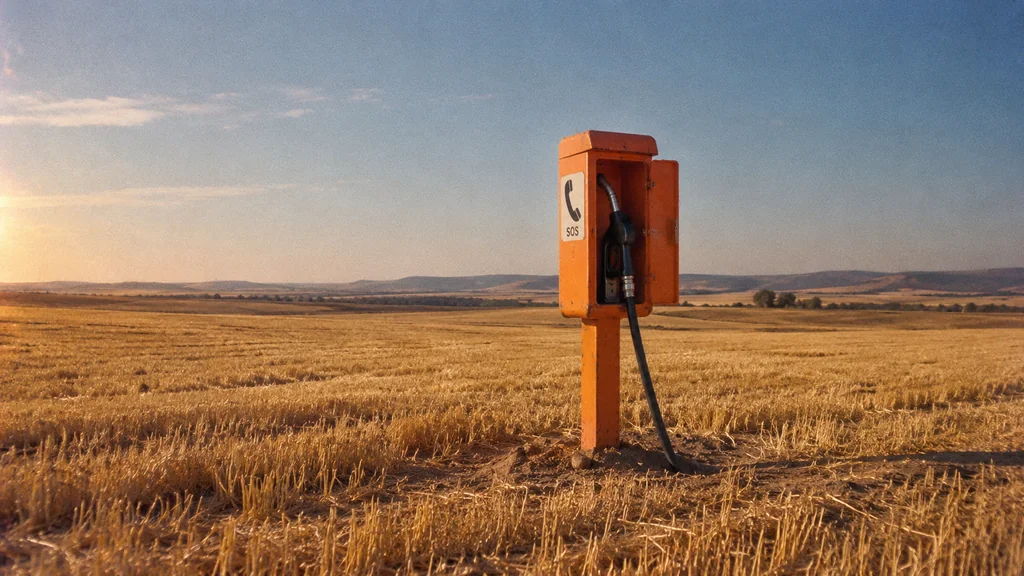
Volatile energy costs penetrate the quietest sectors of the European economy.
Image composition · tobriefFuel drove consumer prices up faster than analysts expected in Germany, France, Italy and Spain in September, according to Bloomberg. Prices outside energy and food barely moved. The European Central Bank (ECB), which sets interest rates for the euro area, has to make sense of that gap before it decides on 29 October (ECB).
The fairest comparison uses the harmonised index, a common basket of goods and services the EU built so that countries' inflation rates line up. On that measure, prices were 5.0% higher than a year earlier in Spain and 4.1% higher in Italy (INE, Istat). France came in at 3.4% and Germany at 3.3% (Insee, Destatis).
Energy did the lifting
The common thread is energy. Its annual price rise ranged from 14.9% in Germany to 22.3% in Italy, where road diesel alone cost 34.9% more (Destatis, Istat).
Spain's headline figure is partly arithmetic. Fuel prices fell in September 2025 and rose this September, so the annual comparison starts from a low point and magnifies the increase (INE).
Underlying inflation, which strips out volatile energy and food, tells a quieter story. Germany's held at 2.4% (Destatis). Italy's edged up from 1.5% to 1.7%, and Spain's rose two tenths to 3.1% (Istat, INE).
France publishes no underlying figure in its early estimate, though services prices sped up from 1.9% to 2.2% (Insee). These small moves sit beside a large energy shock. The September releases do not show whether one caused the other.
Who pays, and how relief changes the number
The fuel bill lands hardest on people who buy the most litres. That means commuters without a train line, hauliers, farmers and households that heat with oil.
How governments soften that bill also changes what the index records. A fuel-tax cut lowers the pump price, so measured inflation falls. A cash payment to chosen households helps them without touching the index. Germany is cutting fuel taxes by about 17 cents a litre from 1 October, too late for the September figure (Zeit). France leaned towards targeted help instead (Reuters via Investing.com). Germany's October reading should therefore look lower than the pain at the pump, while France's will show the full price.
What the ECB has to weigh
The ECB raised its deposit rate to 2.50% on 10 September, before any of these figures arrived (ECB). The deposit rate is what the central bank pays banks to leave money with it overnight. Banks price their own loans off it, so a rise reaches borrowers on variable-rate mortgages first, followed by people whose fixed deals come up for renewal and firms that borrow short-term.
In August, euro-area inflation stood at 3.2%, while the underlying measure eased to 2.4% (Eurostat). The case for another rise rests on the ECB's own staff. Their September projections expected higher energy costs to feed into other prices, with underlying inflation peaking at 2.8% in 2027 (ECB projections). If firms start passing fuel costs into what they charge for transport, food and services, waiting would let that process gather pace.
The case for waiting is blunter. A higher rate cannot produce more oil. It works by making loans dearer and slowing spending over months. Variable-rate borrowers and indebted firms would start paying more while fuel stayed exactly as expensive.
On the September figures available so far, energy drove the jump and broader price pressure remains limited. Underlying inflation moved by tenths of a point at most in Germany, Italy and Spain, and France offers only a services reading. Eurostat's euro-area estimate, due on 2 October, can still change that picture (Eurostat). Until it does, a hike on 29 October would rest more on the staff forecast than on prices already measured.
How was this article?
Help us get better
Help us get better
Details about this article
- Model:
- claude-opus-5-5
- Generated:
- 10/1/2026, 2:50:14 AM
- Pipeline run:
- eu_pipeline_20261001_005008
- Watermark:
- SynthID (Google's invisible watermark)
- Human review:
- None before publication