Cyprus’s cable bill awaits a Greek permit
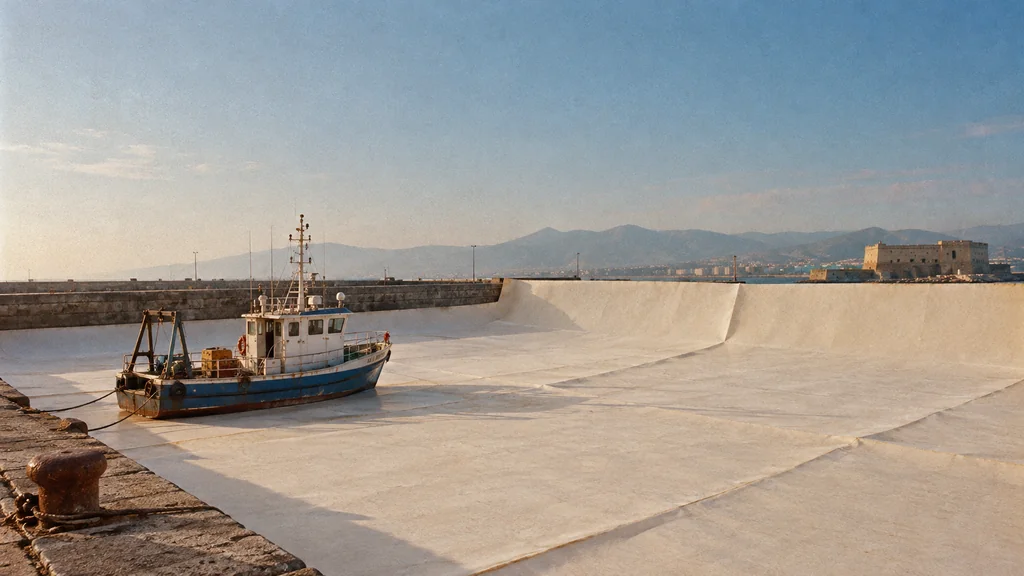
Cyprus waits to price a cable route the seabed has yet to reveal.
Image composition · tobrief- 27/10/2026Abeille Marengo arrives in HeraklionThe vessel reaches its planned operating base on Crete. The proposed surveys would map seabed conditions to…
- 29/10/2026EU energy commissioner meets Greek and Cypriot ministersDan Jørgensen discusses the interconnector with both countries’ energy ministers and reiterates EU support …
- 01/11/2026Greek authorities have yet to issue the survey NAVTEXAbeille Marengo remains in Heraklion despite earlier expectations of an October notice. The pending notice …
A French-flagged survey ship has been sitting in Heraklion, Crete, since 27 October, waiting for Greek permission to map the seabed (ANA-MPA). It was still in port on 1 November (To Vima). Its job is to chart the route of the Great Sea Interconnector, a planned power cable linking Cyprus to Europe's grid. Cyprus will pay most of the cable's cost, yet nobody can yet say what that route, or that cost, will be.
The permit the ship is still missing
The Abeille Marengo has a base in Crete but no permission to work. The Greek coastguard's 14 October filing was only an application to use a foreign-flagged ship for marine research (Hellenic Coast Guard). Two steps remain. An interministerial committee must approve the survey, and Greece must then publish a NAVTEX, a radio warning telling ships that work is under way in a set area on set dates.
That wait is already long. According to Euro2day, the survey application went in on 8 October, and more than three weeks passed without a notice. Some headlines already call this a restart, but the reports beneath them describe preparation.
The stretch that matters lies off the small Greek island of Kasos. In July 2024 an earlier survey ship, Ievoli Relume, stopped work there under Turkish naval pressure (Deutsche Welle). That left the seabed map unfinished in the most politically contested part of the route.
Turkey does not accept the maritime rights that Greece and Cyprus claim for their islands in those waters (Deutsche Welle). On 21 October, Turkish Foreign Minister Hakan Fidan said Ankara would not object if it received advance written notice of the activity and its coordinates (Cyprus Mail). That would be a diplomatic letter to Ankara. A NAVTEX is something else: a public broadcast to all shipping. Nothing public shows that either has been sent.
Even a NAVTEX would only show that Greece has given permission and that the ship intends to work. A ship inside the notice area would not prove much more. The real proof is a survey record, or direct confirmation from the people running the survey, that it collected data beyond the point where Ievoli Relume stopped.
Who pays, and when
Cyprus has tied its money to the notice. Energy Minister Michalis Damianos said on 19 October that the government would start the process for a €25 million payment only once Greece issues the NAVTEX (CNA). The ship sailing out of Heraklion would not be enough.
The payment rests on a 2024 decision by the Cypriot energy regulator. It allows the state budget to cover documented investment spending of up to €25 million a year from 2025 to 2029, or €125 million in all (CERA). The aim is to keep construction costs off electricity bills. If the condition is met, Cypriot taxpayers rather than electricity customers would carry that spending.
The bigger bill depends on the survey. Cyprus pays 63% of the capital cost of the Crete–Cyprus leg, and Greece pays 37% (SigmaLive). Capital cost here means the money needed to build the link, before it carries any power.
On 20 October, regulator chairman Polyvios Lemonaris told parliament that the €1.9 billion estimate would probably be exceeded. He said about 40% of the marine surveys were still to do and that a costlier route was possible (Cyprus Mail). Those unmapped stretches will set the route and the price, and they will only do so once a ship brings back usable data. The same project still faces unanswered questions about its new majority investor (To Brief).
What Cyprus would get for the money
Cyprus has no connection to the continental grid, and the amount of renewable power it had to waste rose sharply in 2025 (European Commission). That wasted power, called curtailment, is solar or wind output that could have been produced but was switched off because the local grid had no room for it. The cable is designed to carry power both ways, so Cyprus could export surplus power and import it when local plants fall short (Deutsche Welle).
Lower household bills are a separate claim. The regulator said nobody had submitted a market-impact study for the first leg (SigmaLive). That is a study of what the cable would do to power prices.
The record therefore supports a plain conclusion. Cyprus bears most of the planned leg's capital cost while its route and final price remain open, and its regulator has no study showing what electricity customers would gain. That does not mean the cable is poor value. It means Cyprus is committing money before it has the evidence to judge, and the next step that could change that rests with Greece's interministerial committee.
Details about this article
- Model:
- claude-opus-5-5
- Generated:
- 11/2/2026, 1:37:43 AM
- Pipeline run:
- eu_pipeline_20261102_005008
- Watermark:
- SynthID (Google's invisible watermark)
- Human review:
- None before publication