International Court of Justice: Myanmar committed genocide against the Rohingya
AI Daily Synthesis
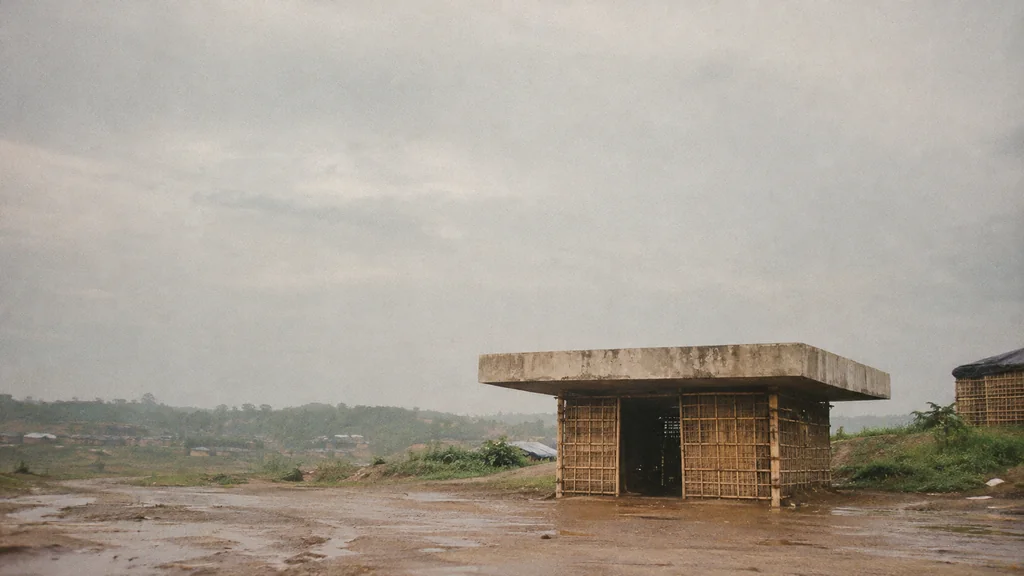
Image composition · tobriefThe International Court of Justice (ICJ), the United Nations’ top court, ruled today by nine votes to six that Myanmar committed genocide against the Rohingya in northern Rakhine State during its 2017 military operations (AP, Reuters). It ordered Myanmar to investigate those responsible and, where warranted, prosecute and punish them. It also ordered Myanmar to allow displaced people to return safely and to pay compensation (ICJ judgment). The court judges states, not individuals: no military officer was convicted. Its judgment is binding on Myanmar and cannot be appealed (CNN).
The Gambia brought the case on 11 November 2019, led by its then justice minister, Abubacarr Tambadou (The Gambia’s application). The African country was not itself directly affected. But in 2022, the court ruled that any state party to the 1948 Genocide Convention can bring a case against another state party (ICJ, 2022).
What the court found
The judges found that three of the five acts defined by the convention had been proved: killing civilians, causing serious bodily and mental harm through sexual violence and attacks on children, and imposing measures intended to prevent births (ICJ summary, UN News). They also found that Myanmar failed to prevent genocide (9–6), failed to punish those responsible (11–4) and failed to enact the legislation required by the convention (14–1) (ICJ judgment). About 815,000 Rohingya lived in the area. The evidence supports an estimate of about 10,000 violent deaths, while about 700,000 people, more than eight in ten, fled to Bangladesh (ICJ summary).
Myanmar argued that it was responding to attacks by the Arakan Rohingya Salvation Army (ARSA), an armed Rohingya group. It acknowledged that excessive force may have been used but denied any intent to commit genocide (BBC). Minister Ko Ko Hlaing had told the judges that the country “was not obliged to stand idly by and let terrorists run unchecked” (AFP). The court accepted that ARSA had carried out coordinated attacks on at least 30 security posts on 25 August 2017. It found that this did not explain the pattern of violence (ICJ summary), partly because the operations did not distinguish fighters from civilians (CNN).
The court’s president, Yuji Iwasawa, read out its finding that security forces killed thousands, committed widespread sexual violence and attacked people trying to flee. He said intent to destroy a substantial part of the group was “the only reasonable inference” (Reuters). The six dissenting judges did not dispute the atrocities. They concluded that specific intent had not been proved to the strict standard required (ICJ summary).
What the court ordered
To remedy Myanmar’s failures, the court ordered, by 13 votes to two, an immediate investigation of those for whom there are reasonable grounds to suspect responsibility. By 14 votes to one, it ordered Myanmar to enact the missing legislation, and by nine votes to six, to provide assurances that the acts would not be repeated (ICJ judgment). By ten votes to five, it ordered remedies: safe, voluntary and dignified return, family reunification, the return or replacement of property, searches for missing people, burial of the dead and protection against discrimination (Al Jazeera).
For the refugees themselves, justice is measured by whether they can return. Refugee leader Sayed Ullah asked for support “until we return home”. Mohammed Osman said the goal would be fully achieved only through dignified repatriation to a country that still does not recognise the Rohingya as an official ethnic group (France 24/AFP).
The obligation to pay compensation takes effect today. By 19 November 2028, Myanmar must report to the court on its measures to provide remedies and, where restitution is impossible, propose an amount and means of compensation. The court will ultimately set the amount after hearing both sides (UN transcript).
By 11 votes to four, the judges found that Myanmar had breached a January 2020 order to preserve evidence. In May 2020, the remains of at least five Rohingya villages were burned in Buthidaung, a town in Rakhine State, and in 2021 a government base was completed on the site of a former village (UN transcript).
In the courtroom and what comes next
The Gambia’s Justice Minister, Dawda Jallow, Ko Ko Hlaing and Rohingya who had travelled for the reading were in the courtroom. Afterwards, people embraced and cried. “It is a great day for the Rohingya … and for all the oppressed,” said activist Yasmin Ullah (AP). Jallow said “the victory belongs to the Rohingya” (Foley Hoag). UN Secretary-General António Guterres welcomed the judgment (UN News).
The court has no enforcement mechanism. If Myanmar does not comply, The Gambia can take the matter to the UN Security Council (UN Charter), where China and Russia have vetoes (NYT). Control of the territory has also changed. The Arakan Army is an armed group that has fought Myanmar’s military since 2023. According to a May analysis by the UN Office for the Coordination of Humanitarian Affairs (OCHA), it controls 14 of Rakhine’s 17 townships (OCHA/ReliefWeb). The judgment concerns 2017 and does not assess the Arakan Army’s actions. Bangladesh, whose capital is Dhaka and which hosts about 1.2 million Rohingya (AP), called for international pressure on Myanmar and the Arakan Army to allow safe repatriation (UNB). In July, the UN, the International Organization for Migration and the UN refugee agency feared that more than 500 people, mostly Rohingya, had been lost in two shipwrecks off Myanmar.
A different court decides individual criminal responsibility. In 2024, the prosecutor of the International Criminal Court sought an arrest warrant for military chief Min Aung Hlaing over alleged crimes against humanity (ICC).
Whether Myanmar complies will become clear from what it reports to the court in The Hague. For now, its government has not responded to requests for comment on the judgment (NYT, Politico).
Details about this article
- Model:
- claude-opus-5-5
- Generated:
- 11/19/2026, 5:26:25 PM
- Pipeline run:
- incremental_20261119_163016
- Watermark:
- SynthID (Google's invisible watermark)
- Human review:
- None before publication