Binance’s $6.36 billion theft leaves withdrawals frozen
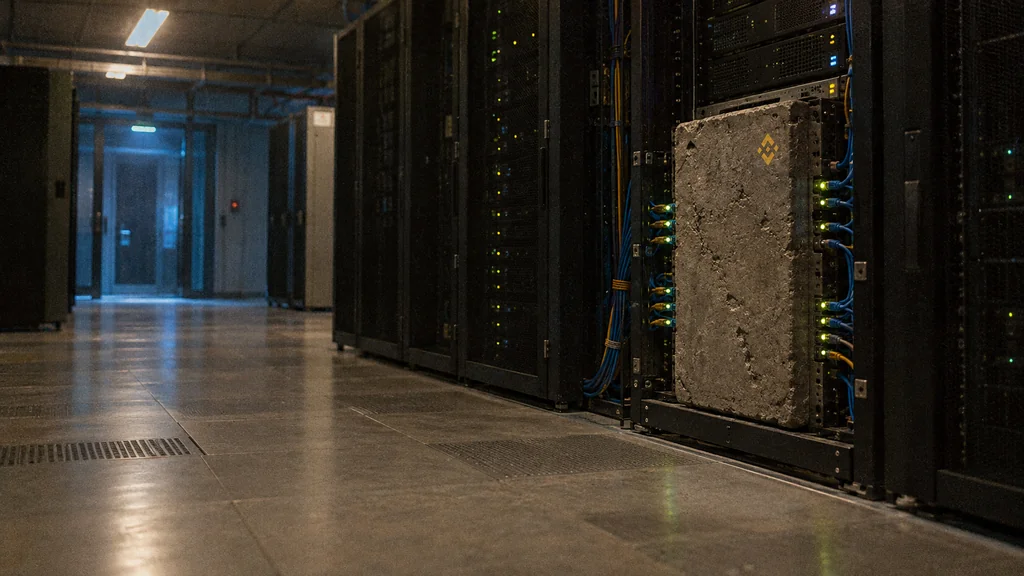
The ledger records every withdrawal; the authority behind them remains unexplained.
Image composition · tobriefOn the evening of 29 October, attackers moved tokens worth about $6.36 billion out of Binance wallets on ten blockchains. Most of it went in roughly 20 minutes, with a later wave of transfers after that, according to blockchain-analysis firm TRM Labs, which ranks it as the largest reported crypto theft. The networks accepted every one of those transfers as properly authorised. How that authorisation happened inside Binance is something the public record cannot show. The exchange has halted withdrawals and says users will not bear the losses (Binance).
A ledger that checks signatures, not intentions
The money left through hot wallets, which an exchange keeps online so it can pay out customer withdrawals automatically. A blockchain handles a transaction from such a wallet the way a bank clerk handles a cheque. It checks that the signature is genuine, not whether the person holding the pen should have been signing. So the record shows exactly which coins moved and where, but nothing about the break-in that made the signing possible.
For that, we depend on Binance, and its account has shifted. It first pointed to a compromised laptop belonging to a DevOps engineer, someone who runs the company's internal systems (BleepingComputer). It later said investigators had found further breach points, without explaining how they connect (Binance on X).
What the traces do reveal
On Ethereum, analysts can follow one step closely. A feature called EIP-7702 lets a wallet sign a permission allowing outside code to act on its behalf, much like a power of attorney. TRM reports that someone submitted 50 such permissions, all signed in advance, and one took effect. From then on, code controlled by the attacker could empty the wallet, and the network treated each withdrawal as the wallet's own action (TRM Labs). Binance co-CEO Richard Teng said this delegation bypassed the exchange's normal approval controls (Richard Teng on X).
On the other chains, observers saw something plainer: ordinary transactions with valid signatures. From that, TRM infers that the systems Binance uses to sign transactions were compromised. Binance has not confirmed this. It says it has found no evidence that its private keys, the secret codes that control each wallet, were leaked.
Frozen is not the same as returned
About $3 billion of the stolen value has been frozen (Cointelegraph). That is possible mainly for stablecoins, tokens pegged to the dollar such as Tether's USDT and Circle's USDC. The companies that issue them can block specific addresses, so tokens sitting there can no longer be moved. Bitcoin and ether have no issuer, so stopping them depends on the coins reaching an exchange willing to cooperate (Reuters).
Getting frozen tokens back takes longer still. TRM's Ari Redbord told CNBC that law enforcement usually needs a court order or seizure warrant before an issuer releases or reissues tokens. Chainalysis researcher Eric Jardine said that process can take months or years (CNBC). Subtracting the frozen sum from the stolen one does not give the final loss.
Binance says it has set aside more than $6.34 billion of company funds to make users whole (Reuters). It told Cointelegraph that $5 billion of this is already held in the same kinds of tokens that were stolen. It declined to share the wallet addresses, however, and security firm CertiK said it could not verify the claim from what Binance provided (Cointelegraph).
TRM and Chainalysis link the attack with high confidence to TraderTraitor, a hacking unit tied to North Korea, while Binance has named no one (BleepingComputer). On 30 October, Binance said it aimed to start restoring withdrawals in about 34 hours, subject to security checks. It also said it would publish a proof-of-reserves result, a public snapshot of the assets it holds, by 2 November (Binance). As of 01:30 Brussels time on 31 October, To Brief had seen no announcement that withdrawals had reopened.
Outside analysts have already traced where the money went, which is what open ledgers are good at. The rest has to come from Binance. It owes an account of how its own systems came to approve the transfers. It also owes evidence for its compensation fund that someone else can check. A reserve snapshot would help only if it identifies the replacement assets and sets them against what Binance owes its customers.
Details about this article
- Model:
- claude-opus-5-5
- Generated:
- 10/31/2026, 1:38:13 AM
- Pipeline run:
- eu_pipeline_20261031_005007
- Watermark:
- SynthID (Google's invisible watermark)
- Human review:
- None before publication