US seeks 120 million barrels of Europe’s diesel
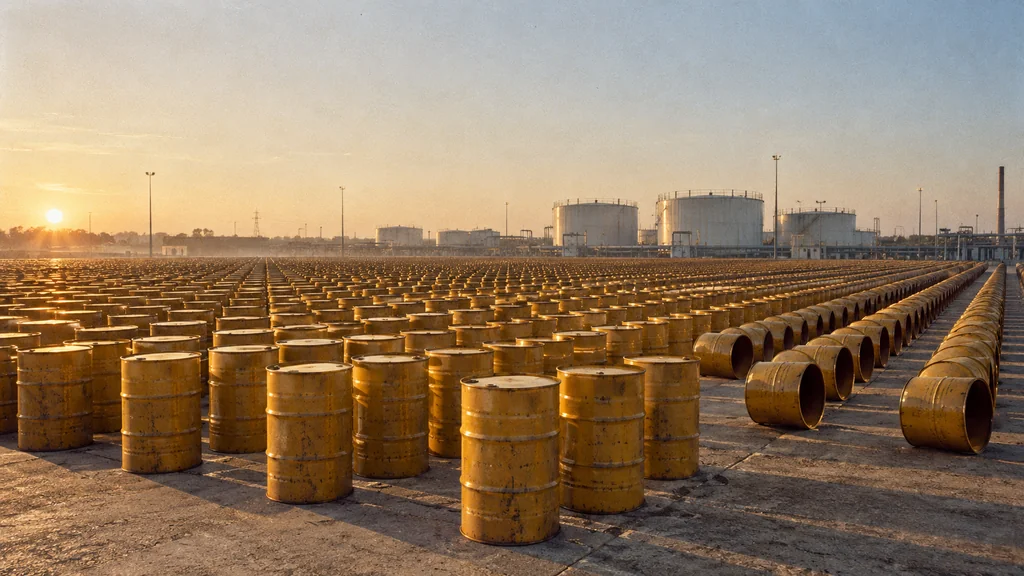
Europe weighs selling emergency diesel before the next supply shock.
Image composition · tobriefThe United States has told France and Germany to release emergency diesel stocks or face a possible restriction on American diesel exports, and one source put the request to the whole EU at 120 million barrels over six months (Reuters). Selling stored fuel now could ease prices, but Europe would have less cover if supply breaks down later. No release and no ban have been agreed.
A request with a threat attached
Washington presents the request as burden-sharing. Treasury Secretary Scott Bessent said the US had done its part in a coordinated reserve release in March and that allies should now act on their commitments. Energy Secretary Chris Wright argued that more diesel would help before the harvest and the winter heating season (Reuters).
The threat is less settled than the request. Donald Trump has backed considering a temporary export ban, but he has also asked whether one would raise American gasoline prices, and Wright has cautioned against a blanket ban (Washington Post). No order putting a ban in place has appeared.
Europe still has reason to take it seriously. An August figure put the US at about half of EU diesel imports (Euronews). Losing a supplier that size would leave European buyers competing for cargoes from elsewhere.
How much that could cost is a matter of modelling, not forecasting. Oxford Economics modelled European wholesale diesel prices (what refiners and traders charge before fuel reaches the pump) 40–50% higher under a complete ban. That worst case helps explain why EU trade commissioner Maroš Šefčovič warned that US restrictions would damage Europe's economy (Euronews).
Who holds the fuel
Brussels has no diesel tank of its own. Each member state keeps its own emergency stocks, held by public agencies or by oil companies obliged to carry them, and each government releases them under its own law (EU stocks directive). That explains why the US pressure is aimed at Paris and Berlin rather than at the Commission.
The draw would be large. According to CGTN, which cited Eurostat-based figures from May 2025, EU emergency diesel and gasoil stocks then totalled roughly 39 million tonnes. By CGTN's estimate, the requested release of about 16 million tonnes would equal some 41% of that total (CGTN). Those balances are more than a year old, so today's share could be higher or lower.
Berlin is wary. Germany's economy ministry said it had received no new request from the International Energy Agency (IEA, which coordinates reserve releases among oil-importing countries), and it warned against unsettling the market (Bloomberg).
Why cheaper pumps are not guaranteed
The Commission sees a price problem rather than a supply problem. Spokesperson Anna-Kaisa Itkonen said the EU faced no diesel shortage but an "affordability crisis" (EU Perspectives). EU prices of fuel for personal transport were 23.8% higher in August than a year earlier, a measure that covers petrol as well as diesel (Eurostat). Hauliers and farmers feel diesel costs first, because they burn the fuel directly in trucks and tractors.
A release would work through the wholesale market. Extra barrels for sale can push the wholesale price down even if governments sell at the going rate. Whether a trucker then pays less depends on retailers, who may pass on only part of the fall, or pass it on slowly and keep the difference as margin.
Polish fuel-market analyst Urszula Cieślak argued that stored fuel sold at market price would not automatically get cheaper for motorists, and that selling it below market could shift value to intermediaries (Fakt). The intermediary mechanism is simple. A trader who buys state fuel cheaply can resell it at the market price and pocket the gap, so the discount lands in a wholesaler's accounts rather than a farmer's.
The insurance has a cost too. Every barrel sold today stops protecting against the next supply shock, and the agencies or companies that hold the stocks will eventually pay to refill them.
IEA members are due to discuss the issue on 2 October (Bloomberg). They start from a trade-off that is already visible. Europe is being asked to spend a large part of reserves built for a supply shortage on a price problem, where relief at the pump is uncertain. The aim is to head off an American export ban that has been threatened but not ordered, and that Washington's own officials are hedging. Because the stock figures date from May 2025, the exact share at stake is uncertain, but on the only figures available this would be a large draw on Europe's emergency cover.
How was this article?
Help us get better
Help us get better
Details about this article
- Model:
- claude-opus-5-5
- Generated:
- 10/2/2026, 2:09:47 AM
- Pipeline run:
- eu_pipeline_20261002_005006
- Watermark:
- SynthID (Google's invisible watermark)
- Human review:
- None before publication