Danish sovereignty stays, US access expands
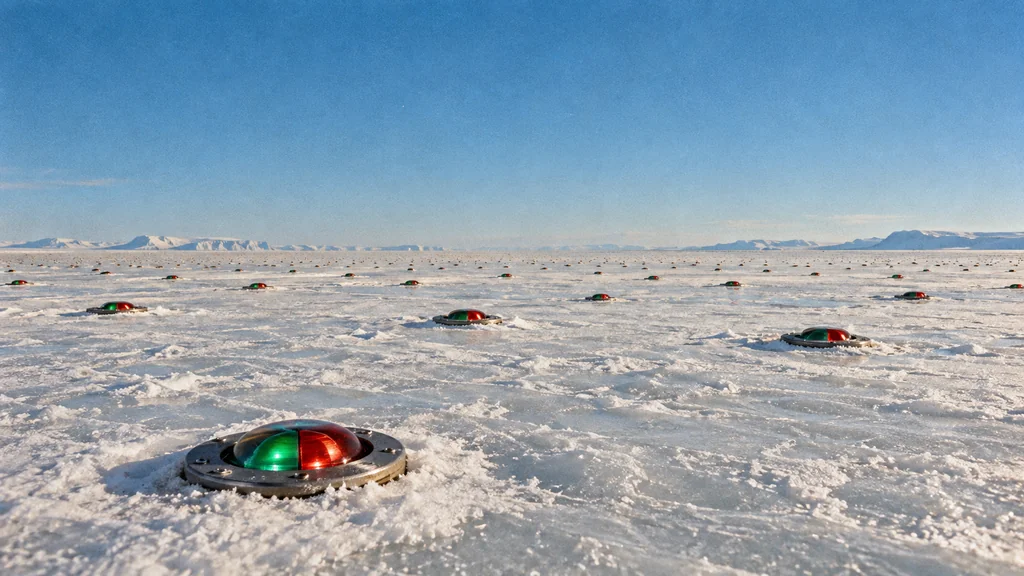
American access multiplies across Greenland before a single new deployment.
Image composition · tobriefDenmark keeps sovereignty over Greenland under the agreement signed in New York on 22 September (Danish prime minister's office). If the Danish and Greenlandic parliaments approve it, the United States would gain durable rights to expand its military presence on the island. It would also gain a formal role in future security decisions there (White House).
Sovereignty in writing, access in exchange
Donald Trump signed with Danish Prime Minister Mette Frederiksen and Greenlandic Premier Jens-Frederik Nielsen. Their text amends the 1951 defence pact that first gave Washington its Arctic foothold (US Statutes at Large).
The new text recognises Danish sovereignty, territorial integrity and Greenlanders' right to self-determination, the red line both leaders had drawn (Danish Foreign Ministry). Trump still claims the deal gives America "permanent control" over the island's security (Deutsche Welle).
Access was the price. The agreement lets the US modernise and expand Pituffik Space Base and commits the three governments to new defence areas at Narsarsuaq and Mestersvig. American ships, aircraft and forces could move between these sites by land, sea and air, including through Greenlandic waters (White House).
The published text sets no end date, and changing it requires every party's agreement (Danish Foreign Ministry). Those rules govern amendment. Whether either government could later leave the agreement is a separate question the parliaments will need to examine.
Who can block a new site
The 1951 pact was a two-way deal between Washington and Copenhagen. Now Nuuk signs "together with" Denmark, and any further US site proposal goes to a three-party committee. If the committee cannot agree within 90 days, the proposal moves up to deputy ministers and then ministers, and nothing is approved by default (White House).
In practice, a new site needs all three governments to say yes, so Greenland can refuse one. That leverage stops at the perimeter. Inside an agreed defence area, the 1951 framework already lets Washington build, station forces and run operations with wide latitude (US Statutes at Large).
The clause with the longest reach concerns independence. If Greenland breaks away, the text expects it to remain in or join NATO and to take on the agreement's rights and obligations (Danish Foreign Ministry, TV5Monde). The clause tries to carry today's alignment into a future state. A newly sovereign Greenland could still seek to renegotiate, and the text alone cannot settle whether it would be bound.
Options, not deployments
Calling these "two new American bases" overstates what exists. Narsarsuaq is a civilian airport on a former wartime US airfield, and Mestersvig is a remote east-coast logistics point. The agreement names no troop numbers, budgets or construction timetable (BBC).
Pituffik already handles missile warning and satellite tracking, which means detection rather than interception (US Space Force). Nothing signed adds a unit or an interceptor. Washington gains permission to build later without reopening the pact.
That optionality is also where Europe's stake lies. Copenhagen argues NATO shares responsibility for Arctic security under the deal. The alliance did not sign it, however, and gets no command role or common funding (Reuters via Internazionale). Any new facilities on the North Atlantic flank would be American assets that allies might benefit from, not shared infrastructure.
The deal also gives Washington a say when Greenland screens sensitive foreign investment. Investors tied to states outside the EU, NATO and recognised partners will face security checks in mining, critical infrastructure and sensitive data, with Danish authorities consulting the US (Sermitsiaq, Danish Foreign Ministry). Non-NATO states cannot hold military installations or a persistent presence unless all parties agree (Politico).
European investors are not barred. Yet the EU, which is courting Greenland on raw materials, has no seat in those consultations (EU Perspectives). Washington now does.
The deal preserves sovereignty while giving Washington durable military options and a role in screening sensitive foreign investment. It is signed but not in force, because Danish and Greenlandic parliamentary procedures come first (Danish prime minister's office). Until then, those gains remain agreed terms rather than operational control. The Folketing (Denmark's parliament) and Inatsisartut (Greenland's parliament) must now decide whether an open-ended pact that reaches toward a future independent state is a price their voters accept.
Details about this article
- Model:
- claude-opus-5-5
- Generated:
- 9/23/2026, 6:52:17 AM
- Pipeline run:
- eu_pipeline_20260923_005006
- Watermark:
- SynthID (Google's invisible watermark)
- Human review:
- None before publication