$40 HIV shot awaits clinic approval
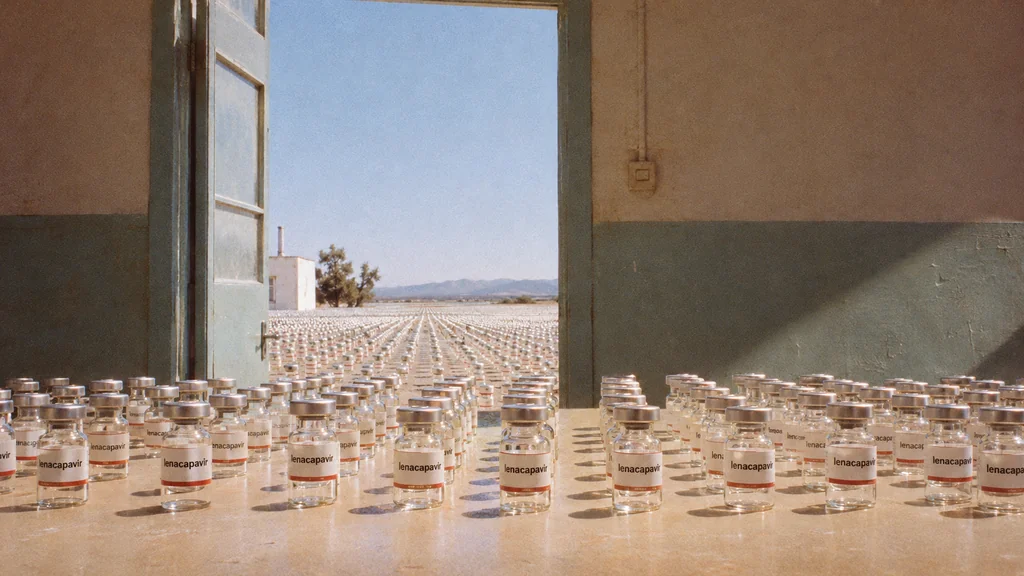
Approval opens a route for cheaper HIV prevention shots; clinics await supply.
Image composition · tobriefDr. Reddy's Laboratories and its partners said on 2 November that the US Food and Drug Administration had granted tentative approval to the first generic version of lenacapavir, an HIV-prevention injection given twice a year (The Manila Times). The Indian drugmaker plans to sell it in 120 lower-income countries for $40 per person per year, a planned price for the medicine alone (Unitaid). Gilead Sciences' original, sold as Yeztugo, has a US list price of $28,218 a year before insurance (The Manila Times), and no generic dose has reached a patient yet.
Three gates between a factory and a nurse
To Brief could not find the FDA's own letter or database entry, so the decision rests on the announcement from Dr. Reddy's and its partners, including the health funder Unitaid and the Clinton Health Access Initiative (CHAI). Tentative approval is the FDA's standard status for a generic while the original drug is still under patent, so Dr. Reddy's cannot sell its version in the United States (CHAI). The agency has still assessed the product. That lets the US government buy it for programmes abroad and gives other buyers and regulators a review to build on.
The second gate belongs to the Global Fund, which buys medicines on behalf of many countries at once. In September, it invited generic makers to submit HIV-prevention products to its Expert Review Panel, and only products the panel finds eligible can be bought through the Fund (Global Fund). That review opened before the FDA decision and runs on its own track.
The third gate sits with each country. The Fund calls national registration critical, so a country must authorise the product itself, or accept another recognised route, before a nurse can give a single injection (Global Fund).
Jamming the virus's protein shell
HIV carries its genetic instructions inside a protein shell called the capsid. Picture a shipping container that has to be assembled, moved and unpacked at the right moments. Lenacapavir binds to that shell and disrupts several of the stages the virus needs to copy itself (US drug label).
Lenacapavir is an antiviral drug, so it trains no immune memory the way a vaccine would. It also stays active in the body for months. People start with injections and tablets on the first day. After that, they return every 26 weeks for two injections under the skin (US drug label). Each visit begins with an HIV test, because the drug is meant only for people who do not already have the virus (US drug label).
The evidence that it works comes from Gilead's large trials of the original product rather than from a new trial of the generic. In PURPOSE 1, none of the 2,134 women and girls receiving lenacapavir acquired HIV (NEJM, PURPOSE 1). The second trial adds a direct comparison with the daily prevention pill. In PURPOSE 2, two of the 2,179 people receiving the injection acquired HIV, a rate 89% lower than among participants taking the pill (NEJM, PURPOSE 2). Most recipients felt the shot, though. Injection-site reactions, mostly mild or moderate, affected 69% and 83% of recipients in the two trials (US drug label).
From a low price to a stocked clinic
Gilead issued royalty-free licences to six generic makers in late 2024, covering 120 resource-limited countries (Gilead). Royalty-free means the generic makers owe Gilead nothing on each dose they sell. Médecins Sans Frontières argues that the countries left outside those licences account for about 25% of new HIV infections (MSF). The $40 also leaves out HIV tests, staff time and clinic visits (CHAI).
In South Africa, clinics are already giving the original product. The health department reported more than 55,123 people starting it at 360 facilities by 7 September (South African government). Supply has been thinner in other places: one Rwandan facility received only 40 doses in April (Las Vegas Sun).
The partners expect first generic supplies to reach countries before the end of 2026, with broader availability in 2027 (Unitaid). The Global Fund and the United States aim to reach three million people by the end of 2028 (Global Fund).
Large trials have established strong protection from lenacapavir. The reported FDA decision gives a low-cost generic a route to overseas buyers, although it has yet to reach clinics. National regulators and the Global Fund now decide how fast that changes, through how quickly they register the generic and how soon they place firm orders.
Details about this article
- Model:
- claude-opus-5-5
- Generated:
- 11/4/2026, 2:17:26 AM
- Pipeline run:
- eu_pipeline_20261104_005008
- Watermark:
- SynthID (Google's invisible watermark)
- Human review:
- None before publication