€50 million for Black Sea warnings
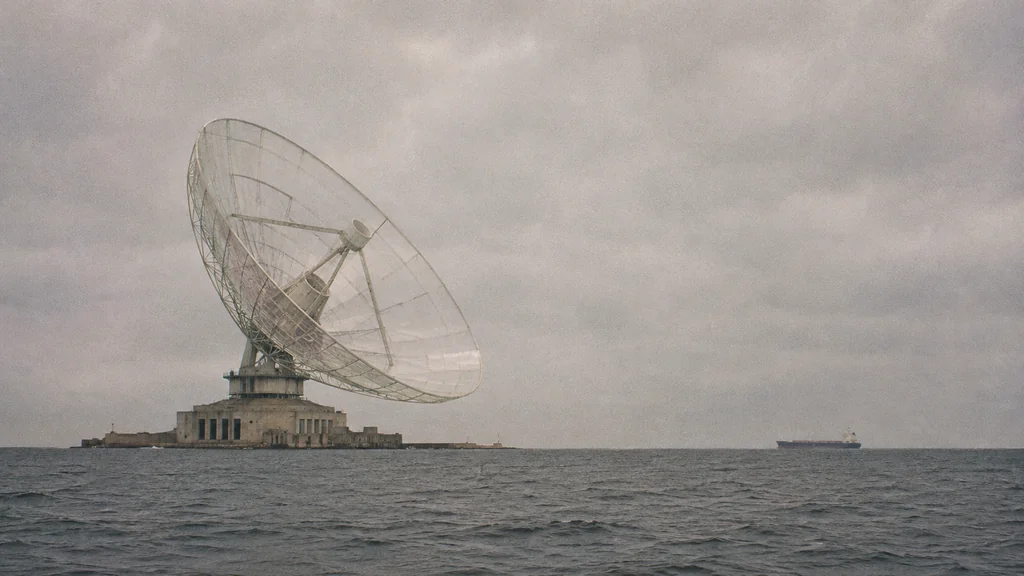
The Black Sea hub could warn ships, but cannot stop an attack.
Image composition · tobriefOn 28 October, a French patrol aircraft spotted three sea drones closing on the Contship Jet, a container ship bound for the Romanian port of Constanța, and warned the crew (Mer et Marine). All 18 sailors were rescued. The ship sank the next day (Bulgarian navy).
On 9 November, Commission President Ursula von der Leyen pledged €50 million to speed up an EU-backed Black Sea hub built to make such warnings routine (European Commission, BTA). The hub would help alerts reach crews faster. It would have no power to order anyone to stop a drone.
What a warning buys
The drones struck about 21 nautical miles southeast of the Bulgarian town of Shabla, inside Bulgaria's exclusive economic zone (Bulgarian navy). That stretch of sea lies beyond Bulgaria's territorial waters. Out there, its armed forces have far less legal room to act against a threat.
Prime Minister Rumen Radev said the aircraft flagged the drones about half an hour before impact. Bulgarian fighters stood ready for anything that entered territorial waters, but the drones never did, and Radev cited legal limits on acting further out (Bulgarian government).
The French aircraft could watch, report and help coordinate the rescue. It had no means to stop the drones (Mer et Marine). That gap between seeing an attack and stopping one is where the new hub sits.
A hub for alerts, still being built
The Commission first proposed the hub in May 2025. It would be a civilian network with centres in Constanța and Varna, run jointly by Romania and Bulgaria with EU support (EU strategy, EU implementation report).
In practice, its staff would gather what different sensors and patrols see into one map of the sea. When something looks dangerous, they would flag it early. The hub creates no naval command and cannot intercept anything.
Von der Leyen said the hub still has to be made operational, and set no date for when it would be (European Commission). Her announcement named no recipient for the money and no split between the two sites.
The next step is giving the hub a legal form. Romanian politician Oana Țoiu listed that legal structure as still ahead, along with a governing board, coordinators and national contributions for 2027 (AGERPRES).
Who decides to stop a drone
Passing an alert is something any state with a sensor in the area can do, as France showed. France had deployed the aircraft in October to help secure the Black Sea (Libération). Von der Leyen's announcement did not say how such national patrols would feed the hub.
Deciding to intercept a drone or open fire is a different act, and it stays with national governments. In an October European Parliament debate, EU foreign-policy chief Kaja Kallas said a protocol letting governments confer quickly during an attack was still only a proposal (European Parliament debate).
Von der Leyen also announced €10 million for Romanian search and rescue, separate from the hub (AGERPRES). That money pays for pulling sailors from the water after a strike, not for preventing one.
The cost of failure spreads well beyond the two host countries. The Contship Jet was Liberian-flagged and Greek-managed, with a crew of 14 Filipinos and four Ukrainians (Ethnos). Greek Prime Minister Kyriakos Mitsotakis said Greek owners could return to Black Sea trade if safe passage were secured, citing high freight and insurance costs (Greek prime minister's office).
Bucharest and Sofia still have to set the hub's deadlines in a bilateral agreement (BTA). That deal can settle who runs the centres and how an alert reaches a ship. It cannot by itself decide who may stop a drone beyond territorial waters, the limit Radev pointed to on 28 October.
The record supports a precise conclusion. The planned hub could pass warnings like France's, but it would have had no power to stop the drones that sank the Contship Jet. Whether anyone intercepts the next one remains a decision for the governments whose forces patrol the Black Sea, and so far none has said how it would act.
Details about this article
- Model:
- claude-opus-5-5
- Generated:
- 11/10/2026, 1:57:47 AM
- Pipeline run:
- eu_pipeline_20261110_005009
- Watermark:
- SynthID (Google's invisible watermark)
- Human review:
- None before publication