SpaceX gets approval for one million computer satellites
AI Daily Synthesis
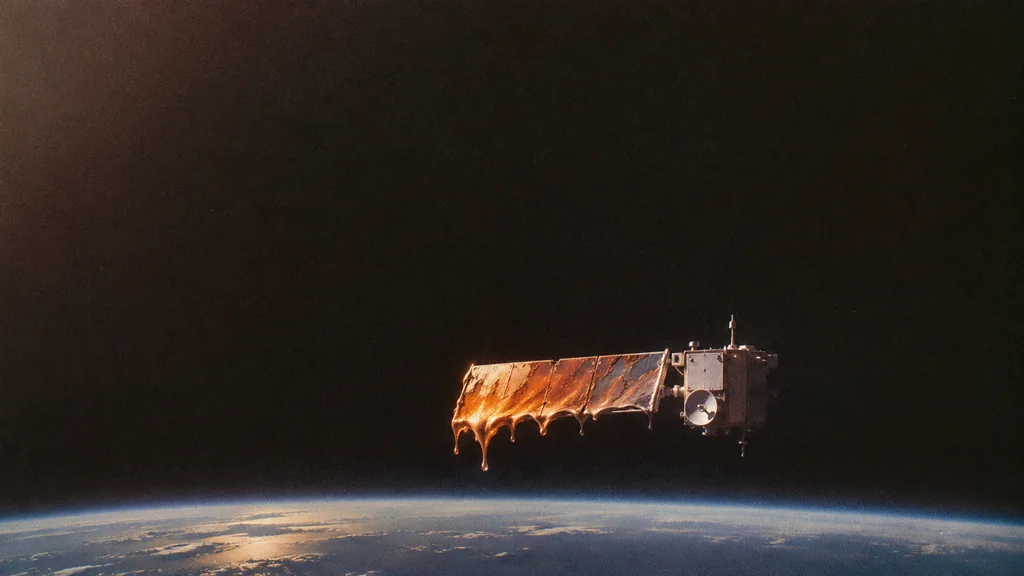
Image composition · tobriefThe Federal Communications Commission (FCC), the US telecommunications regulator, conditionally approved SpaceX’s Starmind on 25 November: up to one million satellites that would serve as an AI data centre rather than provide internet access (FCC decision). The incentive is energy. In an orbit that follows the boundary between day and night, a satellite sees the Sun almost continuously. That gives it plentiful, predictable power without an electricity grid or large batteries (Scientific American, arXiv). The cost is heat, which is hard to shed in space.
Courtney Reinhardt, acting head of the FCC’s Space Bureau, signed the authorisation without a vote by the commissioners. FCC Chairman Brendan Carr linked it to AI’s demand for computing power (Politico). The deadlines are strict: one operational satellite by 2033, 100,000 by 2035, 500,000 by 2038 and the full fleet by 2040. Otherwise, the authorisation expires (FCC decision). Building or launching them is not enough. They must be in the right orbit and working.
One million is a ceiling, not an order. For scale, SpaceX’s Starship deployed 26 Starlink satellites on its most recent flight. Amazon, which is building a rival satellite network, calculated in its objection that even if every satellite launch worldwide continued at the 2025 rate and went to SpaceX, reaching one million would take more than 220 years (Amazon).
A data centre with cables made of light
Picture a data centre room: racks of computers connected by cables. In Starmind, the racks are satellites and the cables are laser beams. According to SpaceX’s application, the units would exchange data almost exclusively through optical links and pass it to Starlink, which would send it down to licensed ground stations (SpaceX application). Radio is the backup: the FCC allowed radio frequencies only for backup telemetry and control when the laser links fail, and only if they do not interfere with other users (FCC decision).
The real obstacle is heat
It seems intuitive that space is freezing, so cooling should be free. A coffee thermos suggests otherwise: it keeps a drink hot precisely because there is a vacuum between its walls. A vacuum insulates rather than cools.
The coils behind your fridge release heat into the kitchen air, but in space there is no kitchen or air. Fluid must carry heat from the chips to large panels, which release it as invisible infrared light (IEEE Spectrum). A hot panel radiates much more than a lukewarm one, but the chips must stay at temperatures they can withstand. An independent technical report therefore assumes panels at around 57°C (ICEF). Lukewarm panels have to be large.
How large? SpaceX gives its AI1 unit an average computing load of 175 kW, roughly the power drawn by nearly 90 electric kettles boiling at once (SpaceX). For that much heat, the same report calculates about 145 square metres of panels, the size of a spacious flat (ICEF). The company’s own brochures show 160 square metres of panels for AI1, up from 110 in an earlier version (Supercomputing News). The physics and the company’s design point to panels of roughly the same size.
Computing in orbit is already happening on a small scale. Starcloud says it ran an AI model on a satellite with an H100 graphics processing unit (Starcloud), and Google sent up a prototype to test whether its chips can withstand space (Google).
The American Astronomical Society asked the FCC to reject the application. It said so many large satellites would leave bright streaks in telescope images, brighten the sky background and burden radio astronomy (AAS). SpaceX responded with filters for radio emissions and a target apparent magnitude of 7, meaning satellites slightly fainter than the naked eye can see (SpaceX). The astronomers maintained that measurements to support those promises were missing (AAS). The FCC accepted the company’s commitments without adding conditions for optical astronomy (FCC decision).
On debris, Amazon calculated that even with 99% successful disposal, a fleet of one million could leave up to 10,000 satellites without a safe end of life (Amazon). The FCC rejected every objection, but imposed one limit here: it approved SpaceX’s debris plan only below 600 kilometres. Operations higher up need fresh approval (FCC decision). It did not require an environmental review because it considers space to be outside the territory covered by US environmental law (FCC 26-64).
SpaceX now faces a 2033 deadline. By then, it must show that at least one of its satellites can compute without overheating, using a cooling system that has yet to be tested in orbit.
Details about this article
- Model:
- claude-opus-5-5
- Generated:
- 11/26/2026, 4:46:43 AM
- Pipeline run:
- incremental_20261126_033009
- Watermark:
- SynthID (Google's invisible watermark)
- Human review:
- None before publication