Cancelled degree threatens İmamoğlu's presidential bid
AI Daily Synthesis
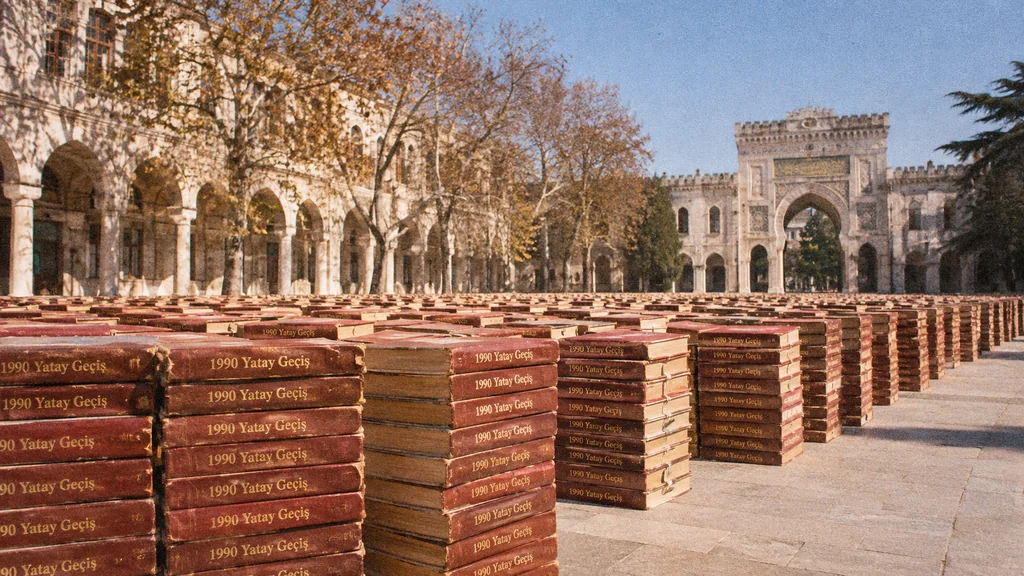
Image composition · tobriefThe cancellation of the degree held by Ekrem Imamoglu, the jailed mayor of Istanbul, a presidential candidate for the Republican People’s Party (CHP), Turkey’s main opposition party, and President Recep Tayyip Erdogan’s main rival, has reportedly become final (Euronews, Stockholm Center for Freedom). Reports on 19 November said Danıştay, Turkey’s highest administrative court, had rejected his appeal (Sabah, T24), while his lawyers say they have not been notified of the decision (Cumhuriyet). His eligibility for the next presidential election is at stake: the constitution requires every candidate to have completed higher education (Constitution).
The pro-government newspaper Sabah reported that the court’s 8th Chamber had rejected the appeal at 12:18 on 19 November (Sabah). That same day, his lawyers said the decision did not appear in UYAP, the Turkish courts’ electronic system (Medyascope). The following day, the opposition newspaper Cumhuriyet reported that the case still appeared to be "under review". It also reported allegations by opposition officials that Sabah had published a decision before it appeared in the system (Cumhuriyet).
That discrepancy does not establish whether the court issued a decision that had yet to be entered into the system or whether the reporting was premature. Neither the decision’s text, number or reasoning nor the original documents from 1990 have been made public. What is known about the substance of the case comes from the lower courts.
From Cyprus to Danıştay
Imamoglu was studying business administration at Girne American University in the Turkish Cypriot north of Cyprus when he transferred to Istanbul University in 1990 (T24). In March 2025, Istanbul University’s governing board cancelled the transfers of 38 people from that year. It also cancelled the degrees of 28 of them who had graduated, including Imamoglu (Arel News). It cited a "manifest error", a report by Turkey’s higher education authority, YÖK, and a document from the prosecutor’s office. Two lower administrative courts rejected Imamoglu’s challenges in January and May 2026, and the case reached Danıştay in June (Karar).
According to press accounts of the first-instance court’s ruling, YÖK had not recognised the university in Cyprus in 1990; recognition came in 1993 (İlkses). The limit for transfers from institutions abroad was three places, but the university admitted 48 students without ranking them by grades (CE Report). Imamoglu’s average was 2.50, while other applicants had averages ranging from 2.75 to 3.54, so a ranking would have excluded him (Ekonomim).
The court also found that the register listed Imamoglu and eight others as having come from another university (İlkses). It described the irregularities as serious and systematic, found that Imamoglu could not have been unaware of them, and applied case law allowing a decision to be revoked without a time limit when there is a clear administrative error (CE Report).
The defence points to the time that has passed. Imamoglu’s lawyers cite a university letter from 2020 and a note from 2024 that described his transfer and graduation as lawful, with no finding that he had acted fraudulently (BRT). They argue that revocation after about 35 years violates legal certainty and acquired rights (Ekonomim). One side argues that the passage of time cannot make a degree that was unlawful from the outset valid. The other says the state cannot withdraw, decades later, what it approved.
The degree is one of two legal cases Imamoglu faces. On 18 November, an Ankara court sentenced him at first instance to two years and one month in prison over voting at the CHP’s 2023 congress; that ruling has not become final (Sözcü, To Brief). CHP leader Ozgur Ozel said on 29 October that Imamoglu remained the party’s candidate and that Mansur Yavas, the mayor of Ankara, would be considered if Imamoglu could not run (24 Saat). After the new reports, Imamoglu’s candidacy office posted "Don’t be afraid!" and "Coward!" without naming anyone they were addressing (Medyascope).
The final decision rests with YSK
The constitution does not specify a particular degree. It requires a candidate to have "completed higher education", a requirement repeated in electoral law 6271 (Law 6271). No other valid, recognised qualification held by Imamoglu has been publicly identified, and the university also cancelled his master’s degree in July 2025 (Stockholm Center for Freedom). The remaining avenue, an individual application to the Constitutional Court, concerns violations of fundamental rights. It does not retry the merits of the case or automatically restore the degree (Constitutional Court).
Turkey’s Supreme Election Council (YSK) has issued no decision on Imamoglu, and the regular presidential election is expected in 2028, with no official date set (Euronews). Once candidates file their nominations, YSK will check their eligibility through a provisional list and objections. Under Article 79 of the constitution, its decisions cannot be challenged before any other body (Constitution).
If the cancellation is not overturned, Erdogan’s main rival will come before YSK without proof of the higher education the constitution requires. YSK will have the final say on his candidacy.
Details about this article
- Model:
- claude-opus-5-5
- Generated:
- 11/20/2026, 4:26:38 AM
- Pipeline run:
- incremental_20261120_033010
- Watermark:
- SynthID (Google's invisible watermark)
- Human review:
- None before publication