Algeria clears Niger troops, mission undisclosed
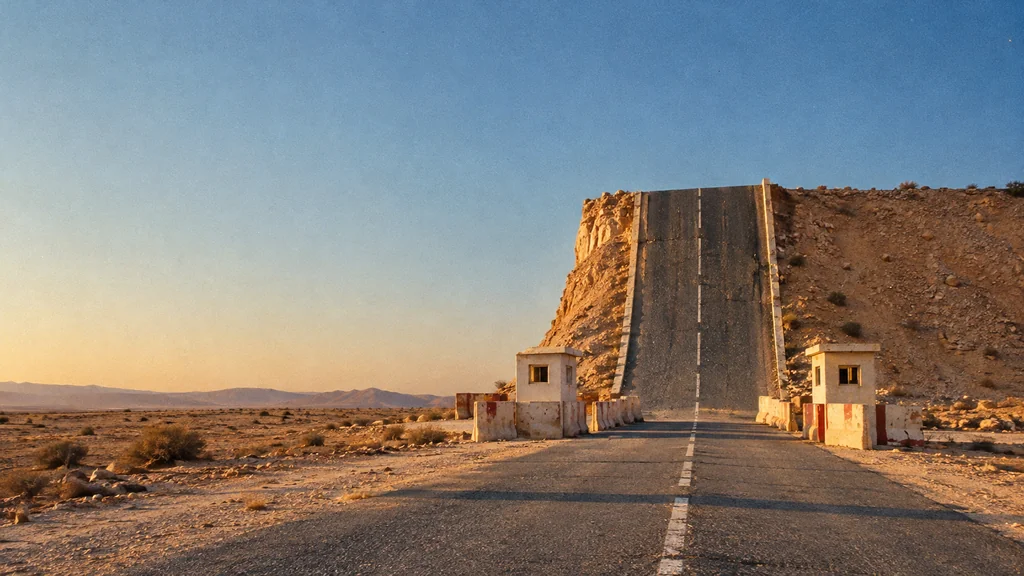
Algeria has approved a deployment whose route and terms remain undisclosed.
Image composition · tobriefAlgeria's president now has legal authority to send army units to Niger. Both chambers of parliament approved his request on 25 October (APS, upper house, APS, lower house). The public, however, cannot verify the lower-house vote or see what mission parliament approved.
No troops have moved yet. A Nigerien security source told Reuters that no Algerian soldiers had officially deployed under what the agency calls the country's first foreign troop deployment since 1973 (Reuters).
A two-thirds rule and a missing number
Algeria's 2020 Constitution sets a high bar. Under Article 91, the president may send army units abroad only after two-thirds of the members of each chamber approve (Algerian Constitutional Court).
The upper house, the Council of the Nation, cleared that bar on the record. It counted 148 votes in favour out of 148 cast, above the 116 needed in its 174-seat chamber (APS). The unanimity covers members who voted, not every seat.
The lower house, the People's National Assembly, published no tally. Its official account says only that members approved by an "absolute majority" (APS). That phrase usually means more than half, and the Constitution demands two-thirds. The published record therefore cannot show whether the chamber met its constitutional threshold, though the gap proves no failure either.
What parliament approved, and what nobody has seen
Foreign Minister Ahmed Attaf made the government's case in closed sessions. According to TSA-Algérie, he cited Algeria's energy interests and a bilateral agreement with Niger as the basis (TSA-Algérie). The government has not described that agreement's terms.
The paperwork behind the vote remains private. Nigerien Defence Minister Salifou Modi signed a defence protocol in Algiers on 21 October, and it has not been published (Xinhua). The president's notification to parliament is unpublished too.
That secrecy produces a puzzle. Le Monde reports that the text parliament approved did not name a destination (Le Monde), while the chambers' own summaries name Niger. With the notification withheld, readers cannot tell which is accurate. Neither chamber disclosed a troop number, departure date, duration or rules for using force.
Even the site is unsettled. Reuters reports that a parliamentary statement named Madama, a former French outpost in Niger's far north near Libya (Reuters). Le Monde traces the name to a Facebook post by former ambassador Amar Belani, who offered it only as a possibility (Le Monde).
Algeria does have a concrete stake in the region. Niger's government says drilling began on 13 August 2026 at Sonatrach's Kafra exploration block near the Algerian border (Nigerien government). An exploration well shows an interest. It does not explain why troops would go, or where.
The 1973 label also needs a qualifier. Algeria's Defence Ministry said four Su-30 fighters and a refuelling aircraft landed in Niamey on 30 August at Niger's request (Algerian Defence Ministry). What would be new is a ground force sent through the constitutional vote.
A possible ground force where Europe's missions ended
Europe's footprint in Niger has shrunk. After France withdrew, the EU's military and civilian missions there also ended at Niamey's request, according to Germany's Foreign Office (German Foreign Office). Italy still runs a training mission at Niamey airport, authorised for up to 485 personnel, a ceiling rather than a confirmed count (Italian Senate).
No European government response to the vote has surfaced, and no coordination with EU institutions has been documented. The European interest is positional. If Algeria sends soldiers, Niger's military government gains a ground partner on its northern border after most European missions have gone.
The record supports one firm conclusion. Algeria's president holds parliamentary authority to deploy, while the mission's size, site and mandate, and the lower-house count that would show the vote was valid, remain undisclosed. Algiers holds the notification, the protocol and any mission order, and those would settle the terms. Whether the force achieves anything can only be judged once it is on the ground.
Details about this article
- Model:
- claude-opus-5-5
- Generated:
- 10/26/2026, 1:33:43 AM
- Pipeline run:
- eu_pipeline_20261026_005007
- Watermark:
- SynthID (Google's invisible watermark)
- Human review:
- None before publication