AI-assisted proof of Riemann hypothesis passes computerised check
AI Daily Synthesis
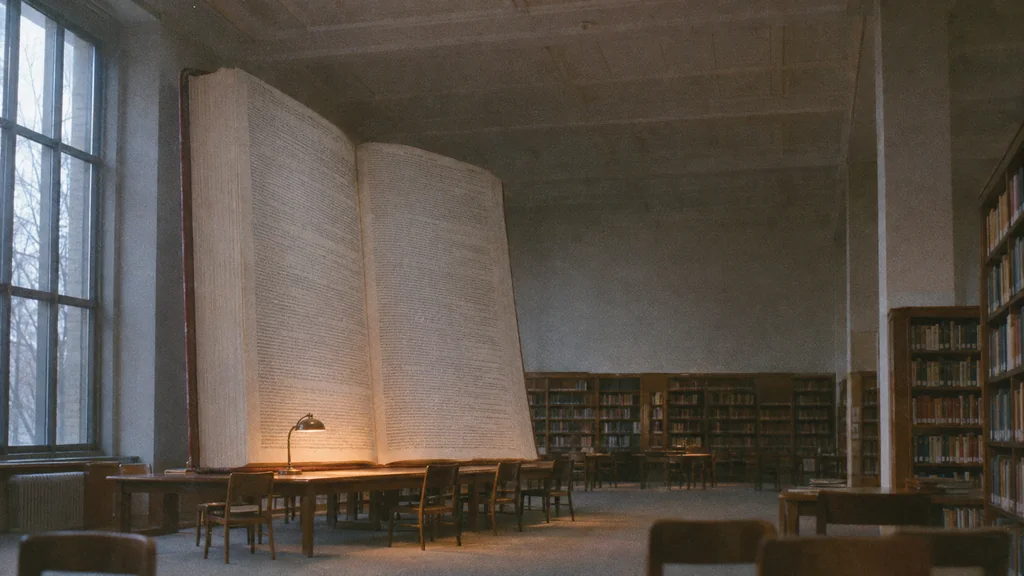
Image composition · tobriefIndependent proof-checking programmes confirmed on 21 November that a proof of the Riemann hypothesis is logically valid (Lean/Mathlib). It is one of the seven Millennium Prize Problems, with a $1 million prize (Clay). The proof was written by mathematician Levent Alpoge, an Anthropic employee, together with Claude, the company’s AI model. It has passed a machine check, but no human has yet understood it.
On 20 November, Alpoge posted a four-page note on his personal website saying he “believes” he has found the proof. He also published about 17 million lines of code in Lean, a language in which a programme checks every step of a proof. He says that, written as conventional mathematical text, the proof would run to more than 250,000 pages, the equivalent of 500 thick volumes (Alpoge’s note).
What the hypothesis says
Prime numbers, which are divisible only by themselves and 1, seem scattered. But if you count how many there are up to a given number, the count follows a smooth average trend with fluctuations around it. It is like summer temperatures, which rise steadily but include scorching days and cooler ones. Each prime appears as a factor in a function called the Riemann zeta function. A classical formula shows that each of its zeros, each point where the function equals zero, adds one of those fluctuations (Clay/Bombieri).
Each zero is a point on a plane with two coordinates, like a point on a map. The vertical coordinate sets the rate of its fluctuation. The horizontal one works like a volume knob: it controls how much the fluctuation grows as the numbers get larger. The hypothesis says that all the “non-trivial” zeros have that knob at the same position, 1/2.
A number raised to the power of 1/2 is its square root. So no fluctuation grows faster than that, and the error in estimating the number of primes remains roughly that size (Gonek). Many theorems have already been proved on the condition that the hypothesis is true. With an accepted proof, they would hold unconditionally (Clay/Bombieri).
What a machine checks
Lean works like an auditor verifying that every line of a vast ledger adds up, without being able to tell you why the company makes a profit. Andrew Sutherland, a mathematician at the Massachusetts Institute of Technology (MIT), reported that proof-checking programmes written by other people also accepted the proof, like two accounting firms independently checking the same ledger. He also reported that the proof relies on no hidden additional assumption (MIT report).
Mathematician Kevin Buzzard had told Scientific American that the code should be checked for redefined symbols that might change the theorem itself. The check found that the proof establishes the definition of the hypothesis already in Mathlib, Lean’s shared mathematics library (Scientific American, Lean/Mathlib). Sutherland notes that all this assumes Mathlib’s definitions mean what they are intended to mean. He adds that some further checks were still running when he wrote his report (MIT report).
Computers have checked proofs for decades, from the four-colour theorem to the Kepler conjecture (AMS, Flyspeck). AlphaProof, an AI system, has also solved Mathematical Olympiad problems (AlphaProof). If this work holds up, the new development will be that AI helped produce a proof of a longstanding research problem. Mathematician James Maynard calls a fully confirmed solution a historic milestone and suspects this proof will turn out to be correct once the checks are complete (Nature).
Alpoge writes that he directed the research and that “Claude far surpassed me near the finish line” (Alpoge’s note). But he names only “Claude”, without specifying a model version or providing conversations, so no one can distinguish the human’s steps from the machine’s. The announcement came a day after Anthropic’s listing on Nasdaq, on 19 November (The Verge, To Brief). He calls a cynical reading of that coincidence “false” (Alpoge’s note).
The proof people can read
That same day, Ravi Vakil, a mathematician at Stanford University, posted a 940-page draft by Alessandro Maria Masullo concerning a broader version of the hypothesis, written by a human without AI (Vakil). Because it can be read page by page, its weaknesses became apparent that day. A theorem in the final chapter still contains the placeholder “Insert statement”, and Vakil wrote that problems had been reported to him (draft). Alpoge’s proof presents the reverse situation: no one can read it, but machines have checked it without finding an error.
The Clay Mathematics Institute still lists the problem as “unsolved”. Its prize rules require publication in a peer-reviewed journal, a wait of at least two years after publication and general acceptance by the mathematical community (Clay rules).
The padlock on your bank’s website relies on how hard it is to break a huge number into the primes that make it up. The Riemann hypothesis says nothing about that, and checking whether a number is prime can already be done without it (AKS).
The machines have given their verdict on the logic. Mathematicians face something more unusual: learning to read a proof that, it seems, already holds.
Details about this article
- Model:
- claude-opus-5-5
- Generated:
- 11/21/2026, 5:41:33 PM
- Pipeline run:
- incremental_20261121_163010
- Watermark:
- SynthID (Google's invisible watermark)
- Human review:
- None before publication