Austria’s four asylum transfers stand alone
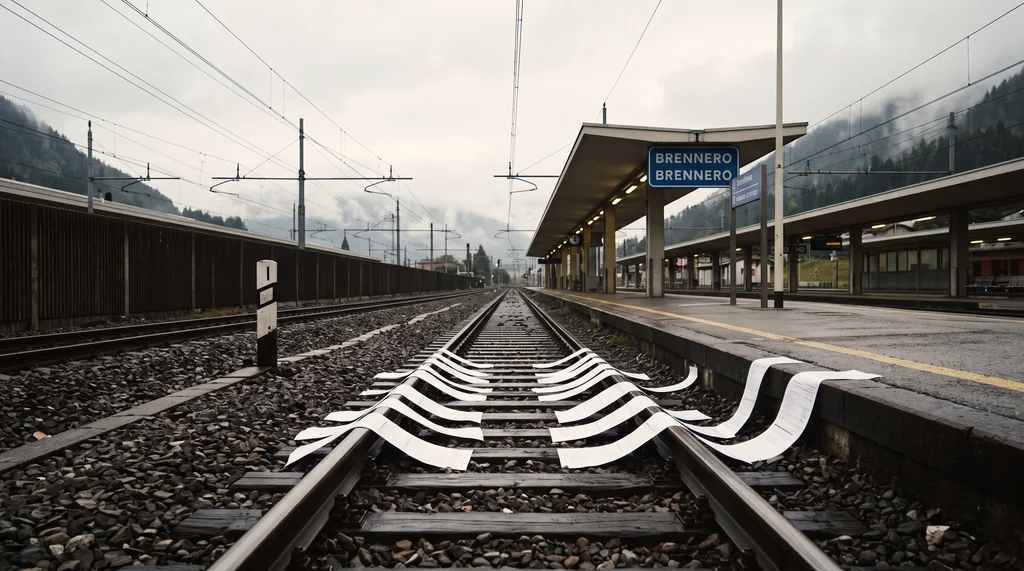
Europe’s transfer system reaches Italy, then folds into paperwork.
Image composition · tobriefAustria has sent four asylum seekers back to Italy since the EU's new migration rules took effect on 12 June. They travelled by train and bus, without police escorts (Die Presse, Kurier).
Four people is a small number. It is also the entire publicly verified record of responsibility transfers to Italy under the Asylum and Migration Management Regulation (the AMMR, the EU's new law replacing the old Dublin system for deciding which country must handle an asylum claim). Several governments say they are doing the same. The results so far suggest that Italy's willingness to cooperate, not the legal text, decides whether the system works.
Requests up, transfers stuck
The clearest official record comes from the European Commission (the EU's executive, responsible for monitoring the rules). Between 12 June and 7 July, eight member states submitted 12 transfer requests to Italy. Italy refused all 12 (Commission assessment, 2EU Brussels). Austria's four transfers came later, but they remain the exception.
Germany, the country that sends the most requests by volume, has no verified completed transfer since the pact began. Its most prominent August case collapsed: a 22-year-old Somali woman was scheduled for transfer from Nuremberg, but Italy rejected the request and a Bavarian church offered sanctuary (Tagesschau). That case involved an entry from late March, before the new rules applied, so it tested old procedures rather than the pact itself.
The pattern is not new. Under the old Dublin regulation, Italy blocked regular returns from Germany for years. According to Berliner Zeitung, Germany lodged roughly 35,000 transfer requests during Meloni's tenure and saw about 15 completed. The exact figures are disputed, but the scale of the gap is not.
Beyond Austria and Germany, the picture thins out fast. Finland has sent notices to Italy but confirmed no completed transfer as of 21 August (Helsingin Sanomat). Sweden's migration minister's office said transfers had occurred, but no agency has published numbers or dates (Euronews). The Netherlands announced it was starting the transfer process, a procedural step rather than a result (Upday NL). France and Spain have refused outright, preferring cooperation over bilateral pressure on Rome (ANSA).
The clock and the leverage gap
Rome argues the pact reset older cases to zero and only post-12 June applications count. No public legal document confirms that old files were formally extinguished under EU law. That claim should be read as a political position, not settled fact.
A deadline works against requesting states too. Under both old and new rules, a transfer must happen within six months. Miss it, and responsibility reverts to the sender — a principle the EU Court of Justice confirmed in its Shiri ruling. A government can win the legal argument and still lose the person to delay.
The AMMR was supposed to solve this by embedding transfers in a broader bargain: frontline states like Italy keep first-entry responsibility, but other EU countries must help through relocating people, paying into a solidarity fund, or providing operational support (AMMR text). The public record so far does not show a quantified 2026 solidarity allocation for Italy that offsets the mounting transfer pressure.
Both camps can say the law is on their side. Austria, Germany, Finland and Sweden frame transfers as enforcing agreed rules. France and Spain see the same rules and choose diplomacy. For asylum seekers caught between these positions, the result is continued limbo: cases contested between countries, challenged in national courts, or delayed past the deadline until responsibility shifts by default.
The power dynamic is plain. The Commission can document Italy's refusals, but it cannot put people on buses. Italy's administrative cooperation is the enforcement point. Austria's four transfers prove the system can physically move a person across a border. The solidarity that was supposed to make this bargain acceptable for frontline states has produced no equivalent proof. The Commission, which designed this deal, owes that evidence at its next assessment.
Details about this article
- Model:
- claude-opus-4-6
- Generated:
- 8/22/2026, 1:57:09 AM
- Pipeline run:
- eu_pipeline_20260822_005006
- Watermark:
- SynthID (Google's invisible watermark)
- Human review:
- None before publication