Inspection: Dead firefighter's air cylinder refilled in Zefyri
AI Daily Synthesis
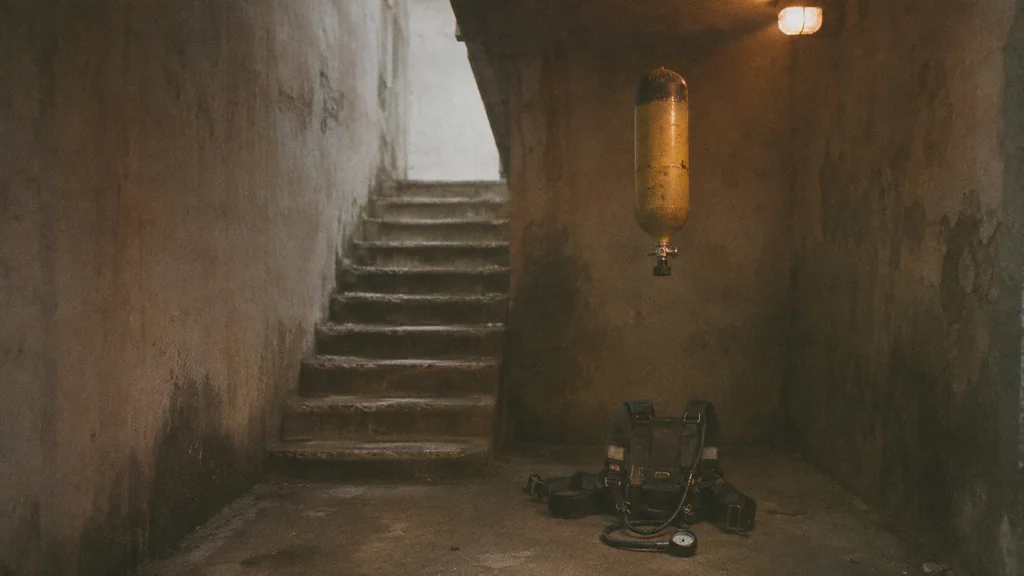
Image composition · tobriefThe compressed-air cylinder used by Ilias Valatsos, one of the two firefighters who died in the fire in Zefyri, an area west of Athens, on 14 November, was not found with the rest of his equipment. The scene examination report says that "during the incident, it was collected, refilled and fitted to another breathing apparatus unknown to us" (iefimerida, Documento). Since the first day, colleagues and the Greek Fire Service have asked whether the two men ran out of air in the basement. Valatsos’s cylinder can no longer show how much air it had left.
The backplate of his Dräger breathing apparatus was found with his equipment, along with its regulator, hoses and pressure gauge (Eleftheros Typos). The cylinder is a separate part that attaches to the backplate, so it could be missing while the other parts remained in place. Valatsos, 44, and Giorgos Zympidis, 23, died from inhaling smoke and soot, according to the initial forensic findings (ERT). The scene examination found no wall or floor collapse, as had initially been reported (CNN Greece). A 34-year-old woman and her two underage daughters face felony arson charges over the start of the fire, and an arrest warrant has been issued for her husband (ERT,).
Two entries, one account
The sequence of events rests mainly on the sworn testimony of a trainee firefighter, published by iefimerida on 16 November (iefimerida). First, the crew sprayed water from the street. Valatsos and Zympidis put on breathing apparatus, entered the ground floor briefly and came back out. When a second fire engine arrived, Valatsos said the fire was in the basement and went back in with Zympidis, carrying a high-pressure hose line.
A third firefighter followed them, came out so a second hose line could be prepared, then went back in. A few minutes later, he shouted that he had lost sight of them. The trainee and the driver found him lying at the turn in the stairs, unable to get up, with his apparatus sounding a low-air warning (iefimerida). They pulled him out with another colleague’s help. He survived with injuries. The trainee and the driver then went back in. The trainee advanced with a rope and felt Valatsos’s helmet with his foot, but they could not carry him out. They retreated as the air in their own apparatus ran low, and the trainee testified that his cylinder was empty when he came out.
The scene examination found Valatsos near the bottom of the stairs and Zympidis farther into the basement. It records the time of the alert as 11:41 (iefimerida). News247 reports that the two men were found with their masks loosened and estimates that they had run out of air (News247).
How long a cylinder lasts
The apparatus is filled with compressed air, not pure oxygen. Newsbomb reports that the two men were using six-litre cylinders pressurised to 300 bar. It also calculates that a full cylinder of that kind lasts up to 22 minutes during heavy work (Newsbomb). The calculation is straightforward: six litres compressed to 300 bar provide about 1,800 litres of air. Scott’s manual for its Sigma 2 apparatus calculates the rated duration using a consumption rate of 40 litres per minute (Scott Sigma 2). At that rate, the same cylinder would theoretically last about 45 minutes.
The 22-minute estimate corresponds to roughly twice that consumption rate. A study of simulated firefighting records breathing rates above 40 litres per minute (study). The faster a firefighter breathes, the faster the cylinder empties. The time is shorter still if the cylinder was not filled to 300 bar. Some of the air is reserved for getting out: it is what remains when the alarm begins to sound.
Giannis Artopios, the Greek Fire Service’s deputy spokesperson, said that recorded location data showed the operation lasted about 30 to 40 minutes. He also said the two men were found about 40 minutes after they entered and suggested that increased consumption may have reduced their air supply (Ethnos). That time measures the operation, rather than continuous use of one cylinder: the two men had left the building between their two entries.
Who will provide the answer
The Greek Fire Service’s Arson Crimes Directorate (DAEE) seized the two dead firefighters’ breathing apparatus for laboratory examination, according to ANT1 (ANT1). Citing anonymous "authoritative sources", iEidiseis reports that the Fire Service’s equipment vehicle took Valatsos’s cylinder to be refilled. According to the same sources, it was mixed with about 40 others, and its identity is no longer known (iEidiseis). Identifying it now depends on equipment registers, serial numbers and filling records.
Fire Service spokesperson Efi Papavramopoulou said the two men had full equipment and followed protocol (EfSyn). Kostas Tsigkas, a representative of Fire Service officers, defended their entry, which was made to put out the fire and check whether anyone was trapped (in.gr). Kostas Papantonis, president of the contract firefighters’ union, publicly asked how long the air in the cylinders lasted (Dnews). He said there should have been an officer in charge, while acknowledging that he did not know the specific equipment (Ta Nea). The Fire Service says the officer in charge of the first fire engine coordinates operations at the scene (ERT). Full equipment does not answer the question about air: wearing breathing apparatus does not establish how full a firefighter’s cylinder was.
The Fire Service has announced a sworn administrative inquiry (EDE) "into the causes and circumstances of the accident" (Enikos). Public reports differ on who ordered it. Fosonline attributes the order to the Fire Service chief (Fosonline); in.gr attributes it to Minister Evangelos Tournas (in.gr).
The laboratory examination will establish what the seized apparatus showed. For Valatsos’s cylinder, the scene examination report does not say who collected it or when it was refilled. The administrative inquiry must answer those questions, along with which apparatus the cylinder was fitted to and whether its serial number and filling records survive.
Details about this article
- Model:
- claude-opus-5-5
- Generated:
- 11/19/2026, 5:26:17 PM
- Pipeline run:
- incremental_20261119_163016
- Watermark:
- SynthID (Google's invisible watermark)
- Human review:
- None before publication