Belgium’s VAT fight stalls €10 billion budget
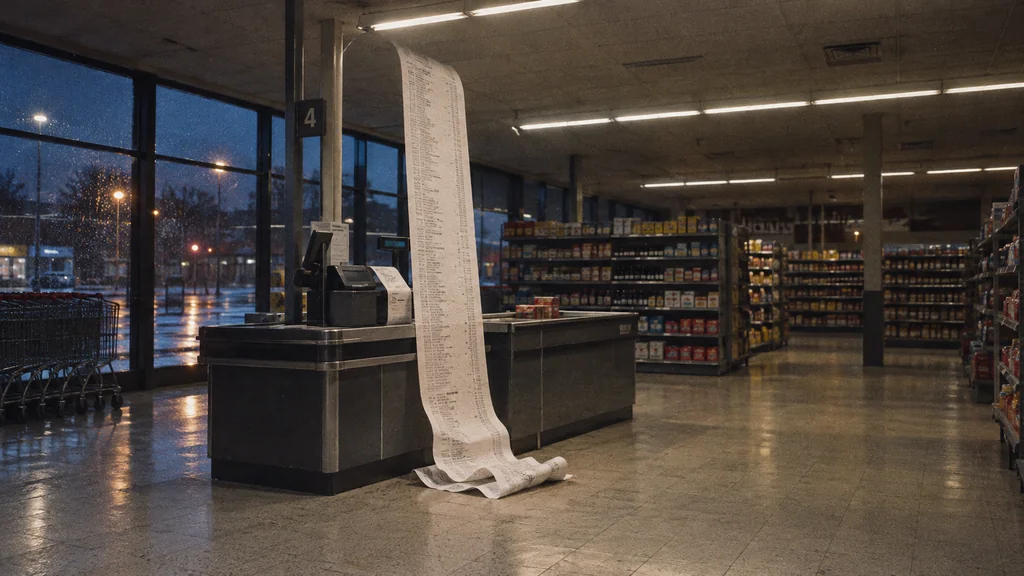
Belgium’s budget talks stall over who will pay at the till.
Image composition · tobriefBelgium's senior ministers met on Saturday afternoon and broke up that evening without a budget deal, stuck mainly on whether shoppers should pay more VAT (De Standaard, RTBF). Prime Minister Bart De Wever wants to improve the public finances by around €10 billion by 2029 (Business AM). His partners accept a target of that size. They disagree over whether shoppers, workers or users of public services should carry it, and Belgium owes the European Commission a draft budget on 15 October (Belgian Chamber).
A tax at the till to pay for cheaper labour
VAT, or value-added tax, is a percentage added to the price at the checkout. De Wever's reported plan would raise the standard rate, which covers most goods and services, from 21% to 22%. It would also merge the reduced 6% and 12% rates into a single 9% rate, with fruit and vegetables possibly taxed at zero (Brussels Times, RTL Info). The government has not published which products would land in which band, so the list is still provisional.
Simple arithmetic shows what is at stake. In a hypothetical example worked through by De Morgen, an item costing €100 including 6% VAT would cost about €102.83 at 9%, and about €94.34 at 0% (De Morgen). Those prices assume shops pass the full change on to customers, which they do not always do. Under that same assumption, goods in today's middle band would get slightly cheaper and standard-rate goods slightly dearer.
De Wever wants the VAT money to fund faster cuts in taxes on work, betting that cheaper labour leads firms to hire more (Brussels Times). Whether a household comes out ahead therefore depends on what it buys and on how much it gains from those cuts, and the plan has not said who would receive them. The sum available has already shrunk, from about €4.5 billion to €2.5 billion, as exemptions and offsets were added (De Standaard).
The CSC trade union commissioned a simulation that put the cost at €348 a year for an average worker (CSC). That figure comes from the union's own scenario, not from an agreed package.
The alternatives move the bill elsewhere
MR, the Francophone liberal party in the coalition, refuses to raise part of the money at the till. Its president, Georges-Louis Bouchez, argues that higher taxes hurt workers and the middle class. He cites a coalition rule that new taxes may supply at most one ninth of the total budget effort, meaning the combined package of savings and extra revenue (MR).
The party offers its own arithmetic instead. It would reach €10 billion with €4 billion from measures it says were already decided, €1.5 billion from growth and €4.5 billion of spending cuts (MR). Counting growth means assuming a bigger economy will bring in more tax at today's rates, which is a forecast rather than money in hand. MR has not named the cuts, so nobody can yet tell who would lose out under its plan.
Cuts face resistance of their own. Les Engagés and the Flemish socialists of Vooruit, both coalition partners, oppose roughly €2 billion of health savings (RTL). The reporting does not spell out how those savings would work, so patients might face higher costs, longer waits or fewer services, depending on the design.
Why Brussels is watching
Eurostat recorded Belgium's 2025 deficit (the gap between what the government spends and what it collects) at 5.2% of GDP, the value of everything the economy produces in a year, with debt at 107.9% (Eurostat). The EU's reference value for deficits is 3%, and EU governments, acting through the Council, have given Belgium until 2029 to correct what they judge an excessive deficit (Council recommendation).
Missing this week's deadline would not be new. Belgium missed last year's October deadline and filed its 2026 plan on 14 January 2026 (Eurogroup), and the EU rules impose no automatic fine for lateness (Regulation 473/2013).
A late filing is the smaller problem. Belgium's deficit sits well above the EU's reference value, and its coalition agrees that the gap must close. What it has not settled is how to split the adjustment between shoppers at the till, workers waiting for tax cuts and patients in the health system. Until the VAT product list is fixed, nobody can say exactly what the till option would cost any given household.
Details about this article
- Model:
- claude-opus-5-5
- Generated:
- 10/11/2026, 1:35:03 AM
- Pipeline run:
- eu_pipeline_20261011_005006
- Watermark:
- SynthID (Google's invisible watermark)
- Human review:
- None before publication