Berlin’s Ukraine plan awaits Moscow and Washington
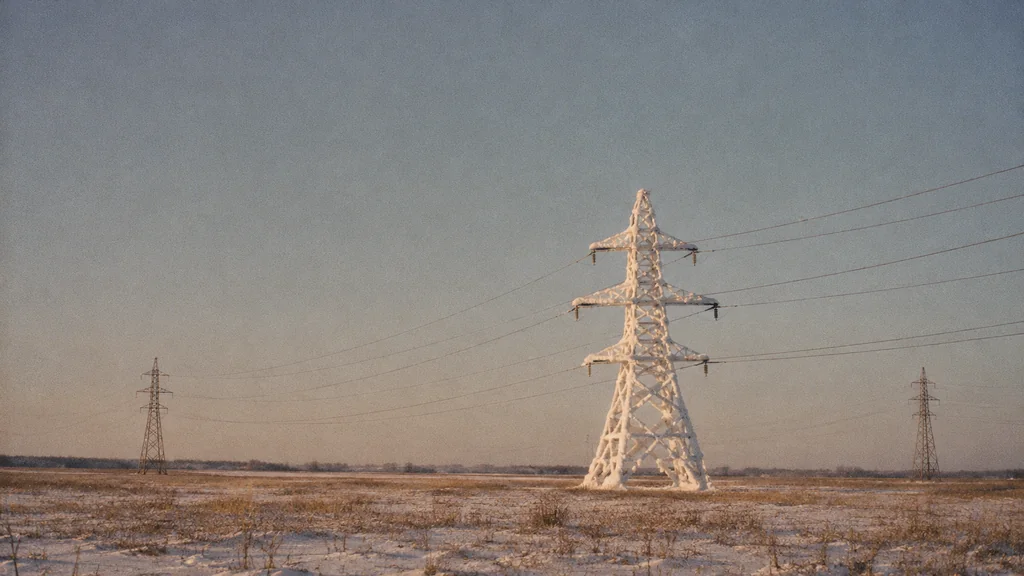
Europe asks for a winter energy pause that Moscow has already rejected.
Image composition · tobriefThe leaders of Germany, France, Britain and Ukraine asked Russia on 19 November to stop attacking energy facilities through the winter, calling the pause a first step toward ending the war (Four-leader statement). Their joint text sets out what Europe wants from a settlement. Russia has rejected comparable pauses, the United States did not sign, and coalition governments have yet to commit a force.
The statement came out of a Berlin meeting of the Coalition of the Willing. France, Britain and Germany assembled this voluntary group of nearly 40 countries to back Kyiv and plan for a possible peace (German government).
Moscow had already given its answer. On the same day, Putin ruled out a moratorium on energy strikes and on fighting in the Black Sea, according to Reuters. The leaders asked anyway. The simplest explanation is that they wanted the request on record, so that continued strikes look like Russia's choice. That is an inference, and the statement does not say so.
The request also covers the Black Sea, so that Ukrainian food exports can move. It names no start date, no list of protected sites, no monitors and no penalty for violations. Even if Moscow accepted, those gaps would invite arguments over who broke the pause first.
Guarantees that start only after the guns stop
The security guarantees are conditional too. They would apply only after a ceasefire (Four-leader statement). The text proposes that the United States lead a system to check whether the ceasefire holds, and that a European-led Multinational Force Ukraine could deploy.
If Russia attacked again, the signatories promise a legally binding commitment to respond. Each government would still act under its own national procedures, and the text does not say what the response would be. Who sends troops remains undecided.
Military planning has moved faster than the politics. Poland's defence ministry calls the Koalicja 26.2 exercise the first drill of the planned force, with 11 countries taking part (Polish defence ministry). France says about 1,100 of its personnel joined when the exercise began on 9 November, rehearsing rapid deployment after a ceasefire (Élysée).
Those troops are training in Poland, not Ukraine. Italy shows how much each capital keeps in its own hands. Prime Minister Giorgia Meloni backs the guarantee work but repeated that Italian soldiers will not go to Ukraine (LaPresse).
The money is pending as well. A day before Berlin, the European Commission proposed lending Ukraine up to €45 billion more (Commission/EEAS). That requires changing the EU's long-term budget, which needs unanimity (any one of the 27 governments can veto) and the European Parliament's consent. Berlin's backing helps, but the decision sits elsewhere.
A seat at a table Moscow has not offered
Europe also wants a place in talks with Russia, which have so far run between Ukraine, Russia and the United States. Chancellor Friedrich Merz rejected a new "Yalta," in which great powers settle Europe's future over Europeans' heads (Deutsche Welle).
A European negotiating team now exists, drawn from France, Germany, Italy, Poland, Britain and the EU institutions. Moscow has not agreed to let it in. Kremlin aide Yuri Ushakov said on 16 November that Russia had not accepted a wider table (Reuters). Meloni added that the team still lacks a clear mandate on what it may offer or refuse (LaPresse).
Washington's position is just as open. Envoys Steve Witkoff and Jared Kushner attended and Donald Trump joined by phone, yet the United States did not sign the statement (German government). Nobody has said whether it would lead the monitoring system the text assigns to it, or back a European force.
What Berlin did fix is Europe's price. Borders must not change by force, Russian assets stay frozen until Moscow pays, and any concession touching the EU or NATO needs those members' consent (Four-leader statement).
Those terms tell Moscow and Washington what Europe will demand and what it is prepared to fund. Berlin produced a common position, but secured neither a Russian pause nor agreed American and European commitments to enforce one. The next answers belong to the Kremlin on the truce and to Washington on monitoring. The loan waits on all 27 EU governments and the Parliament, and troops wait on each coalition capital.
Details about this article
- Model:
- claude-opus-5-5
- Generated:
- 11/20/2026, 1:52:02 AM
- Pipeline run:
- eu_pipeline_20261120_005008
- Watermark:
- SynthID (Google's invisible watermark)
- Human review:
- None before publication