Black Sea drones outpace Bulgaria’s navy
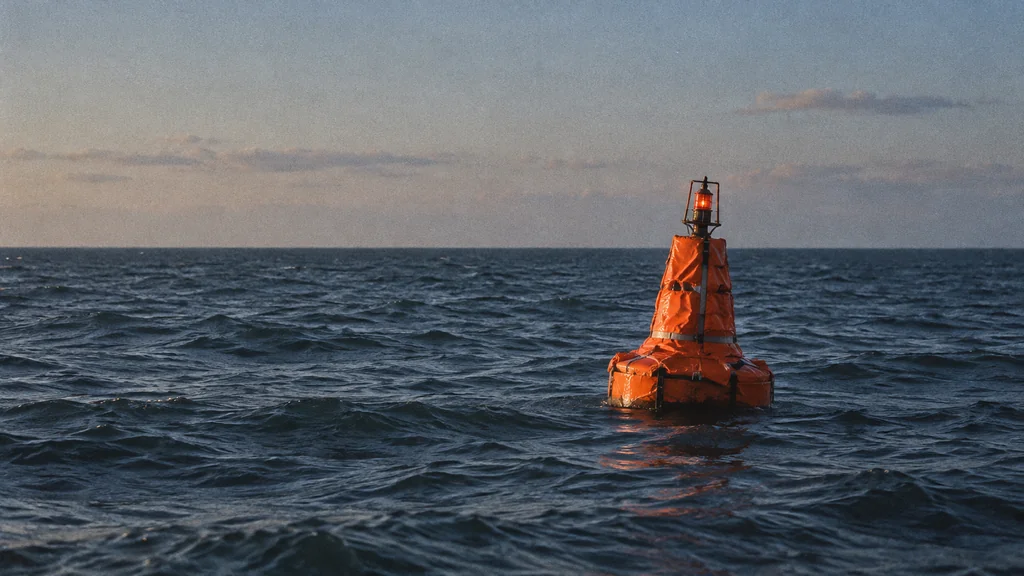
The Black Sea’s warnings reach ships before protection does.
Image composition · tobriefSea drones struck the container ship CONTSHIP JET off Bulgaria's coast on 28 October, and all 18 sailors aboard were rescued (Bulgarian Transport Ministry). A French patrol aircraft saw the drones coming, but Bulgaria's naval commander says none of his forces could reach them in time (bTV). The same day, Bulgaria, Romania and Türkiye agreed to share warnings, yet none of the three announced escorts or patrols to stop the next attack (The Sofia Globe).
Spotted, warned, rescued
The Liberian-flagged ship was sailing from Haifa to Constanța, Romania's main Black Sea port (AP). Bulgaria's Defence Ministry says its systems registered three drone impacts on the hull (Bulgarian National Radio).
The crew abandoned ship about 17 nautical miles east of Cape Kaliakra. Bulgaria sent three naval vessels and a Border Police boat to pick them up (Bulgarian Transport Ministry). That evening the sailors reached Varna's maritime station aboard the rescue vessel Proteo (Radio Varna).
This was the latest in a month of strikes on merchant ships off Bulgaria and Romania. One of the earlier targets was the KHORYV, whose missing crew French and Romanian aircraft were still searching for last week (To Brief).
Dangerous cargo in the water
A maritime-security source told Reuters that evening that the ship was badly damaged and listing (Business Day). By the next morning, the Bulgarian outlet Maritime.bg reported that it had sunk. It cited two sources and said official confirmation was still pending, so the sinking remains unconfirmed (Maritime.bg).
The risk to other ships is better established. A Bulgarian navigation warning reports more than 20 containers drifting from the vessel, some holding flammable gases, flammable liquids and other dangerous goods (Varna navigation warnings). For any ship crossing that stretch of sea, these are floating hazards that are hard to spot.
On the coast, Varna's regional governor said a first inspection found no visible pollution. He said water would be sampled at five points along the shore (DarikNews). That was an early visual check, not a laboratory result.
Warning without defence
Rear Admiral Kiril Mihaylov, Bulgaria's naval commander, explained the gap himself. The drones moved at about 26 knots, and no Bulgarian force was close enough to catch them. So he sent his ships to stand by and rescue the crew (bTV).
That afternoon in Sofia, defence ministers Dimitar Stoyanov of Bulgaria, Ștefan-Radu Oprea of Romania and Yaşar Güler of Türkiye condemned the attacks. They agreed to share early warnings and reports of ships and threats at sea, and to continue the talks in Bucharest and Ankara (Romanian Defence Ministry). Oprea asked NATO for help against drones, and Güler said the three militaries could take measures. None of them named an escort or a patrol mission (The Sofia Globe).
NATO's own response follows the same pattern. On 20 October it promised patrol aircraft, radars, drones and explosives specialists, but no mission to intercept attackers (Reuters).
Nobody has claimed the attack, and Mihaylov said he could not tell where the drones were launched. Earlier this month, Prime Minister Rumen Radev said the logic of the attacks pointed to Moscow, while admitting Bulgaria could not prove it (AP).
On 28 October, the system did what it was built to do. A French aircraft spotted the threat, Romania's rescue centre logged the hit at 12:01, and Bulgarian crews brought every sailor ashore (Bulgarian Transport Ministry). Every measure announced since, from NATO's package to the Sofia agreement, adds more surveillance over the western Black Sea. None publicly gives any navy the job of escorting merchant ships or intercepting drones (Reuters, Romanian Defence Ministry). Published commitments do not reveal every military deployment. On the public record, though, the plan for the next attack is the one that worked this week: see it coming, warn the crew, and pull the sailors out afterwards.
Details about this article
- Model:
- claude-opus-5-5
- Generated:
- 10/29/2026, 7:24:17 AM
- Pipeline run:
- eu_pipeline_20261029_005007
- Watermark:
- SynthID (Google's invisible watermark)
- Human review:
- None before publication