Bloomberg: YouTube reaches $3 billion agreement with US schools
AI Daily Synthesis
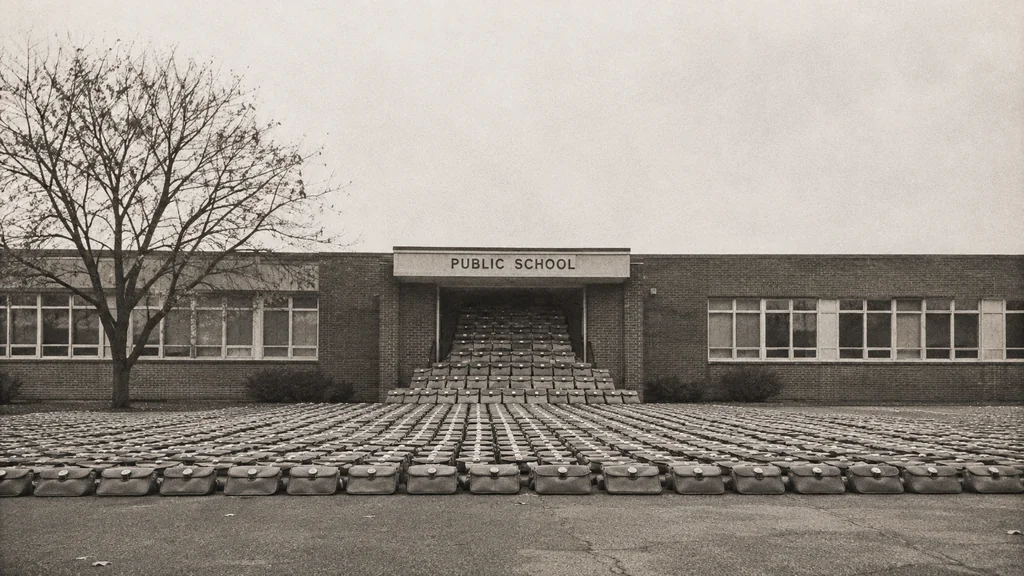
Image composition · tobriefYouTube has reached an “agreement in principle” to pay about $3 billion to thousands of US school districts, the bodies that run public schools in their areas. Bloomberg reported the agreement, citing anonymous people familiar with the confidential talks (Bloomberg). The districts accuse the platform of being designed to keep students online and want to recover what they spend on counsellors and mental health services. The settlement is not yet in effect. According to the same report, a majority of the districts must first join it, and finalising it could take months.
What Bloomberg reported
Bloomberg’s Olivia Carville published the report on the afternoon of 20 November. Beyond the payment, the agreement reportedly includes “additional safeguards for teenagers” (Bloomberg). Google spokesperson José Castaneda and the schools’ lawyers declined to comment (Bloomberg). The Verge and Engadget carried the news the same day, attributing it to Bloomberg. Google did not immediately respond to The Verge’s request for comment (The Verge, Engadget).
What the schools say they have spent
The lawsuits target algorithmic video recommendations, autoplay and endless scrolling. The districts argue that these features contributed to addiction and harmed students’ mental health (Bloomberg).
The most detailed public breakdown of costs comes from Breathitt County, Kentucky. Its separate case, numbered 4:23-cv-01804, is part of the same federal proceedings (GovInfo). The case was brought against all the platforms, not only YouTube, and sought more than $60 million for a 15-year mental health programme (MediaPost). The district also listed more than $62,000 for phone storage pouches, monitoring software and education programmes. It estimated that staff time spent dealing with incidents cost $2.2 million to $3 million a year (MediaPost). Its superintendent testified that roughly 20% of his time went on cases related to social media (Bloomberg Law).
The companies countered that the district did not know which students used which platform, how often they used it or which features affected them. They added that referrals to outside counsellors did not record “social media addiction” as a cause. The federal judge ruled that, taken together, the evidence could allow a juror to infer a causal link. That ruling let the case proceed; it did not find that YouTube caused the expenses (Eric Goldman, MediaPost).
What must happen for the settlement to take effect
The schools’ lawsuits are pending in the federal court for the Northern District of California, in Oakland. They have been brought together there with lawsuits filed by students and families in proceeding MDL 4:22-md-03047 (GovInfo). An MDL, or multidistrict litigation, brings similar cases together for pretrial proceedings without turning them into a single class action (28 U.S.C. § 1407). On 10 August, the US Court of Appeals for the Ninth Circuit allowed more than 3,000 such lawsuits to proceed. On 26 August, Meta’s separate settlement with 51 US jurisdictions was filed.
Judge Yvonne Gonzalez Rogers oversees the proceedings (court). According to Bloomberg Law, she will have to approve the agreement (Bloomberg Law). Districts that do not join can continue their own lawsuits, according to the reports.
The agreement covers only schools. Thousands of individual personal injury lawsuits against YouTube remain pending (Bloomberg Law). The next school trial, brought by Tucson Unified School District, a public school district in Arizona, is expected in February 2027. Meta, Snap and TikTok are the defendants (The Verge).
Before the report, YouTube had already described some of its tools for teenagers. Autoplay is off by default for minors, while break and bedtime reminders are on. Parents can set a daily limit for Shorts, including a limit of zero (YouTube). In its 26 August agreement, Meta committed to measures of its own and has publicly called on YouTube and TikTok to adopt some of them (Meta).
On 19 November, a day before the report, the school board of Bloomington District 87, a public school district in Illinois, voted to join the lawsuit against Meta, TikTok, Snap and YouTube (WGLT). Local public radio station WGLT reported that more than 335 districts in 11 states had filed claims through the same law firm. The firm’s fee is 25% of any money recovered (WGLT).
For Meta, Snap and TikTok, and the schools suing them, a figure of about $3 billion (Bloomberg) would become a reference point in negotiations before the Tucson trial. The next step rests with the school boards: if a majority sign, the agreement goes to Judge Gonzalez Rogers.
Details about this article
- Model:
- claude-opus-5-5
- Generated:
- 11/21/2026, 4:20:32 AM
- Pipeline run:
- incremental_20261121_033011
- Watermark:
- SynthID (Google's invisible watermark)
- Human review:
- None before publication