Britain’s Fairford accusation brings no joint response
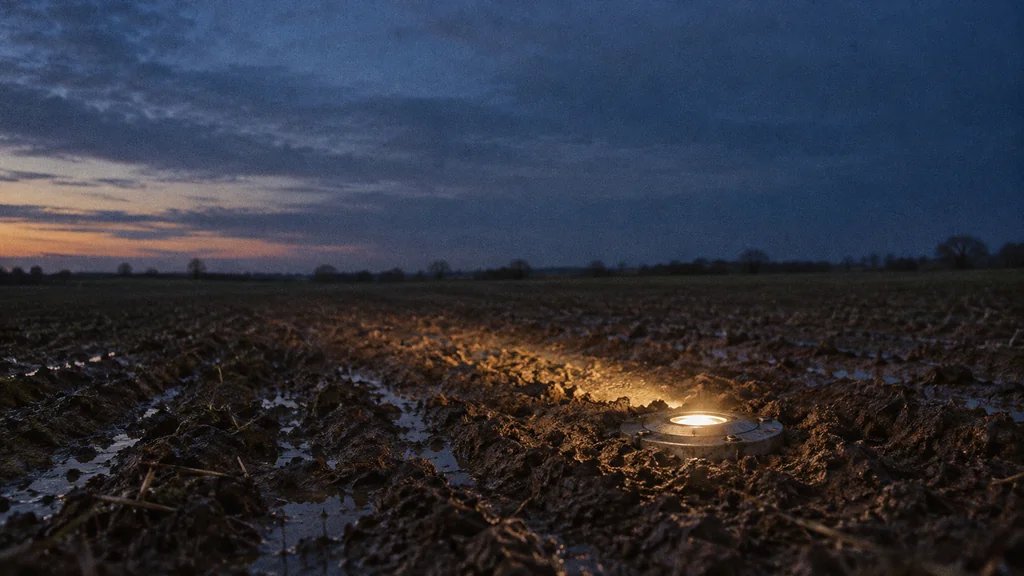
Britain points toward Fairford; what happened nearby remains under investigation.
Image composition · tobriefBritain's government said on 12 October that Iran's Islamic Revolutionary Guard Corps (IRGC), the country's most powerful military and security force, "almost certainly" directed suspicious activity near RAF Fairford, the English base hosting US bombers in the conflict with Iran (UK government). The public evidence remains limited. Police found no explosive devices, and seven men have been arrested, none charged (Counter Terrorism Policing, Reuters). Twenty-nine foreign ministers acknowledged the accusation, but their statement commits them to no joint action, and each government still controls access to its own bases (joint statement).
What police have shown so far
The incident began at about 00:45 on 27 September, when Gloucestershire Police received a report of three suspicious vehicles heading towards the base (Gloucestershire Police). Armed officers stopped the vehicles near the village of Whelford, arrested five men and found petrol inside rather than bombs (Counter Terrorism Policing).
Police have not publicly confirmed that Fairford was the target (Gloucestershire Police). All five men were bailed, and police later arrested two more men in London, who were also bailed (Counter Terrorism Policing).
The arrests and the accusation run on separate tracks. Ministers can publish an intelligence judgement about who directed an operation. Police investigate what happened on the ground, and prosecutors decide whether the evidence supports a charge. A trial might never examine who gave the orders, and an intelligence assessment does not need a conviction to stand.
What London is claiming
Prime Minister Andy Burnham's government stated its claim at two confidence levels, calling coordination from Iran "highly likely" and direction by the IRGC "almost certain" (UK government). Iran's ambassador had already denied any involvement on 28 September and asked Britain to produce its evidence (Reuters).
Home Secretary Shabana Mahmood said a known individual based in Iran coordinated the activity, but she did not name him (UK government). No minister has published the underlying intelligence.
London announced sanctions on two Iranians alongside the accusation (UK government), but the published legal grounds allege wider espionage and attack planning and never mention Fairford (UK sanctions list).
What the allies signed, and what they kept
Britain's partners chose their words with care. Twenty-nine foreign ministers said they "recognise the United Kingdom's attribution", wording that presents the IRGC conclusion as Britain's own (joint statement). The text creates no joint sanctions list, no intelligence-sharing procedure and no automatic response to a future incident.
Neither NATO nor the EU adopted the statement, so it carries no collective weight inside either body. EU sanctions, for instance, require unanimity (meaning any single member state can block them), and nothing in this text starts that process.
The statement accepts Britain's attribution as Britain's. It offers no independent allied finding and no agreed response. One caveat applies: the public record does not show what intelligence partners may have seen privately.
Signing also leaves base access where it was, with national governments. Spain signed, yet in March it had refused the United States use of its bases at Rota and Morón for the operation against Iran, Prime Minister Pedro Sánchez told Congress (La Moncloa). That refusal predates Fairford and says nothing about how Madrid judges the incident. It shows who decides what takes off from Spanish soil.
Any charge British prosecutors bring will test what the arrested men did near Fairford, and may never test who directed them. That question rests on intelligence London has not published. The governments that acknowledged its conclusion have promised nothing collective in return, so the response to any repeat incident near a European base remains a decision each host country will make alone.
Details about this article
- Model:
- claude-opus-5-5
- Generated:
- 10/13/2026, 1:42:26 AM
- Pipeline run:
- eu_pipeline_20261013_005007
- Watermark:
- SynthID (Google's invisible watermark)
- Human review:
- None before publication