Britain trades food checks for EU rules
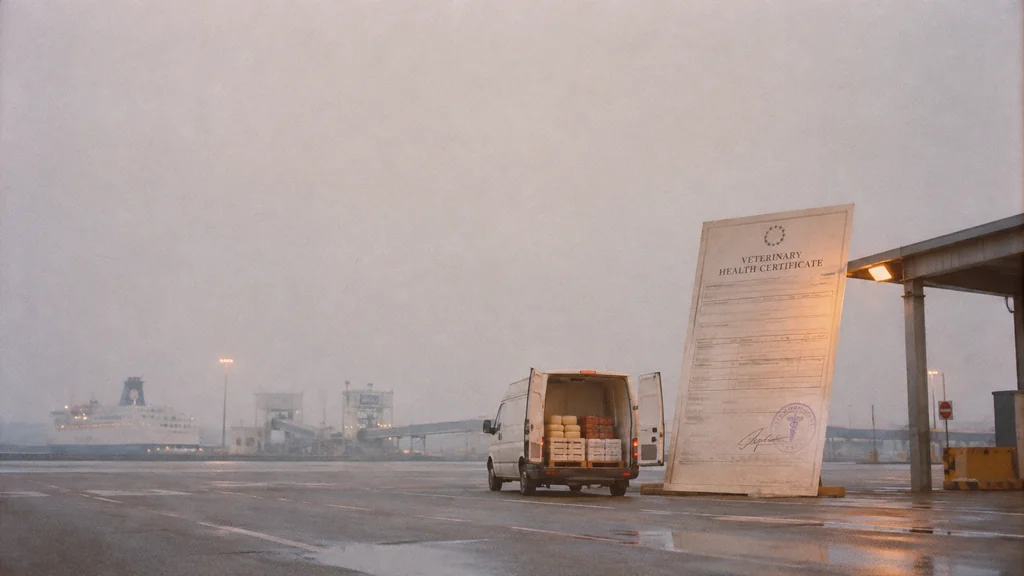
A proposed deal could lift the same certificate cost from every load.
Image composition · tobriefA draft agreement sent to EU ambassadors on 4 November would remove most of the veterinary and plant-health checks on food trade between the EU and Great Britain (BBC, Irish Times). The biggest relief would go to traders sending small, frequent food shipments, because each shipment pays the same fixed certification charge. In return, Britain would change its food rules whenever the EU changes its own.
Nothing has changed at the border yet. EU and UK leaders meet in Brussels on 20 November to take stock of the talks (Council of the EU), and the Guardian reports the new system is expected to start in the first quarter of 2028 (The Guardian). Until official notices change, traders must keep following current guidance, including every certificate, advance notification and inspection (UK business guidance).
Why a fixed fee hurts small shipments
Brexit split the EU and Great Britain into separate territories for two kinds of rules. Sanitary rules protect people and animals from unsafe food. Phytosanitary rules keep plant pests and diseases out. Food crossing between the two sides needs a certificate, signed by an official vet or inspector, proving it meets the other side's standards.
The exporter pays for each one. The Dutch food safety authority, for example, charges a Dutch exporter from €174.66 for a physical certification, plus €54.11 for each extra quarter-hour (NVWA). Total bills vary with the product and the time an inspection takes.
That charge applies per shipment, whatever the shipment's size. A full lorry of one product spreads it across many pallets. A small van carrying cheese, ham and salmon can need several certificates for a load worth far less. Small producers and mixed loads therefore pay the most relative to what they sell.
Logistics UK, a freight trade body, estimates that the deal would save traders £150–£250 per shipment. The figure comes from the group's own model, which no one has independently checked (Food Management Today).
Customs paperwork would stay even after the deal takes effect. French customs says every EU–UK shipment needs a customs declaration, and lorries entering through Calais also need a safety declaration (French customs). Exporters claiming zero tariffs must still prove rules of origin, the evidence of where goods were genuinely made. The deal would remove the vet's certificate while leaving the customs border in place.
What Britain signs up to
Under the planned agreement, Britain would apply EU food, animal and plant rules and keep them updated as Brussels revises them (GOV.UK). Those rules would also cover firms that never export. The Food Standards Agency, Britain's food regulator, says domestic-only businesses may need to change recipes, processes or suppliers, and reports that firms want 12 to 24 months to adjust (Food Standards Agency). A bakery in Leeds with no foreign customers could still face new costs.
The National Farmers' Union supports fewer checks but wants exceptions for gene-edited crops and some pesticides, areas where British rules have moved away from EU ones (NFU). An exception would let Britain keep its own rule for that product. The deal's logic suggests a likely price: an excepted product would probably keep facing checks when it crosses the border, so its traders would get less of the relief.
Who gains most
The supported winners are traders on either side who send small, frequent shipments of covered food. These include British cheesemakers selling into France and continental fish exporters sending to Britain. Some products that have been effectively shut out since Brexit, such as fresh sausages and seed potatoes, could be sold again (GOV.UK).
Other traders would gain much less. Britain has already waived plant certificates and checks on medium-risk EU fruit and vegetables until 31 January 2028 (Defra). For a Spanish fruit grower, the deal would mainly stop those checks from returning. It would not remove a cost the grower pays today.
That difference shows where the money is. Removing fixed certificate costs would help traders sending small, frequent food shipments. Neither side has published the list of product exceptions, and that final list will determine which of those traders get the relief.
Details about this article
- Model:
- claude-opus-5-5
- Generated:
- 11/4/2026, 2:12:25 AM
- Pipeline run:
- eu_pipeline_20261104_005008
- Watermark:
- SynthID (Google's invisible watermark)
- Human review:
- None before publication