Bulgaria guards Bezmer against an unverified threat
Bulgaria activates visible precautions while the intelligence picture remains quiet.
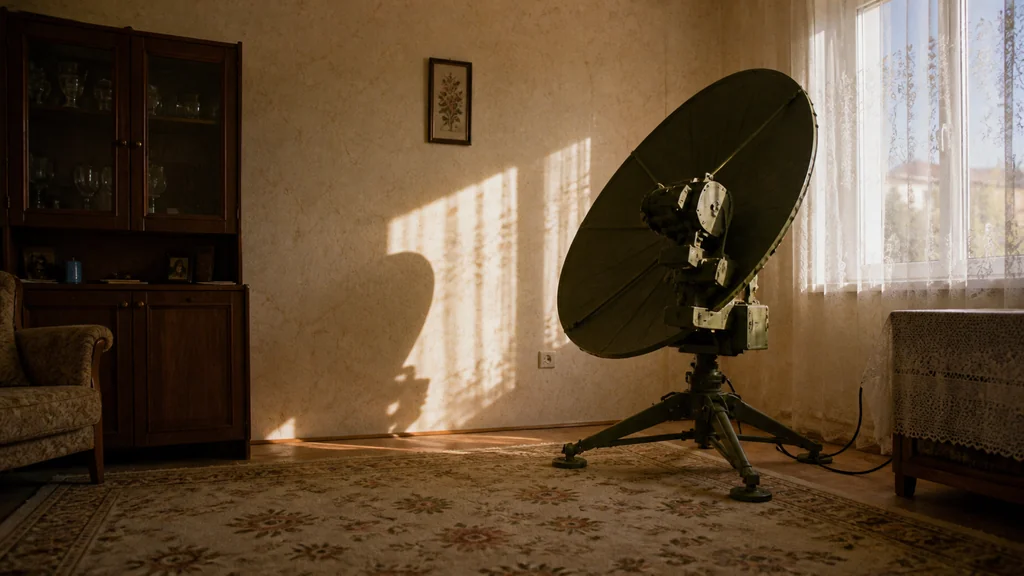
Image composition · tobriefBulgaria tightened security at Bezmer air base after Financial Times reporting, carried by multiple outlets, suggested Iranian-linked actors had discussed possible strikes on US military assets in southeastern Europe (Stars and Stripes). Bulgarian officials have not confirmed such a plan. NATO's secretary-general called Bulgaria's prime minister to repeat the alliance's collective defence pledge. But the public record still shows no verified Iranian attack plan and no new NATO operational decision.
As To Brief reported when the story first broke, the underlying exposure is real: Bulgaria's parliament authorized a temporary US deployment of tanker aircraft at Bezmer through October. What followed is a study in how alliance politics converts an unconfirmed threat into a readiness performance.
Visible Precautions, Low Assessed Risk
Interior Minister Ivan Demerdzhiev said Bulgaria had taken pre-emptive measures around Bezmer, calibrated for "a much higher threat level" than the one intelligence services were actually reporting (Investor). Defence Minister Dimitar Stoyanov said something closer to the opposite: the risk was extremely low, there was no direct threat to Bulgaria or to the sites hosting US aircraft, and the security environment had not changed (Fakti, Сега). A Military Intelligence document reportedly backed that assessment (24 часа). No Bulgarian intelligence service has spoken publicly. No declassified finding has been released.
The gap between the visible precautions and the stated assessment is the story. Bulgaria is guarding Bezmer against something its own defence ministry describes as negligible.
Reassurance, Not Operations
NATO Secretary-General Mark Rutte told Prime Minister Rumen Radev that allied forces and assets were ready to respond to and neutralise any threat (BNR, Sofia Globe). That carries political weight. But it triggered nothing visible in alliance machinery: no Article 4 consultation (where any ally can raise a security concern for collective discussion), no meeting of the North Atlantic Council (NATO's main political decision-making body), no new mission order.
The contrast with recent events is sharp. When Polish and Romanian airspace incidents occurred days earlier, NATO published an explicit allied statement and convened allies (NATO). For Bulgaria's Iran file, no equivalent step appeared.
Greece offers another test. Greek reporting said Athens would examine possible Patriot air-defence support for Bulgaria, but only if Sofia made a formal request and only after approval by KYSEA, Greece's Government Council for National Security (Euronews Greece, Mediapool). Bulgaria has not made that request. Greece has not moved a battery. The conditional offer lets Athens project itself as a southeastern-flank security actor without weakening its own posture around Crete and the eastern Mediterranean.
The Politics Are Easier to Read Than the Threat
Bulgaria's government can appear vigilant without validating a panic narrative. NATO gets deterrence value from solidarity language without the political cost of a formal step. The opposition party GERB pushed for summoning the Iranian ambassador, highlighting an apparent gap: Bulgaria's foreign ministry had no official comment in the initial reactions (24 часа).
Romania provides the sharpest contrast for what operational readiness actually looks like. Days before the Bezmer story broke, Romania detected airborne targets near Izmail, issued a public RO-Alert, and scrambled F-16s after one object entered Romanian airspace (Agerpres). That sequence is detection, warning, aircraft in the air, post-incident investigation. The Bezmer episode, so far, is guards at the gate for a threat that remains a newspaper report.
The southeastern flank's larger problem is capacity. Bulgaria's fighter modernization is delayed until 2030 (BNR), and the visible alliance response to an unverified threat was a phone call. If Sofia wants the public to read Bezmer as preparedness rather than theatre, its defence ministry and NATO's operational planners need to show what would change when a threat becomes verified. Neither has provided that answer yet.
Details about this article
- Model:
- claude-opus-4-6
- Generated:
- 8/21/2026, 1:56:18 AM
- Pipeline run:
- eu_pipeline_20260821_005006
- Watermark:
- SynthID (Google's invisible watermark)
- Human review:
- None before publication