Bulgaria’s copper boost hinges on Belgium
Pirdop can refine more copper; Europe’s extra output remains unproven.
Image composition · tobriefOn 9 October the European Commission named the expansion of Aurubis's copper plant at Pirdop, Bulgaria, one of 46 new "strategic projects" for critical raw materials (European Commission, project annex). Before the label arrived, the expansion had already cleared environmental screening, gained European loan backing and started construction. The public record shows no sign that the label changed its timing or its output, which makes Pirdop a useful test of what the EU's label actually does.
What Pirdop makes, and what the label offers
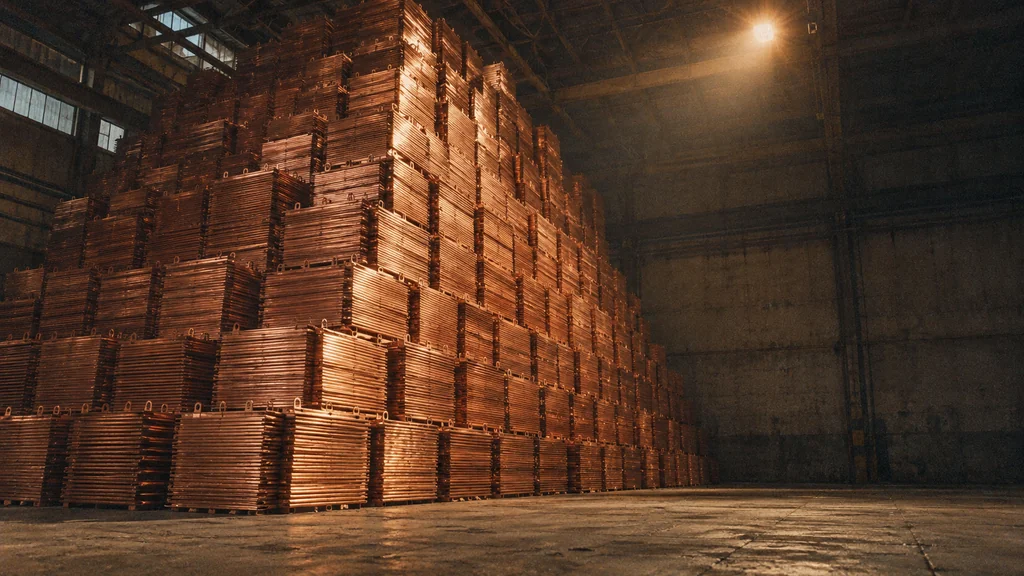
Pirdop melts copper-bearing material into anodes, which are plates of impure copper. In a tankhouse, an electric current dissolves those anodes and deposits near-pure copper onto cathodes, the form manufacturers buy. The expansion raises Pirdop's cathode capacity to about 340,000 tonnes a year, from roughly 230,000 (Aurubis, EIB).
The label comes from the Critical Raw Materials Act. Under this EU law, the bloc should be able to process at least 40% of its own yearly consumption of key raw materials by 2030 (EUR-Lex). The Act's tools are speed and attention rather than cash. A strategic project gets priority in national permitting, a single administrative contact point, and help finding lenders and buyers (EUR-Lex). The designation itself awards no grant, and national authorities still issue every permit.
For Pirdop, that help arrives late. In November 2023, Bulgaria's regional environment inspectorate decided that the expansion did not need a full environmental impact assessment, the most detailed form of review (RIOSV Sofia). The building contractor scheduled construction from May 2024 to March 2026 (GBS).
Financing was also arranged in advance. A €200 million European Investment Bank loan signed in 2025 covers Aurubis investments in both Bulgaria and Germany (EIB). The public record shows no permit deadline the label will shorten and no money it unlocked.
The anodes that used to go to Belgium
Pirdop has been making more anodes than its tankhouse could refine. Some of them travelled to Aurubis's refinery at Olen in Belgium, and the company says the expansion ends that transfer (Aurubis presentation). Olen holds a permit to produce 355,000 tonnes of cathodes a year (Antwerp provincial decision).
The move puts two different measures in play. Capacity is how much copper a plant could refine. Output is how much it actually refines. Pirdop's new tankhouse adds refining capacity to Europe, whatever happens in Belgium.
Europe produces more copper only if two conditions hold. Olen has to replace the Bulgarian anodes with other copper-bearing material, and both plants have to run close to full. Aurubis argues that the freed space at Olen can take other material. No published document says how much, from where, or when.
Finding that material means drawing on the stage where Europe is weakest. The EU's Joint Research Centre measures import reliance, meaning the share of the bloc's needs at each stage of the supply chain met from abroad. It put that share at roughly 48% for copper extraction and 17% for processing (JRC). Europe's shortage is ore, and a refinery cannot dig any up. Whatever replaces the Bulgarian anodes at Olen will come from a supply chain that already leans on imports.
Who gains
Aurubis gains most clearly. It refines more at a single site and stops shipping semi-finished metal across the continent. Bulgaria gets a larger processing base, although no published figure separates new jobs from the existing workforce. Olen loses its Bulgarian anodes and has to find replacements. The EIB loan was signed before the label existed, and the designation adds no public money of its own.
The Pirdop expansion is real, and it gives Europe more room to refine copper. Whether it gives Europe more copper depends on what Olen does next. Pirdop had cleared environmental screening, started construction and secured EIB financing before Brussels called it strategic, and no public document shows that the designation moved its schedule or its tonnage. The label may still help later, with buyers or future permits, but this record cannot show it.
Details about this article
- Model:
- claude-opus-5-5
- Generated:
- 10/19/2026, 1:36:36 AM
- Pipeline run:
- eu_pipeline_20261019_005005
- Watermark:
- SynthID (Google's invisible watermark)
- Human review:
- None before publication