Bulgaria’s government files exposed for five years
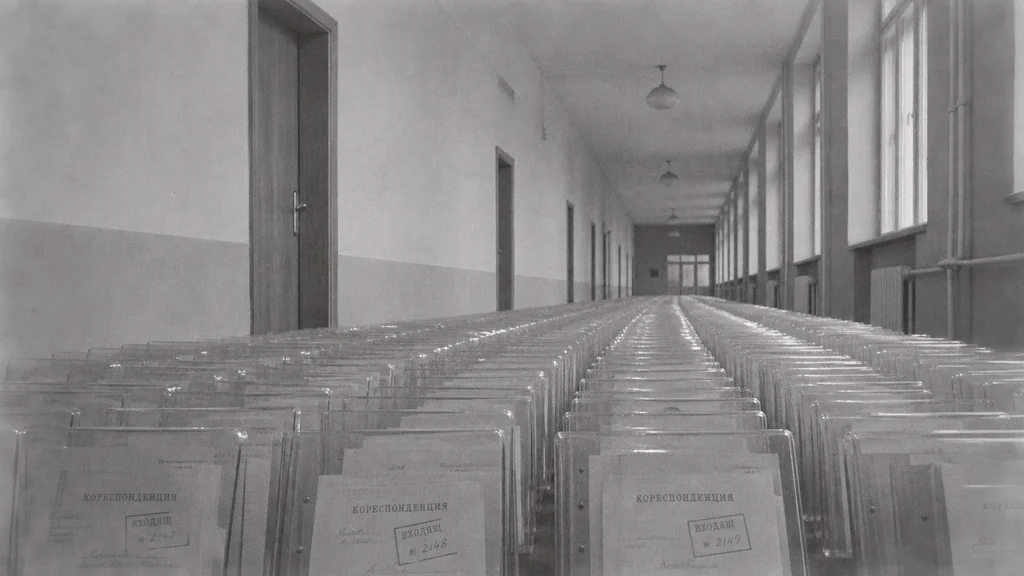
Years of government correspondence passed through systems outsiders could read.
Image composition · tobriefFor years, someone outside the Bulgarian government could read what ministers were weighing and whom they were consulting. On 18 November, the Ministry of Innovation and Digital Transformation said attackers had held hidden access since 2021 to the infrastructure state institutions use to exchange information, and had collected sensitive material (Ministry disclosure). Officials describe the stolen files as Council of Ministers work, reports and correspondence between ministers and institutions (BTA briefing report).
Papers like these work as a map of a government's thinking. They show which options are on the table and which institutions get a say, even when no website goes dark and no public service stops. For a foreign intelligence service, that is often more useful than causing disruption.
Minister Ivan Vasilev put the amount downloaded at at least 130 GB, which he likened to more than 62 million pages (Reuters). Both numbers are official estimates. Nobody has explained how bytes were converted into pages, so the comparison illustrates scale rather than counting documents.
From one alert to a five-year story
The ministry says the attackers moved between components of the exchange infrastructure (Ministry disclosure). It has not said how they got in or which agencies they reached.
The trail began small. On 23 June, the Cybersecurity Center of state-owned Information Services JSC flagged unusual activity in the network of a single monitored administration, according to national cybersecurity coordinator Velizar Varbanov (NOVA briefing report). Deeper analysis showed the problem spanned several state institutions.
On 5 August, the ministry publicly acknowledged unauthorized access to some administrative networks, without mentioning how long it had lasted or how much was taken (BNR). The account of a years-long operation came only this week.
Why the pieces finally connected
Officials say Bulgaria's security tools used to work in isolation, with no combined view across government networks (Ministry disclosure). Imagine guards each watching one camera in separate rooms. A person moving from corridor to corridor looks unremarkable to every guard, because no one sees the whole route.
The new national monitoring system works more like a single control room. It gathers warning signals from many institutions' networks in one place, so analysts can link events that would look harmless on their own. Officials credit that joined-up view with helping investigators follow the intrusion's reach, although the first warning came from one administration's own network.
The control room still has blind spots. Varbanov said the system covers 49 state administrations, and visibility extends only to those institutions (NOVA briefing report). That number describes coverage, not how many bodies were breached.
What officials say about the damage
The ministry says checks so far found no compromise of citizens' personal data (Ministry disclosure). Varbanov said separately that there is no evidence classified data leaked (BNR interview).
What happened to the documents afterwards is unclear. Vasilev said he did not know what the attackers did with them (Economic.bg).
Vasilev spoke of multiple international hacker groups but named no sponsor. Former minister Bozhidar Bozhanov suggested that an operation this long might be funded by states such as China or Russia, which is his own reading rather than an official finding (Mediapool). Vasilev has also sent prosecutors information about actions and failures to act by Bulgarian state bodies during the intrusion years (BTA briefing report).
An interagency team isolated the affected systems, cut the attackers' control channels and ended all unauthorized access found so far. Heightened monitoring follows for 90 days (Ministry disclosure). Reports of the briefing say ENISA, the EU's cybersecurity agency, worked with EU and NATO partners to help remove malware and close off access (BNT).
Bulgarian officials report a years-long theft of government material, uncovered with help from a monitoring net that now spans part of the administration. No file inventory, malware sample or independent audit has been published. Without that forensic account, the public cannot establish how the attackers moved or exactly what they took. Vasilev's ministry and the prosecutors now hold the material that could answer both.
Details about this article
- Model:
- claude-opus-5-5
- Generated:
- 11/19/2026, 1:52:03 AM
- Pipeline run:
- eu_pipeline_20261119_005010
- Watermark:
- SynthID (Google's invisible watermark)
- Human review:
- None before publication