Cernavodă’s cooling pumps have three centimetres left
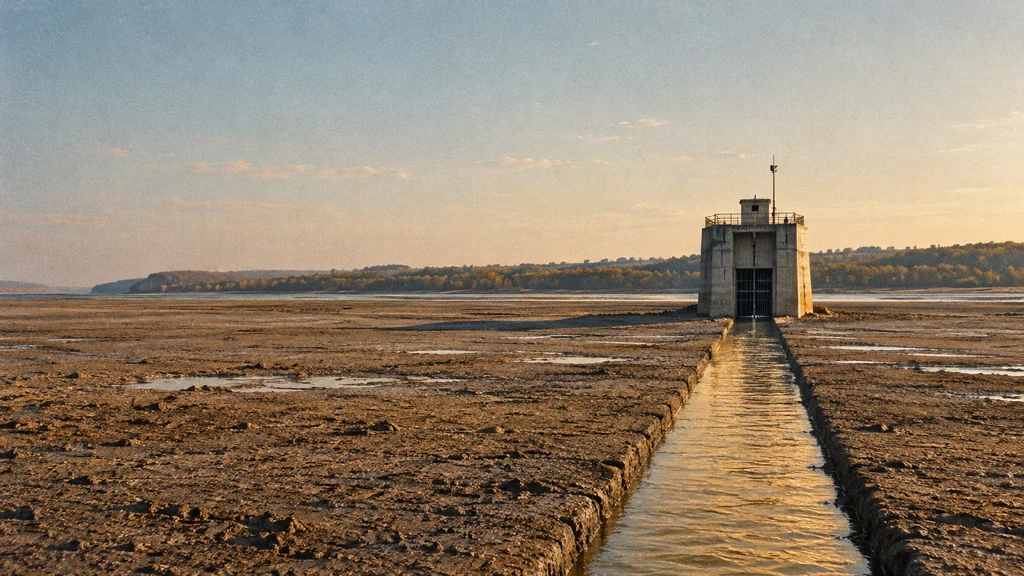
Cernavodă’s idle reactors still depend on water reaching their cooling pumps.
Image composition · tobriefOn 10 October, the Danube gauge at Cernavodă read −259 centimetres, according to Romania's water authority, ANAR (Agerpres). That left the river three centimetres above −262, the level below which the nuclear plant's pumps can no longer reliably draw cooling water (Mediafax). ANAR ordered an extra 20 cubic metres per second released from the Iezer reservoir from 10 to 18 October, but no published measurement yet shows how much of that water has reached the plant (Agerpres, HotNews).
The minus signs need a word of explanation. The gauge measures the river's surface against a fixed reference point, so a negative reading is not a depth. It says nothing about how much water covers a reactor. ANAR described −262 as an operational limit for the pumps, not the "safety limit" some headlines used, and called the release temporary and exceptional (Mediafax).
Why a reactor that is switched off still needs the river
Both of Cernavodă's reactors are already idle. Nuclearelectrica, the state-controlled operator, told the stock exchange it shut Unit 1 on 28 July and Unit 2 on 13 August (Unit 1 disclosure, Unit 2 disclosure).
Shutting a reactor stops the chain reaction, but the fuel keeps giving off heat as radioactive by-products decay. Pumps have to carry that residual heat away into river water. Petre Min, head of the response centre at the nuclear regulator CNCAN, said on 10 October that both units still needed river water, and that crews were building a barrier to steer more of it toward the pumps (HotNews).
So the Iezer water is not there to generate electricity. Its job is to keep cooling running as the river falls, and to keep the plant fit to restart. On 7 October, energy ministry state secretary Cristian Bușoi said forecasts showed no sustained rise in the Danube over the next ten days, and that plant specialists would decide when the pumps and reactors could safely resume (Digi24).
The gap in the record lies between the reservoir and the intake. Agerpres and HotNews both relay ANAR's figures; neither measured water at Cernavodă. The release figure is what leaves Iezer, not a forecast rise on the Cernavodă gauge. ANAR mentioned the time the water needs to travel downriver but gave no estimate, and none of the reports cited here says how much will reach the pumps, or when.
What the grid and the neighbours show
Romania can buy electricity from neighbouring countries through a daily cross-border auction (ENTSO-E). According to grid readings compiled by Solar Industry, nuclear output was zero on 10 October and net imports (imports minus exports) stood at about 2.12 gigawatts at 21:00 (Solar Industry). That snapshot shows Romania bought more power than it sold at that hour. It cannot show which imports stood in for Cernavodă, or what the outages will add to anyone's bill.
The low river is squeezing nuclear power across the border too. Bulgaria's Kozloduy plant, which also draws on the Danube, announced on 6 October a preventive cut of about 90 megawatts across Units 5 and 6 combined, citing the low river (Kozloduy). It had already trimmed Unit 5 for the same reason in August (To Brief).
Farmers on the same stretch were already short of water. ANAR restricted irrigation on the Călărași–Cernavodă section of the Danube in July (ANAR). The October order, as reported, sets aside no measured volume for farms or fish farms. Because the irrigation limits came first, the record does not show that farms lost water to cooling.
ANAR has ordered reservoir water released to cool a plant that is producing nothing, but the cited reporting has yet to show how much of it reached Cernavodă's intake. Nuclearelectrica and CNCAN can measure that water at the pumps. Their reading would show whether the release worked, and how far the plant is from a restart.
Details about this article
- Model:
- claude-opus-5-5
- Generated:
- 10/11/2026, 1:34:15 AM
- Pipeline run:
- eu_pipeline_20261011_005006
- Watermark:
- SynthID (Google's invisible watermark)
- Human review:
- None before publication