China can block Geran engines, but hasn't
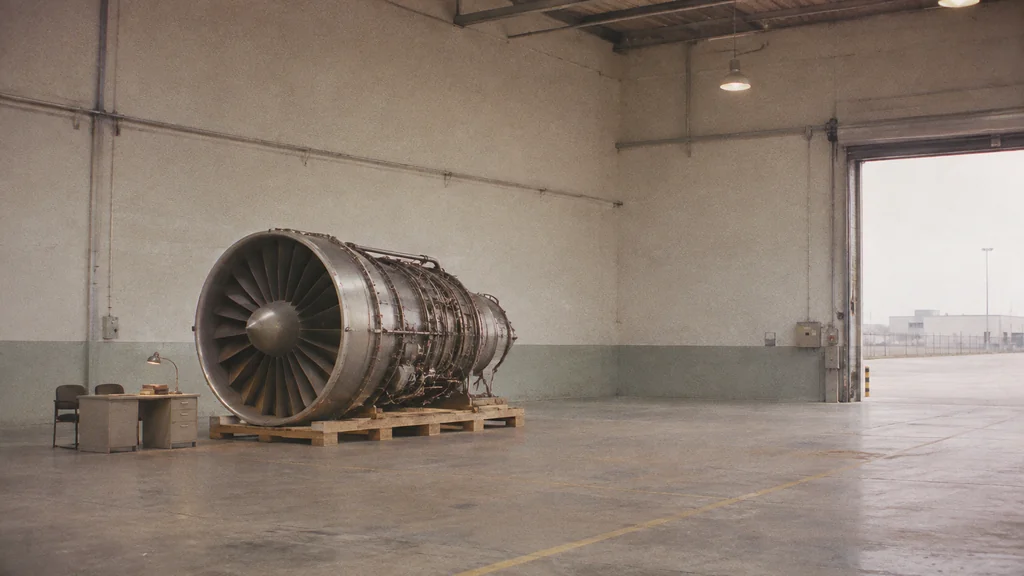
China can stop these engines; no refused shipment is publicly documented.
Image composition · tobriefSince 18 November, Chinese firms exporting small turbojets built for drones have needed a government licence (Chinese notice). Ukraine says engines in this class turn up in the wreckage of Russia's jet-powered Geran attack drones, the Russian-built successors to Iran's Shahed (Vlasiuk). Beijing can now refuse those shipments. The public record does not show it has refused one.
What a licence lets Beijing do
China announced the rule on 19 October. It covers turbojets with at least 400 newtons of thrust that are specially designed for drones, sent to any destination (Chinese notice). Part of it repeats older controls. A specialist review notes that drone engines above 16 kW have needed licences since 2023, which makes the jet-engine threshold the clearest addition.
The commerce ministry decides who gets a licence. Exporters must name the goods, the buyer and the end use, and customs officers can hold a shipment while they question the paperwork (ministry guidance).
The rule bans nothing outright. It gives officials a point at which they can approve or refuse each sale. Beijing calls it a national-security measure and says compliant applications can be approved (commerce ministry statement).
Tracing the engines to Russia's drones
Kyiv says items on the Chinese list match Chinese parts recovered from Russian drones and missiles. Vladyslav Vlasiuk, the Ukrainian president's sanctions commissioner, said on 18 November that his team had passed manufacturers' names to Beijing and asked for rigorous enforcement (Vlasiuk).
Others point in the same direction. Reuters reported that some covered engines power Shaheds assembled at Alabuga, Russia's drone plant in Tatarstan (Reuters via The Moscow Times). Poland's PISM institute, writing on 28 October before the rule took effect, named Chinese Telefly turbojets in newer Gerans (PISM).
On thrust, the Telefly engines clear the bar. Ukrainian military-intelligence debris records cited by the technical review list them at roughly 785 to 1,960 newtons.
The open question is design. The rule reaches only engines built specifically for drones, and at least one Telefly model is marketed for other uses. Classifying it is the commerce ministry's call, and none of the reporting on the rule says how Beijing has classified it. If the ministry treats that engine as general-purpose, it could leave the checkpoint without a licence.
What the rule misses, and what Europe can't reach
Much of a Geran falls outside the list. Vlasiuk named anti-jamming antennas, navigation modules, Harxon antennas, gimbal cameras and Geran-4 servos as uncovered (Vlasiuk's list). Russia is also trying to build its own engines, according to PISM, which would eventually make Chinese licences matter less.
For Europe, every Geran left unbuilt is one fewer for Ukraine's European-supplied air defences to shoot down. Europe has no hand on this checkpoint, though. EU sanctions bind European exporters, and they struggle once goods leave European hands. The Dutch government has acknowledged that traders outside the sanctions coalition re-export Dutch chips through intermediaries (Dutch parliamentary answer).
A Chinese export licence is a decision by Chinese officials under Chinese law, and Brussels gets no vote on it. The rule also cuts both ways: it reaches Ukraine's own long-range drone makers, as we reported before it took effect (To Brief).
The evidence of enforcement so far is thin. German coverage of the rule carried no figures on licence applications or halted production lines (t-online). Two days after it took effect, no refused licence, held shipment or slowdown at Alabuga has been publicly reported.
China has created a way to stop qualifying engines from reaching Russia, but no stopped shipment is publicly documented. Only the commerce ministry's licence decisions and customs records can show whether that changes.
Details about this article
- Model:
- claude-opus-5-5
- Generated:
- 11/20/2026, 1:52:37 AM
- Pipeline run:
- eu_pipeline_20261120_005008
- Watermark:
- SynthID (Google's invisible watermark)
- Human review:
- None before publication