Cholesterol edit faces a 90-patient test
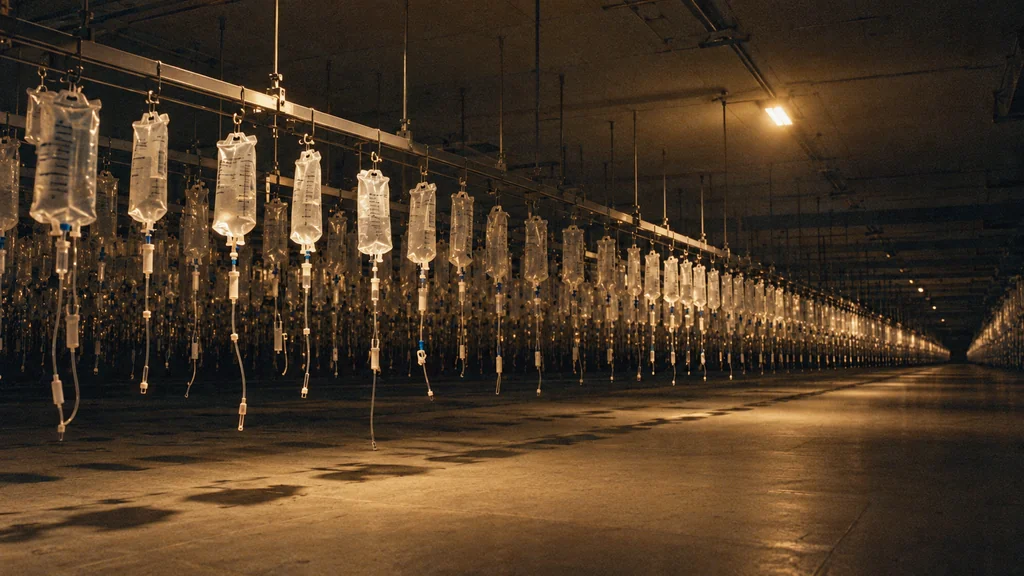
One infusion lowers cholesterol for a year; its lasting safety remains unproven.
Image composition · tobriefCholesterol treatment usually works like a subscription: a pill every day, or an injection every few weeks or months. CTX310, an experimental gene-editing therapy, uses a single infusion instead. In the four people who received the highest dose, LDL cholesterol (the kind linked to clogged arteries) was on average 52.5% lower a year later (NEJM). Those are blood measurements from a tiny early trial, and they say nothing yet about heart attacks.
The result itself is not new this week. CRISPR Therapeutics presented the one-year data in August (company update). The late-September coverage, including a Cleveland Clinic release, retold that finding rather than adding a new one (ScienceDaily, To Vima).
A gene that slows the clean-up
Your blood carries fat around in small particles, and enzymes break those particles down so the fat can be used or stored. The liver makes a protein called ANGPTL3 that holds those enzymes back. Less ANGPTL3 should let the clean-up run faster, lowering triglycerides (another blood fat) and LDL (mechanism review).
The idea came from people, not only from lab animals. Those who naturally carry gene variants that disable ANGPTL3 tend to have lower blood fats and less coronary artery disease (Dewey and colleagues). That is a strong hint. Still, living without the protein from birth is different from losing it in adulthood after years of high cholesterol.
CTX310 is designed to switch that gene off in the liver. Tiny fat bubbles called lipid nanoparticles carry two tools into liver cells. One is a guide RNA, a short sequence built to match a stretch of the ANGPTL3 gene, a bit like a search term. The other is the recipe for Cas9, an enzyme meant to cut the DNA at the spot the guide matches (mechanism review).
The cell then repairs the cut, and the hope is that the repaired gene no longer produces working protein. The trial did not watch that step directly. It measured what happened in the blood.
Four patients carry the headline
CRISPR Therapeutics, based in Zug, Switzerland, ran the first trial mainly to check safety (company update). It treated 15 adults whose blood-fat disorders persisted despite available drugs, at rising doses (original trial). There was no placebo group, and everyone knew what they had received.
The one-year average hides a wide spread. Among the four high-dose participants, individual LDL drops ranged from 24.4% to 84.2%, while ANGPTL3 protein fell 78.6% on average (HCPLive). Because the protein fell together with the fats, the intended pathway appears to have responded (research commentary). Cardiologist Luke Laffin of Cleveland Clinic warned against treating a four-person average as a settled estimate (Laffin interview).
An edit meant to stay
The original report recorded two serious events among the 15 participants. One was a spinal-disc herniation, the other a sudden death 179 days after the lowest dose, and investigators judged both unrelated to the treatment (original trial). The person who died had severe inherited cholesterol disease and had undergone earlier heart procedures (TCTMD).
Fifteen people are too few to reveal a rare complication, and a year says little about decades. That matters more here than with a pill. A statin can be stopped, while an edit to liver DNA is meant to outlast the particles that delivered it. Investigators plan to follow participants for 15 years (Cleveland Clinic via ScienceDaily).
The next study keeps the same focus on hard-to-treat patients. It is a single-arm trial, meaning everyone gets the therapy and there is no comparison group, in adults whose disorders resist treatment. It plans to enrol about 90 people, with primary completion expected in June 2027 (ClinicalTrials.gov).
In the four high-dose participants, one infusion sustained lower LDL for a year. The trial cannot tell us whether that prevents heart attacks. Showing that it does, and that a permanent edit stays safe for as long as it lasts, now falls to CRISPR Therapeutics and its investigators in larger trials.
Details about this article
- Model:
- claude-opus-5-5
- Generated:
- 9/30/2026, 1:53:38 AM
- Pipeline run:
- eu_pipeline_20260930_005007
- Watermark:
- SynthID (Google's invisible watermark)
- Human review:
- None before publication