Houthis near Aden, Riyadh changes commander
AI Daily Synthesis
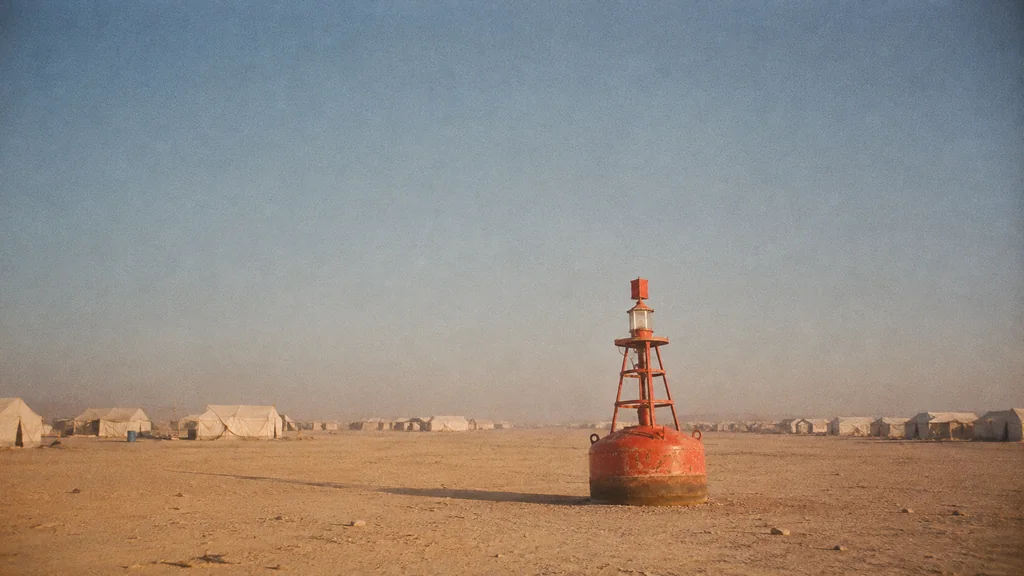
Image composition · tobriefYemeni government forces abandoned their positions beside the Bab el-Mandeb Strait to defend Aden. The city has been the government’s temporary seat since it lost Sanaa in 2014 (Reuters). The Houthis, the armed movement that holds the capital, advanced into the vacated positions where the Red Sea meets the Gulf of Aden. The next day, Saudi Arabia put its top military officer in charge of the war (The National).
On 15 November, the Southern Armed Forces, formations aligned with the government, announced their withdrawal from Dubab airfield and the area around the strait. They said they were leaving to secure Aden (Southern forces’ statement). The Houthi-controlled Saba news agency said they had retreated after losing their supply lines. A government source told the newspaper Al-Araby al-Jadeed that the capture of the Kharaz area could trap the forces at the strait (Al-Araby, Al-Araby al-Jadeed). The Houthis and the government source describe the same situation: the forces pulled back to keep their exit route open.
Two routes to Aden
The sources place the Houthis at two locations. The first is the al-Kharaz military camp in Lahj province, about 60 kilometres from Aden, according to government-side sources who spoke to AFP (AFP via Straits Times, BBC Arabic). We reported that distance this morning. The second location is on the coast: five military sources told Reuters that the Houthis had reached coastal Khor Omaira, about 100 kilometres west of the city (Reuters). The more distant position is also the more revealing one. It shows the Houthis following the coast towards the city beyond the strait. Both reports rely on anonymous sources, and neither comes with an independently geolocated map.
At Khor Omaira, a missile strike on a checkpoint killed eight civilians and wounded between 12 and 14 (AFP via Straits Times, Al-Jnoob Post). Local and government sources attribute the strike to the Houthis, without independent technical confirmation.
Claims about gains on this coast have failed to hold up before. On 5 October, the government announced that it had recaptured Mocha, a Red Sea port north of the strait, with Saudi air support (SABA). That same day, the Saudi newspaper Okaz reported that the advance force was still five kilometres outside the city (Okaz). According to Reuters, the October offensive ultimately took Dubab and positions near the strait, but not Mocha (Shorouk).
The withdrawal on 15 November returned those gains to the Houthis.
Around Aden, government forces are building sandbag fortifications and digging underground positions (BBC Arabic). Civil servant Amin Mahmoud told Reuters that checkpoints and identity checks had multiplied (Reuters via Al-Monitor). Food and fuel are available, but residents fear the fighting will draw closer.
The city’s weak point is the cohesion of its defenders. Yemen expert Iona Craig told the BBC that anti-Houthi forces are fragmented and lack a central military command (BBC). Yemen Monitor records at least four different formations at the front (Yemen Monitor). In 2019, the Southern Transitional Council, a separatist group, took control of Aden after clashing with government forces (Al Jazeera Centre). The city has already changed hands between allies.
Riyadh and the strait
Saudi Arabia has led the coalition supporting the government since 2015 (Britannica). On 16 November, King Salman of Saudi Arabia appointed Fayyad al-Ruwaili, chief of the Saudi general staff, to command the coalition’s joint forces. The appointment followed a recommendation from Defence Minister Khalid bin Salman, while the previous commander moved to an advisory post (The National). Two Western diplomats told Reuters they linked the change to the retreat (Reuters via Al-Monitor). The published account of the decision gives no reason, and the original decree could not be found publicly. The war in Yemen is now directly under the country’s most senior military officer.
At sea, the concern is the strait itself, the route towards the Suez Canal. An advisory issued on 15 November by the Joint Maritime Information Center (JMIC) described it as open, with about 22 cargo ship transits a day. That is less than a third of the roughly 61 recorded in 2023 (JMIC/UKMTO). Those figures predate the latest advance. Houthi positions on the coast do not, by themselves, mean control of shipping or a halt to transits. The Greek-commanded European naval mission Aspides is mandated to protect merchant ships, not to hold territory on the coast (founding decision). In Brussels, Greek Foreign Minister George Gerapetritis renewed Greece’s proposal for a global maritime ceasefire, without announcing any change to the mission (Greek Foreign Ministry).
Between the strait and the city lies the Kharaz refugee camp. On 15 November, the UN refugee agency (UNHCR) warned that fighting around the camp was putting about 9,600 refugees at risk and was already restricting aid. It also called for safe passage for those leaving (UNHCR via Xinhua). They had sought refuge in Yemen and now find themselves where sources place the leading edge of the Houthi advance. The government chose to defend its seat in Aden instead of the strait, and those living between the two are paying the first price for that choice.
Details about this article
- Model:
- claude-opus-5-5
- Generated:
- 11/16/2026, 6:24:24 PM
- Pipeline run:
- incremental_20261116_163014
- Watermark:
- SynthID (Google's invisible watermark)
- Human review:
- None before publication