Cleared Hormuz lanes, tankers still hit
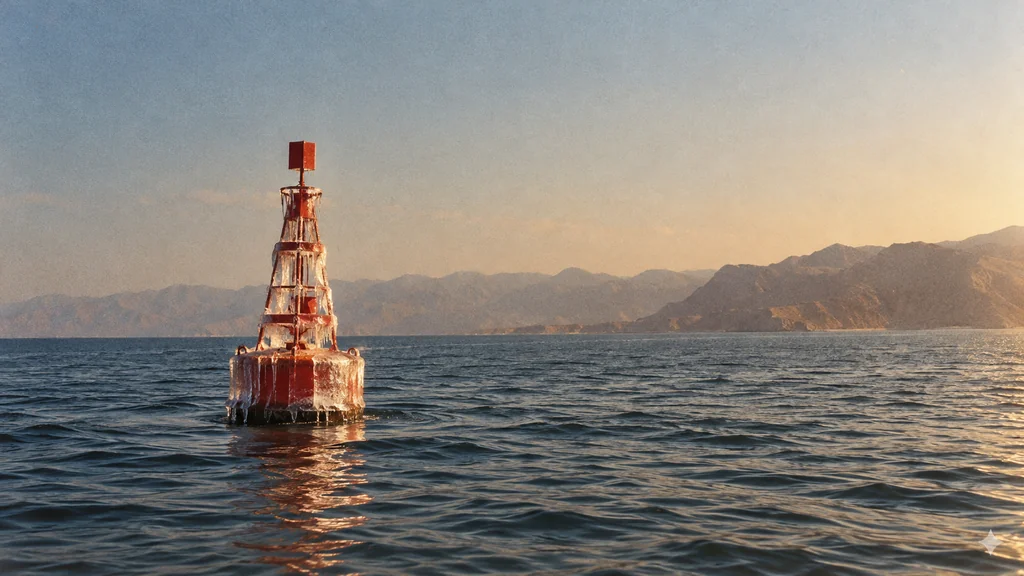
A swept passage still leaves tanker crews exposed to other weapons.
Image composition · tobriefUS forces said days earlier that they had cleared Iranian mines from the main routes through the Strait of Hormuz. On 29 October, tankers there were still hit, one by a projectile and one by explosives fixed to its hull from a small boat (UKMTO, UKMTO). Iran's Revolutionary Guard says four tankers struck mines instead, but it has given no details that would let anyone check (Le Figaro). Shipowners, Europe's among them, must decide whether to send crews in while holding two incompatible accounts.
What the documented attacks were
The second attack came late that evening, north-east of Khasab in Oman. A small boat pulled alongside an outbound tanker and attached two explosive devices above its waterline. That account comes from UK Maritime Trade Operations (UKMTO), the British service that sends security alerts to merchant ships (UKMTO).
UKMTO later reported that the resulting engine-room fire was out and the ship had resumed its voyage. Maritime-security sources quoted by Reuters named it as the Panama-flagged LOUISE 1 (Reuters).
Other incidents fit the pattern without proving more. Oman's navy evacuated 25 crew from the burning Panama-flagged RITI off the Musandam peninsula, though Oman named no attacker or weapon (Anadolu). On 30 October, UKMTO reported a projectile setting another vessel alight south of Iran's Lavan Island (UKMTO on X).
None of these independent reports describes a ship hitting a sea mine. A swept lane offers no protection against a projectile or a charge planted by hand.
A fight over which lane ships use
Iran's mine claim sits inside a dispute over routes. The Guard issues diversion orders telling ships to leave the lane along Oman's coast for a northern passage nearer Iran. US guidance tells American-flagged vessels to stay close to Oman and ignore those orders (MARAD).
The Guard calls the southern lane an "unauthorised route." Its tally of tankers that struck mines there rose from three to four across successive statements, without new evidence (Tasnim, Tasnim).
The threat is credible enough to work on captains' minds. A week earlier, two supertankers were disabled in what were reported as mine blasts (To Brief). That gives Tehran an incentive to talk up mines on the southern lane. If masters believe the claim, some may obey Iranian orders or wait outside, whether or not the mines exist.
The claim has some grounding, since fires and attacks were recorded in the area. But the Guard published no vessel names, positions or IMO numbers, the permanent identifiers that let outsiders check ship registers. AP and Reuters could not verify the four mine strikes, and AP could not match any of them to the independently reported attacks (AP, Reuters).
Who decides whether to sail
Washington argues that assisted passage works. On 25 October, US Central Command said it had cleared the main routes and supported more than 3,000 commercial transits over six months (CENTCOM). The Joint Maritime Information Center, a multinational naval advisory cell, was less reassuring. On 29 October, before either tanker attack, it rated the threat severe and estimated that roughly 500 vessels were waiting outside the strait (JMIC).
The EU itself offers no escort here. Its naval mission Aspides protects ships near the Red Sea's Bab el-Mandab strait, but at Hormuz it only monitors (Council). The call falls to shipowners and masters, who weigh naval warnings against insurance terms.
Denmark's Maersk shows what that looks like in practice. On 30 October it temporarily restricted new bookings for Khor Fakkan, Fujairah and selected Gulf ports, citing continuing disruption and congestion rather than these attacks (Maersk).
The Guard could settle its side of the dispute by publishing names and positions for the tankers it says hit mines. Until it does, the record supports a narrower conclusion than either government offers. The independently documented attacks include projectiles and hand-placed charges, weapons no mine sweep removes, so a cleared lane is not a safe one. Iran's unverified count puts more pressure on captains without giving them any more evidence.
Details about this article
- Model:
- claude-opus-5-5
- Generated:
- 10/31/2026, 1:34:31 AM
- Pipeline run:
- eu_pipeline_20261031_005007
- Watermark:
- SynthID (Google's invisible watermark)
- Human review:
- None before publication