Congo’s Ebola contact lists miss nine in ten
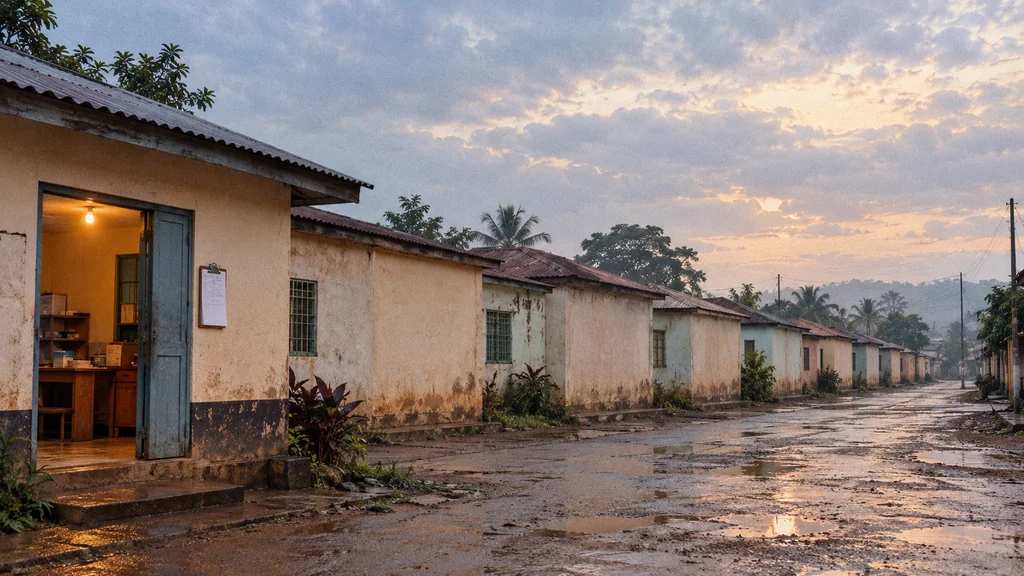
In Congo, most new patients are found beyond the contact lists.
Image composition · tobriefThe Democratic Republic of the Congo has confirmed 10,060 cases of Ebola disease since May, with 4,887 deaths, according to the national public health institute's count, which ECDC reproduces (INSP, ECDC). Containing Ebola depends on finding exposed people before they fall ill. Yet only about one in ten new patients was already on responders' contact lists (WHO Weekly Epidemiological Record).
A fever that looks like malaria
Ebola's first signs are fever, fatigue and muscle pain, much like malaria. A patient may pass through an ordinary clinic before anyone suspects Ebola (ECDC). By then, family members, carers and clinic staff may already have been exposed.
The virus spreads through direct contact with the bodily fluids of someone who is sick or has died, or with objects those fluids have contaminated. It does not travel through the air. People are not infectious before symptoms appear, which can take between two and 21 days after exposure (WHO).
That delay gives responders their chance. Someone exposed today can be watched, and isolated at the first fever, before passing the virus on.
Watching the list, and finding who is missing from it
Responders work from contact lists. A "known contact" is someone already identified as exposed to a patient's fluids or belongings. Teams check that person every day until the 21-day window closes. On 20 October, teams were following 30,130 contacts but had seen only 79.7% of them in the previous day, against a target of 95% (WHO).
Those two figures measure different gaps. Picture lifeguards on a beach. The follow-up rate shows how closely they watch swimmers inside the flags. The known-contact share asks how many swimmers who got into trouble were inside the flags at all.
Only about one in ten new cases had been a known contact (WHO Weekly Epidemiological Record). The other nine reached responders as patients, after days of illness that nobody was monitoring. Many never reached a treatment bed. Of 482 deaths in WHO's latest reporting period, 307 happened in communities rather than treatment centres (WHO).
The area to search keeps widening. In September we reported that the outbreak had passed 7,000 cases and entered a seventh province (To Brief). It has since reached eight provinces and 66 health zones, the districts Congo uses to organise its health services (WHO). Ituri and North Kivu in the east still account for 9,520 cases (Actualite.cd). Each new zone means more households to visit and more lists to build.
A vaccine made for a cousin
Congo's previous large epidemic, in 2018–2020, was caused by Zaire ebolavirus (WHO). The vaccine used then, Ervebo, is licensed against that species (FDA). This outbreak is caused by Bundibugyo virus, a related species, and no vaccine or treatment is approved for it (WHO). Ervebo is like a key cut for the neighbour's lock. It might turn this one, but nobody has shown that it does.
By 23 October, more than 9,000 frontline workers had received Ervebo under a research protocol (WHO Africa). That means the shot is given as part of a study that records what happens afterwards, because protection against Bundibugyo is unproven.
That same day, a formal trial called Tumaini vaccinated its first participant in Bunia. It starts with Ervebo and adds vaccines designed for Bundibugyo as they become ready (ITG). Vaccination has begun. Whether any of these vaccines protects against this virus is not yet known.
The same list-building happens wherever a case appears. A patient diagnosed in Abuja on 20 October was evacuated to Switzerland (ECDC). Nigeria then identified 44 of that person's contacts (WHO). ECDC still rates the likelihood of infection for the general EU/EEA population as very low (ECDC).
In Congo, most new reported patients were not already known contacts. That share cannot tell us where the outbreak goes next. It is still the most direct sign of whether responders are reaching exposed people before the fever does, and a rise from one in ten would mean the lists are starting to catch the virus.
Details about this article
- Model:
- claude-opus-5-5
- Generated:
- 10/28/2026, 1:31:00 AM
- Pipeline run:
- eu_pipeline_20261028_005008
- Watermark:
- SynthID (Google's invisible watermark)
- Human review:
- None before publication