Congo’s Ebola toll passes 5,000
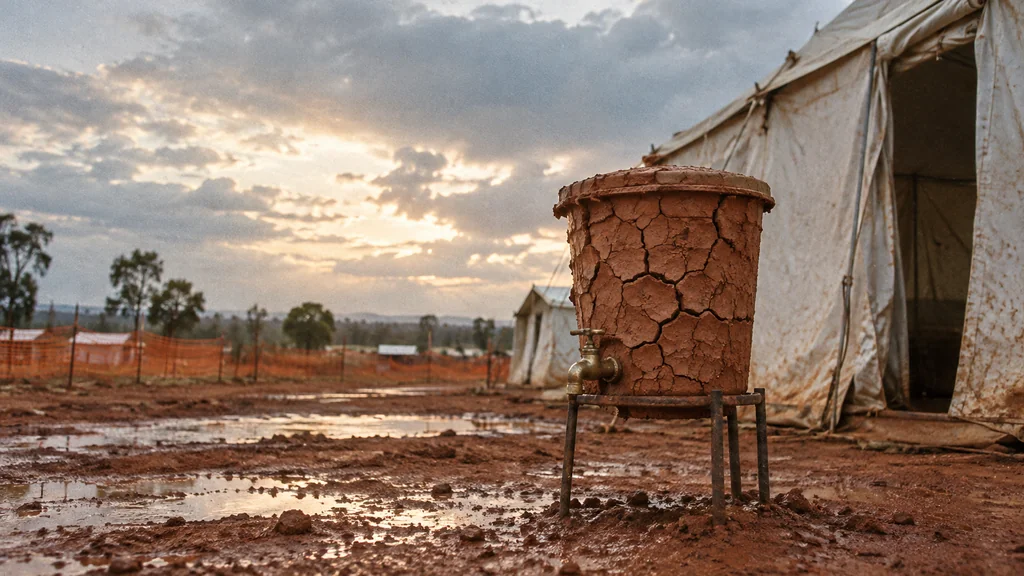
In eastern Congo, the response depends on care reaching every person.
Image composition · tobriefCongo's own count of Ebola deaths has passed 5,000. DW and AP reported that a national public health bulletin, with data through 29 October, listed 5,026 deaths among 10,351 cases (DW, AP via PBS). The World Health Organization's published totals are lower because they describe earlier dates. The agencies are not contradicting each other.
The virus behind this outbreak is Bundibugyo, one of several viruses that cause Ebola disease and far less studied than its better-known relatives. Cases are concentrated in Congo's eastern provinces of Ituri and North Kivu. Our earlier report tracked the rise in cases (To Brief).
Snapshots of a crowd that keeps walking
Think of each official count as a photograph of a crowd that is still moving. The date on the photo matters more than who took it. WHO counted 4,381 deaths as of 11 October (WHO Weekly Epidemiological Record). Its next tally, through 20 October, reached 4,687 (WHO outbreak notice).
The EU's disease agency, ECDC, then recorded 4,992 deaths using Congolese data through 28 October (ECDC). Congo's bulletin, one day newer, caught the next frame. Lined up by date, the counts tell one story: a reported toll that kept climbing through October.
Dividing deaths by cases is tempting, but the result misleads. Imagine judging how many runners finish a marathon by counting them halfway through the race. Some people with Ebola die before they are ever tested, so they may be missing from the case column. Others were diagnosed recently and have not yet recovered or died. The ratio describes the state of the records more than any patient's odds.
Why cases are hard to catch
Containing Ebola starts with recognising it, and early Ebola fever looks a lot like malaria. UN News reports that some patients in eastern areas visited between two and five health facilities before reaching an Ebola treatment centre (UN News). Each extra stop is another place where a sick person meets nurses and relatives before anyone suspects Ebola.
Many people never reach specialised care at all. In WHO's latest reporting interval, 307 of 482 deaths happened in communities rather than in treatment centres (WHO outbreak notice).
Once a case is confirmed, responders list everyone the patient was close to and check on them. Those checks run through the incubation period, the gap between infection and the first symptoms. A person with Bundibugyo disease is not infectious during that gap, so a contact spotted at the first fever can be isolated before passing the virus on.
That only works if the visits actually happen. As of 20 October, WHO says about 30,130 people were being followed as contacts (WHO outbreak notice). Only 79.7% had been seen in the previous 24 hours, against a target of 95%, according to the same WHO notice.
Staffing is strained as well. On 30 October, AP reported that workers at a treatment centre in Tchomia, Ituri, stopped work over four months of unpaid wages while caring for five confirmed and ten suspected patients (AP via PBS). Ituri's acting response chief said the government was responding to their demands.
A vaccine under test
No approved vaccine has been shown to prevent Bundibugyo infection. Ervebo is licensed against a different Ebola virus, called Zaire, and nobody yet knows whether it protects against this one. WHO's advisers said it should be used here only as part of research. A trial called TUMAINI began on 23 October (WHO immunization director's message). It is randomised: chance decides which volunteers get which vaccine or comparison, so any difference in infections can be credited to the vaccine rather than to who signed up.
Ervebo was the first vaccine given in the trial. Candidates designed specifically for Bundibugyo, linked to Oxford and Moderna, are expected to follow (NPR).
Drugs are at a similar stage. An October review found no established evidence that the candidates under study work in people (October review). The candidates include MBP134, a mix of lab-made antibodies designed to latch onto the virus, and remdesivir, a drug that slows the virus copying itself. Treatment centres still offer real care, including fluids and symptom management.
The next WHO total will be another frame of the same crowd, dated a little later. Until TUMAINI produces results, the documented weak points are the places a response can act: fevers mistaken for malaria, contacts who go unvisited, and treatment staff working without pay.
Details about this article
- Model:
- claude-opus-5-5
- Generated:
- 11/1/2026, 1:27:01 AM
- Pipeline run:
- eu_pipeline_20261101_005008
- Watermark:
- SynthID (Google's invisible watermark)
- Human review:
- None before publication