Congo’s Ebola toll rises as tracing lags
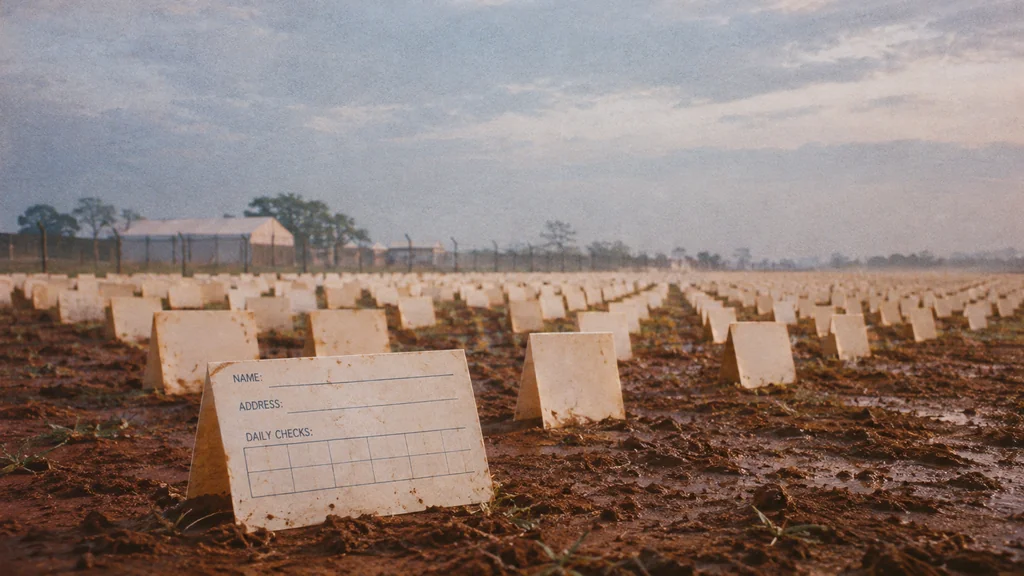
The death count catches up while contact lists still leave people unseen.
Image composition · tobriefThe Bundibugyo Ebola outbreak has now killed 5,376 people, according to figures Africa CDC gave AFP on 2 November, with 5,372 in the Democratic Republic of the Congo and two each in Uganda and Kenya (AFP dispatch). Congo's count rose by 346 deaths, but the government's own report shows most of them happened earlier and were only now added (INSP SitRep No. 169). The record became more complete. The harder work, finding infected people before they expose others, is still falling short.
Old deaths, newly counted
Picture a household that finally enters a pile of old receipts into its budget. The balance drops overnight, even though the money was spent weeks ago. A death toll can move the same way when earlier deaths join the official record.
Our 1 November report counted 5,026 deaths among 10,351 cases through 29 October (To Brief, DW). Two days later, Congo's situation report No. 169 reworked the records for Ituri, the worst-hit province.
Congo's report calls this "harmonising", which simply means bringing separate records into one consistent tally. Officials did it across 97% of Ituri's health zones, the local districts through which Congo runs its health services, and the clean-up added 314 earlier deaths (INSP SitRep No. 169). The European Centre for Disease Prevention and Control (ECDC) says Congolese data remain under review and harmonisation, so revisions like this are expected (ECDC, 30 October).
The genuinely new figures are smaller. On 30 October, officials notified 32 new deaths, and confirmed cases rose by 63 to 10,414 (INSP SitRep No. 169).
A race against a 21-day clock
Bundibugyo virus spreads through direct contact with the bodily fluids of someone who is ill or has died, and it is not airborne (WHO outbreak notice). People are not contagious before symptoms appear, which can take two to 21 days after exposure (ECDC outbreak page).
That delay gives responders a window. Teams list the people who had direct contact with a patient or a body, check on them daily, and isolate anyone who develops a fever before that person can expose others.
On 30 October, Congolese teams were following 37,674 contacts and reached 85.8% of them, short of their 95% target (INSP SitRep No. 169). A separate measure asks whether new patients were on those lists at all. WHO's weekly epidemiological record, which summarises a reporting week rather than a single day, found that only about one in ten newly identified cases had already been a known contact (WHO Weekly Epidemiological Record). That share is a revealing sign of whether teams are finding cases early.
People who do seek help can also slip through. Early Ebola looks like malaria, and UN reporting found that some patients in eastern Congo visited two to five health facilities before reaching a treatment centre (UN News).
The cost shows up in where people die. Of the 32 deaths notified on 30 October, 23 occurred in communities rather than treatment centres (INSP SitRep No. 169). Care was further disrupted when treatment-centre workers stopped work, saying they had gone four months without wages (AP via PBS).
Vaccines still under test
No vaccine or specific treatment is approved for this virus (WHO outbreak notice). The licensed Ervebo vaccine targets a related species, Zaire ebolavirus, and that licence does not establish that it protects against Bundibugyo (FDA Ervebo information). Even so, more than 9,000 frontline workers had received it under a research protocol by 23 October (WHO Africa).
A formal trial called TUMAINI vaccinated its first participant in Bunia on 23 October (TUMAINI first-participant announcement). It uses ring vaccination, which works like a firebreak: instead of vaccinating a whole region, it offers the vaccine to the contacts around each detected case, the people most likely to have been exposed. Vaccines designed specifically for Bundibugyo, from Oxford with the Serum Institute and from Moderna, are still in early testing or being readied to join it (NPR).
A ring trial only works where cases are found, and it delivers answers only after enough participants have been followed. For now, then, the outbreak response rests on the old tools of finding, isolating and treating the sick quickly.
Congo's higher toll mostly reflects records catching up with deaths that had already happened. The clearest signs of progress will be that one-in-ten share of new cases already on a contact list rising and fewer people dying at home, which is the task facing Congolese response teams and their partners long before any vaccine result arrives (WHO Weekly Epidemiological Record).
Details about this article
- Model:
- claude-opus-5-5
- Generated:
- 11/3/2026, 1:45:13 AM
- Pipeline run:
- eu_pipeline_20261103_005009
- Watermark:
- SynthID (Google's invisible watermark)
- Human review:
- None before publication