Cyprus faces bill for 1,000MW cable
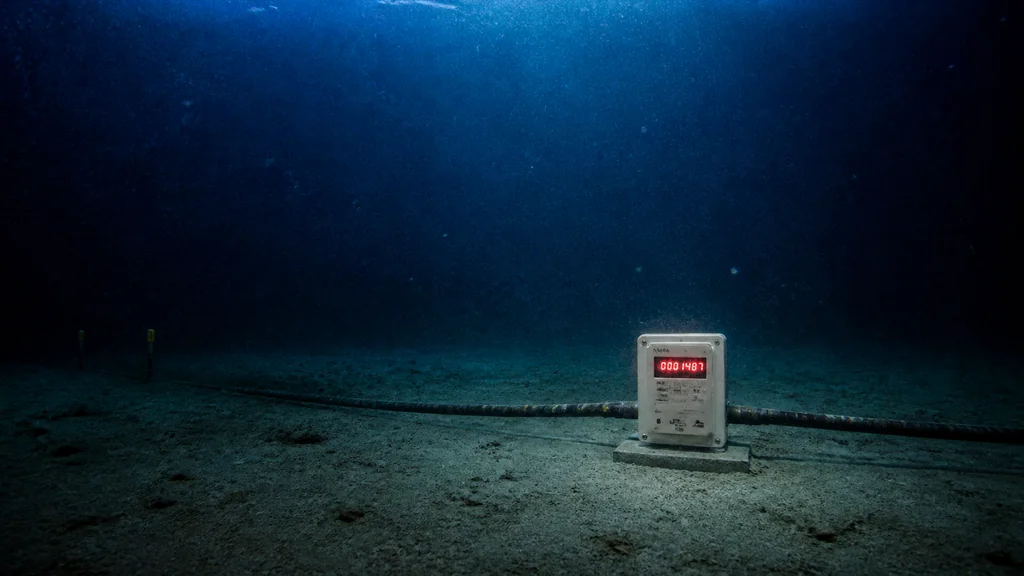
The cable reaches Cyprus only when its cost reaches consumers.
Image composition · tobriefADMIE, Greece's electricity transmission operator, asked energy regulators in Cyprus and Israel to start deciding how construction costs for the Cyprus-Israel section of the Great Sea Interconnector would be split between countries' electricity consumers (ADMIE, Cyprus Mail). The planned submarine cable would connect Greece, Cyprus and Israel into a single electricity link. The filing moves the project from political endorsement into a harder question: whose electricity bills go up, and by how much.
This is not a construction start or a funding commitment. Regulators are being asked to decide how the bill would be split, and how much of it can be recovered from electricity tariffs — the per-kilowatt-hour charges consumers already pay (Euronews Greece). That sounds procedural, but it is the step that makes or breaks the project. Without a tariff decision, lenders have no proof they will be repaid. With one, cash flow becomes predictable enough to attract financing.
Why the tariff decision matters more than the cable
The mechanism runs like this. Regulators in each country approve a cost split. That split determines how much each country's grid operator can charge consumers over time. Those guaranteed future payments are what banks and investors look at before lending billions for construction. If the split is unclear, or if one country refuses, the project stalls regardless of how many political endorsements it has.
The Cyprus-Israel section would carry 1,000 MW of capacity over roughly 324 km of submarine cable at extreme depths, which matters because deep-water cables are far more expensive to survey, lay and repair (Kathimerini Greece). The broader Greece-Cyprus section spans about 1,208 km with an estimated cost around €1.9bn, partly offset by roughly €657m in EU co-financing through the Connecting Europe Facility, the EU's programme for cross-border infrastructure (Enerdata, CINEA).
ADMIE says its cost-benefit analysis found the interconnection viable "under all scenarios examined," but the full study has not been published. Neither the capital cost for the Cyprus-Israel leg, the proposed percentage split, nor a consumer bill-impact estimate has been made public (Philenews).
Cyprus gains the most — and carries the most risk
The filing came a week after French infrastructure investor Meridiam took a 66% majority stake in the project vehicle, with ADMIE keeping 34%. That deal brought private capital and a credible long-term investor, two things the project previously lacked (EnergyNews).
Greece's press treated the filing as momentum. Cyprus was cooler. Energy Minister Michalis Damianos said Cyprus would wait for European Investment Bank due diligence before deciding whether to participate as a shareholder or accept conclusions on costs (Politis, Times of Israel). Opposition party AKEL demanded full disclosure of the Meridiam agreement's terms and consumer-cost effects before any new commitments (Kathimerini Cyprus).
Their caution has a concrete basis. Cyprus is the only EU member state with no electricity interconnection to another country, which means it generates all its own power, usually from expensive imported fuel. Ending that isolation is the cable's biggest promise, but it also means Cyprus is the country with the most to gain and, therefore, the weakest bargaining position on cost. One report puts the possible split for the Greece-Cyprus leg at 63% for Cypriot consumers versus 37% for Greek ones, though this ratio has not been confirmed by either regulator (Serbia Energy). If accurate, Cypriot households would face real tariff exposure if costs overrun or cheaper electricity arrives later than projected.
What remains open
The project now has two things it lacked a year ago: a private-capital sponsor willing to put equity in, and a formal filing that forces regulators to answer the cost question in writing. Those make the Great Sea Interconnector more investable than at any previous point. They do not make it financed. No public disclosure from Meridiam details its payment schedule, overrun provisions or conditions for closing (Marine Cyprus). Seabed surveys remain incomplete. Turkey's objections in the Eastern Mediterranean still hang over cable-laying routes (Capital).
The real test is whether Cyprus's regulators accept a cost split that puts the larger share on their consumers. That number will eventually appear on electricity bills.
Stocks in this story
Details about this article
- Model:
- claude-opus-4-6
- Generated:
- 8/14/2026, 2:03:07 AM
- Pipeline run:
- eu_pipeline_20260814_005006
- Watermark:
- SynthID (Google's invisible watermark)
- Human review:
- None before publication