Czech broadcaster funding advances without a costing
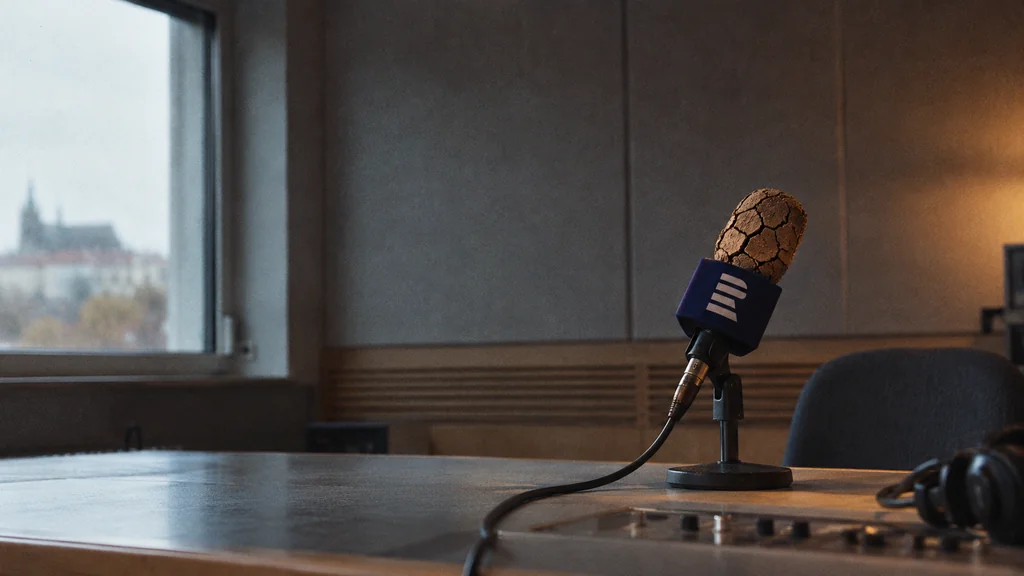
Czech public broadcasters await proof that a fixed payment can sustain their work.
Image composition · tobriefCzech MPs early on Saturday refused to throw out a government bill that would abolish the licence fees funding Czech Television (ČT) and Czech Radio (ČRo), defeating an opposition motion to reject it by 96 votes to 81 (Chamber roll call, Frekvence 1). Households still pay the fees, and the bill faces several more votes. The coalition has written a fixed state payment into law, which limits what any minister can do to the broadcasters, but it has not shown why that payment is enough.
A night vote, not a final one
On Friday 23 October the coalition unexpectedly moved the bill to the top of the agenda and kept the Chamber of Deputies sitting through the night (ČTK). We reported the acceleration as it began (To Brief). The majority capped debate at about nine hours, although more than 60 deputies had registered to speak (Novinky).
The vote was a first reading, where deputies only decide whether a bill deserves further work. The draft now goes to the Media and Culture Committee, which has a meeting listed for 29 October (Chamber bill record).
Two more players can slow it down. The Senate can reject or rewrite the bill, and President Petr Pavel can veto it. Neither can stop it for good: the Chamber can override both, but only with a majority of all deputies, not just those present (Czech Constitution).
A fixed sum without a costing
Households liable for both fees now pay CZK 205 a month (Czech government). The government argues that a charge tied to owning a TV or radio set makes little sense when people watch on their phones. Its replacement names each broadcaster's payment in the law itself, CZK 7,807,592,000 combined for 2027, paid from the state budget through the Culture Ministry (draft bill).
That design is the bill's strongest argument. Prime Minister Andrej Babiš calls the payment a mandatory expenditure with an inflation clause, which he says guarantees stability and independence (ČTK). In practice, a finance minister drafting the yearly budget could not quietly trim the sum to punish awkward reporting. Changing it would take a new vote in Parliament to amend the statute, which is slower and far more visible.
The weak point is the amount. The European Broadcasting Union, the association of Europe's public broadcasters, says the payment falls about 15% short of expected fee income (EBU). During the government's internal consultation, the Finance Ministry asked why the figures tracked 2024 fee receipts when later planned receipts were higher.
The recorded answer pointed to negotiations in the coalition council, the meeting of governing-party leaders where political deals are struck (consultation record). It did not point to any calculation of what ČT and ČRo need to meet their legal duties. On the record so far, the number came out of a political bargain.
Pressure at home, attention abroad
President Pavel said the overnight scheduling raised serious doubts about the sponsors' aims (ČT24). Staff at both broadcasters have announced an all-day strike for 3 November (Médiář). Neighbouring media are following it: Poland's Rzeczpospolita covered the protests and strike plans (Rzeczpospolita), and Austria's public broadcaster reported the vote (ORF).
EU law sets the test the final law will face. The European Media Freedom Act, the EU regulation protecting media independence, requires public-media funding to be adequate, predictable and set by transparent, objective criteria, though it does not require a licence fee (EMFA). The European Commission has said it will assess compatibility only once a law is adopted (Commission answer).
That test fits the gap in the Czech record. A statutory payment that ministers cannot touch speaks to "predictable." Nothing published so far speaks to "adequate" or "objective criteria," because the coalition has not supplied a costing tied to what ČT and ČRo are legally obliged to deliver. Culture Minister Oto Klempíř and the coalition owe that costing to the committee before its next vote.
Details about this article
- Model:
- claude-opus-5-5
- Generated:
- 10/25/2026, 1:25:31 AM
- Pipeline run:
- eu_pipeline_20261025_005006
- Watermark:
- SynthID (Google's invisible watermark)
- Human review:
- None before publication