Czech media funding faces a 15% cut
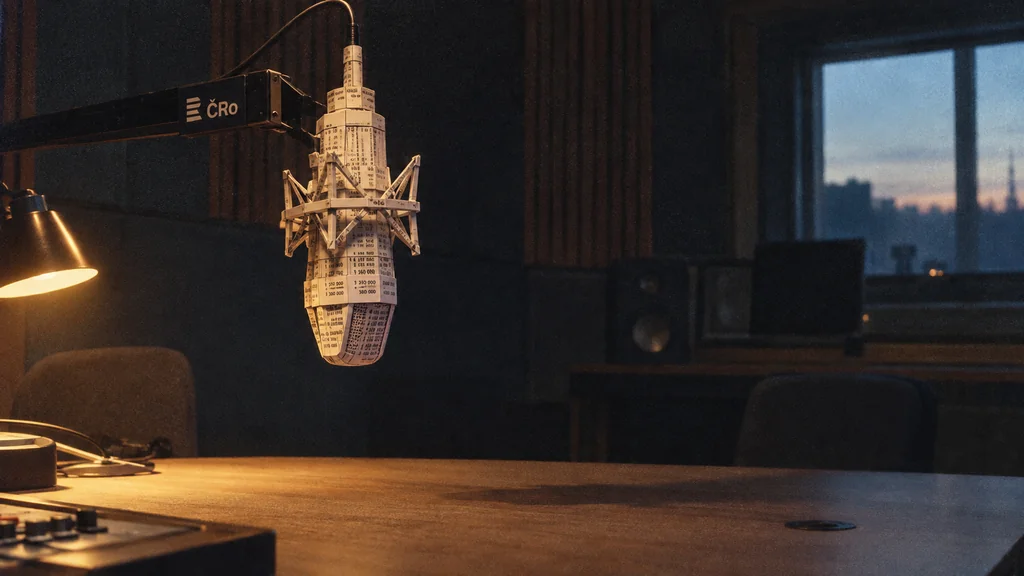
Czech lawmakers set public broadcasters’ funding without showing what their duties cost.
Image composition · tobriefCzech MPs have kept alive a bill that would scrap licence fees for Czech Television (ČT) and Czech Radio (ČRo) and fund them from the state budget instead. The proposed payment sits about 15% below what the fees were expected to raise (Seznam Medium). When the Finance Ministry asked how that amount was calculated, the recorded answer was that coalition leaders had agreed it (consultation record). The bill has passed only its first reading, so the fees still exist.
On Friday the coalition unexpectedly moved the bill to the top of the agenda and kept deputies sitting through the night (ČTK). The vote came at about 4:36 a.m. (Novinky), and the opposition's motion to reject the bill failed by 81 votes to 96 (Chamber roll call). President Petr Pavel said the way the bill was handled raised doubts about its sponsors' intentions. We covered that vote on Saturday (To Brief).
The haste brought thousands into Prague's Old Town Square on Sunday (Reuters). The organisers, the civic group Milion chvilek pro demokracii, want the bill withdrawn (Milion chvilek). Staff at both broadcasters plan to strike on 3 November (Médiář).
How the coalition picked the number
From January 2027, the bill would pay the two broadcasters a combined CZK 7,807,592,000 a year out of the Culture Ministry's budget (bill text). Compared with the fee income both broadcasters had planned, that is CZK 1.398608 billion less, or about 15.2% (Seznam Medium).
During the formal comment round on the draft, the Finance Ministry asked where the amount came from. The answer on record is that coalition leaders negotiated it, with no calculation of what the broadcasters are legally obliged to provide (consultation record).
Prime Minister Andrej Babiš makes a serious case for the change. A fee tied to owning a TV or radio set makes little sense when people watch on phones. A payment written into law, paid monthly and protected against inflation would, he argues, guarantee stability and independence (ČTK).
The inflation protection is thinner than it sounds. The payment stays flat until prices have risen by more than 10 percentage points in total, and only then rises by 10% (Médiář). An earlier draft promised annual inflation increases. The record does not show who changed that, or why.
The EU rule Prague has to meet
The European Media Freedom Act, an EU regulation binding in every member state, requires public-media funding that is adequate, sustainable and predictable, set according to criteria fixed in advance (Regulation 2024/1083). It does not require licence fees, so Prague is free to pay its broadcasters from the budget. The test is whether the amount follows from the broadcasters' duties, and that link is exactly what the Czech record lacks.
In May, answering a Czech MEP, the Commission said it would examine whether the bill complies once it becomes law (European Parliament). It has found no breach, and a shortfall alone would not prove one.
Slovakia shows why a written formula guarantees less than it seems. It scrapped fees in 2023 and tied funding to a share of national output, then lawmakers cut that share within months, taking funding from roughly €186 million to roughly €131 million, according to the Commission. Germany's DW has followed the Czech vote.
Who can still change the amount
The Chamber's Media and Culture Committee is due to discuss the bill on 29 October (bill record). It can recommend amendments, and any deputy can propose a different sum at the second reading before a final Chamber vote. The Senate can then amend or reject the bill and the president can veto it, but the Chamber can override both with a majority of all its members. The decisive power over the number stays with the same coalition that pushed the first reading through overnight.
That leaves one gap in the government's case. The payment schedule would be fixed in law and paid monthly, though Slovakia shows a later parliament can rewrite such a law. The published record contains no costing showing that the amount covers what ČT and ČRo are required to do. The bill's sponsors owe that calculation before the final vote. The weakened inflation clause is a second decision they have yet to explain.
Details about this article
- Model:
- claude-opus-5-5
- Generated:
- 10/26/2026, 1:33:05 AM
- Pipeline run:
- eu_pipeline_20261026_005007
- Watermark:
- SynthID (Google's invisible watermark)
- Human review:
- None before publication