Czech taxpayers front Agrofert’s €3.18m gap
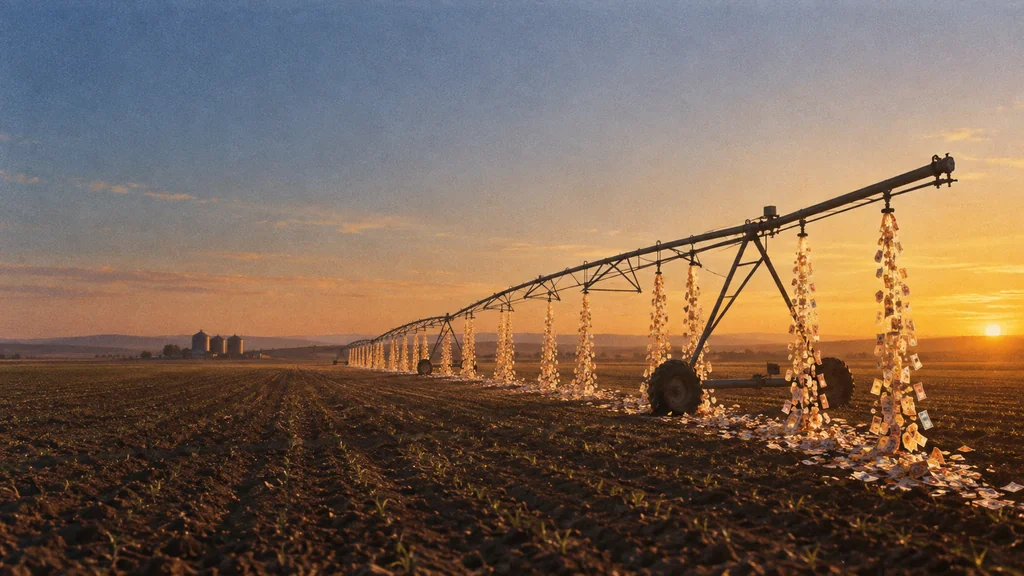
Prague keeps subsidies flowing after Brussels closes the reimbursement tap.
Image composition · tobriefThe European Commission has not frozen Czechia's EU funding. On 8 September, Brussels paused repayment for a defined slice of spending linked to Prime Minister Andrej Babiš's Agrofert conglomerate. The rest of Czechia's EU money keeps flowing. But the Czech agricultural paying agency SZIF continues paying Agrofert from public funds while Brussels refuses to guarantee it will reimburse Prague. The financial risk is quietly shifting to Czech taxpayers.
What Brussels Actually Stopped
The Commission instructed Czech authorities to exclude from their EU reimbursement claims any spending on projects involving companies controlled by or associated with Babiš (EU Perspectives, EFE). The cutoff applies to projects carried out after 9 December 2025, the date Babiš returned as prime minister. It covers companies both inside and outside his RSVP Trust.
The Commission also paused repayment of part of Czechia's rural-development claim. SZIF valued that portion at €3.18 million (roughly CZK 76.9 million), though the Commission declined to confirm the figure (Euractiv, České noviny).
This is a temporary interruption, not a cancellation. Under EU Regulation 2021/2116 (the rules governing how the EU pays for farm policy), it can last up to six months with a possible three-month extension (Euractiv). Direct agricultural payments, the larger formula-based subsidies where officials have little discretion over who qualifies, remain unaffected. Those come from another EU fund operating under different rules (European Commission).
Why Brussels Intervened
The Commission's reasoning centres on Article 61 of the EU Financial Regulation (the rule requiring anyone involved in spending EU money to avoid conflicts of interest). Babiš transferred his Agrofert shares into RSVP Trust and says he no longer owns, controls or benefits from the company (ČT24).
Brussels looked past the label. According to reporting on the trust's structure, the arrangement reverts to family control the moment Babiš leaves government, with his descendants as intended economic beneficiaries (Pravda). The full trust deed has not been published, so independent verification remains impossible. Commission spokesperson Louise Bogeyová referred to a "potential" conflict and said Brussels was seeking further information (EUobserver). Babiš told reporters he was "not interested" in the Commission's concerns (EUobserver).
Who Fronts the Money
The payment chain is the real story. Brussels does not pay Agrofert directly. SZIF checks a claim, approves it and pays the company from Czech public funds. Prague then declares that spending to the Commission and asks for EU reimbursement. If SZIF pays while Brussels withholds reimbursement, Agrofert already has the money. Czechia fronts the cash and could bear the loss (ČT24, Česká justice).
SZIF continues paying. Agriculture Minister Martin Šebestyán argued that the interruption does not permit the agency to stop beneficiary payments and said recovery would begin only if Brussels permanently excludes the spending. Whether Czech law actually compels continued payment or merely permits it remains unclear. SZIF has not published the legal opinion behind its position.
This division of power runs through all EU shared management: Brussels controls the reimbursement tap, but national authorities control which companies receive money. The Commission can protect the EU budget. It cannot stop Prague from paying Agrofert. That gap explains both the Commission's leverage and its limit.
The Commission gave the Czech Ministry for Regional Development one month to respond, according to iROZHLAS. The Commission has paused EU repayment, but Prague continues funding Agrofert. Czech taxpayers therefore finance the gap and would bear any loss the state cannot recover if Brussels permanently rejects the claims.
Details about this article
- Model:
- claude-opus-4-6
- Generated:
- 9/12/2026, 1:46:52 AM
- Pipeline run:
- eu_pipeline_20260912_005006
- Watermark:
- SynthID (Google's invisible watermark)
- Human review:
- None before publication