DAX giants earn €52.6bn, shed 41,000 jobs
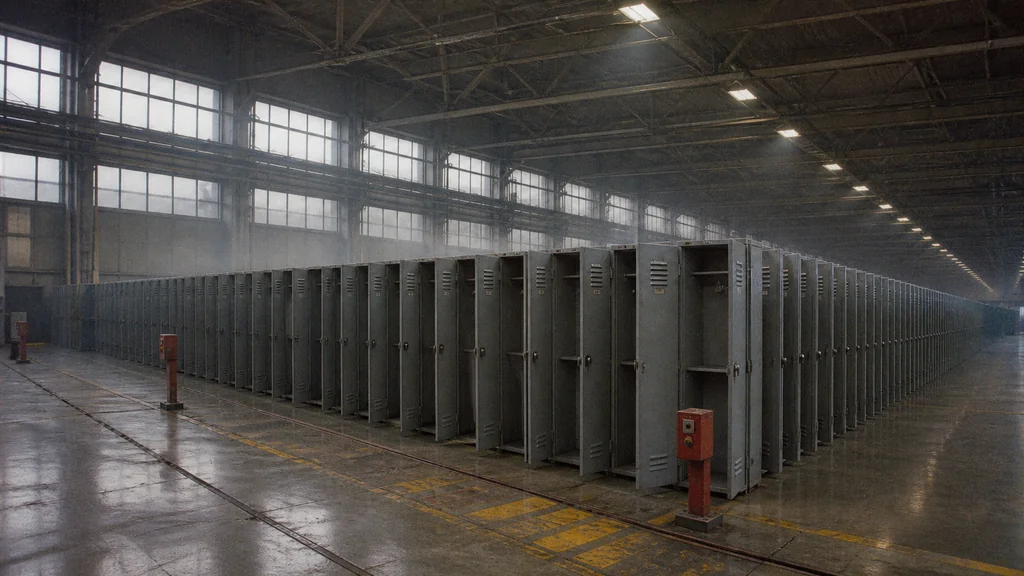
Record profits rise as Europe’s industrial workforce quietly disappears.
Image composition · tobriefGermany's 40 largest listed companies earned a record €52.6 billion in operating profit in the second quarter, up nearly 16% from a year earlier. In the same period, they employed 41,000 fewer people (Tagesschau, Handelsblatt). The two numbers belong together. The same companies can make money abroad while cutting jobs at home, and that gap is now wide enough to reshape industrial employment across Europe.
Where the Profit Comes From
The DAX (Germany's blue-chip stock index) is not a mirror of German factories. It includes telecoms, insurers, defence contractors and pharmaceutical groups. The quarter's biggest earner was Deutsche Telekom, with €6.9 billion in operating profit, much of it driven by T-Mobile US. Allianz, the insurer, came second at €4.9 billion (Handelsblatt). As FAZ observed, the profit boom says nothing about German factory health. These earnings come from activities that do not need German production workers.
The factory floor tells a different story. Auto employment fell 5.8% over the year to 691,500, the lowest since 2005. Manufacturing as a whole shed 2.7% of its workforce, dropping to 5.29 million (Tagesschau). Auto parts suppliers lost 7.6% of their workers (DW). That supplier number matters because the same shrinkage travels through supply chains into Central Europe.
Germany Is Replacing Less Than It Wears Out
Companies are no longer putting enough money back into their German operations to replace worn-out equipment. The Bundesbank reported in May that net fixed investment (what companies spend on new machinery minus what wears out) turned negative in 2024 and 2025, a first since reunification (Bundesbank). Price-adjusted business spending on machinery has fallen since 2019.
Behind the investment retreat sits a competitiveness problem. The Bundesbank estimates roughly three-quarters of Germany's recent loss of export market share comes from weaker competitiveness, not softer global demand. German car exports to China virtually halved between 2021 and 2025 (Bundesbank). Industrial electricity prices fell 4.2% year on year by June (Destatis), easing the worst of the 2022–23 energy shock, but the broader cost structure still discourages new capacity.
The Pressure Travels into Central Europe
Germany anchors industrial supply chains across the continent. Nearly 28% of Polish exports go to Germany (PAP Mediaroom). Roughly a third of Czech exports flow the same way (Novinky). The ECB (the European Central Bank, which sets monetary policy for the eurozone) has warned that cost pressures and weakness travel fast through these links (ECB).
Romania already shows what this means in practice. Vehicle output fell 12.7% in the first half, and more than 18,000 auto workers lost jobs between January 2025 and April 2026 (PSNews, ZF). Some plants still win orders: Czech car production rose 4.5% in the first half, with Škoda running at full capacity (iROZHLAS). Hungarian vehicle manufacturing jumped 21% in June (HVG). But these are selective wins inside a European auto sector that is shrinking overall.
Globally diversified German groups protect their margins through foreign earnings, cost cuts and sector mix. Germany itself grows less certain of hosting the next factory, battery line or supplier contract. That corporate choice travels through supplier links into Poland, Czechia, Slovakia and Romania. Central European plants may still win work when companies shift production. That is not the same as secure employment, especially when the groups making the choices are cutting European headcount.
Details about this article
- Model:
- claude-opus-4-6
- Generated:
- 8/15/2026, 1:50:24 AM
- Pipeline run:
- eu_pipeline_20260815_005006
- Watermark:
- SynthID (Google's invisible watermark)
- Human review:
- None before publication