Lawyer: Iran flogged singer over concert without a headscarf
AI Daily Synthesis
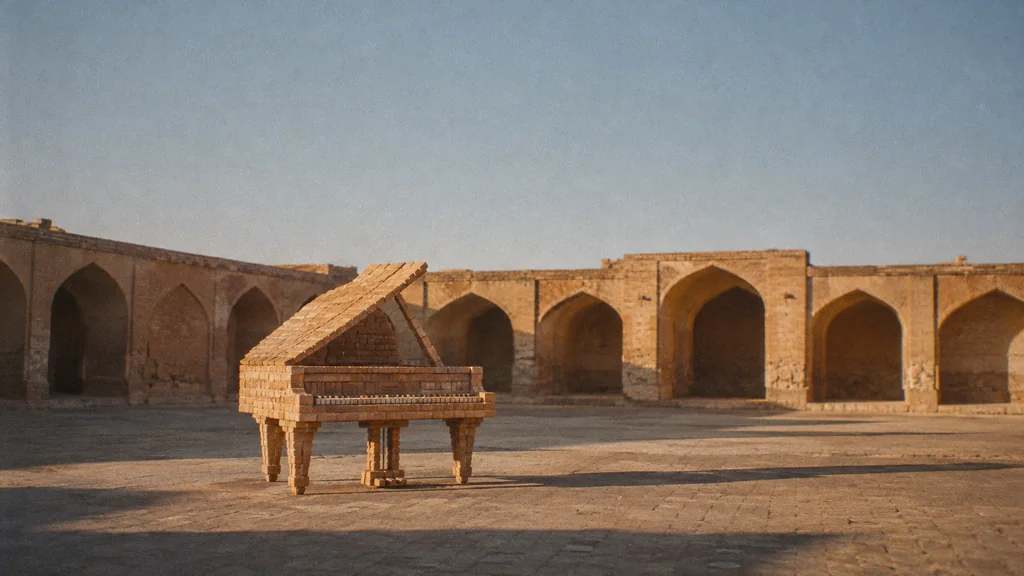
Image composition · tobriefIranian singer Parastoo Ahmadi and four of her collaborators each received 74 lashes on Monday in the city of Qom, according to lawyer Mostafa Nili (BBC Persian, Radio Farda). They were sentenced over a concert without a headscarf or an audience that Ahmadi uploaded to YouTube in December 2024. Radio Farda, which saw the ruling, said the court found that posting the performance online made an appearance in an empty venue a public act (Radio Farda).
Nili spoke to the Iranian news site Emtedad. After the ruling was upheld, Ahmadi, Soheil Fakih-Nasiri, Amin Taheri, Amirali Pirnia and Mohsen Laskari "reported to the sentence enforcement office of the Qom prosecutor's office, and the flogging sentence was carried out against them", he said (BBC Persian). They were five of the nine people convicted over the concert; the four men were described as musicians and members of the production team (Iran International). The Iranian news agency ISNA reported Nili's statement, while the authorities did not immediately comment, according to CNN (CNN). A defence lawyer said the lawyers had sought a postponement, but "the enforcement branch insisted on carrying it out immediately" (BBC).
A video in an empty caravanserai
The video was posted on Ahmadi's channel on 11 December 2024 (CNN). It was filmed at Deir Gachin, a historic caravanserai, or old roadside inn, in Qom province. Ahmadi sings in a black dress, without a headscarf, in a venue with no audience (Radio Farda). The message accompanying the concert read: "I am Parastoo, the girl who wants to sing for the people she loves" (The Creator Wire). She called it an "imaginary concert" and described the right to sing as "something I could not give up" (Euronews).
On 14 December 2024, Ahmadi, pianist Ehsan Beyraghdar and guitarist Fakih-Nasiri, one of the five flogged on Monday, were arrested, according to the court ruling reproduced by Radio Farda (Radio Farda). They were released within two days (HRANA). Mizan, a news outlet linked to Iran's judiciary, called it an "illegal concert" (CNN).
From trial to enforcement
At the hearing on 9 June 2026, five lawyers defended the nine accused and argued that the video was neither "obscene" nor "vulgar", according to defence lawyer Abouzar Zaman. He wrote that the judge insisted an image of a woman without an Islamic headscarf was an obscene image (IranWire).
On 17 June 2026, Branch 122 of Qom's Criminal Court 2 convicted all nine (Radio Zamaneh). Each received 74 lashes, a two-year ban on artistic activity and a two-year ban on leaving the country for "offending public decency" by producing and posting obscene and immoral content online, Radio Farda reported at the time (Radio Farda). The court held the musicians and production team responsible because filming, producing and distributing the work on YouTube made it publicly accessible. The ruling cited Article 638 of the Penal Code and Article 743 of the law on electronic crimes (BBC Persian).
On 25 September, Branch 16 of the Qom Court of Appeal rejected the appeal. Its presiding judge, Abbas Ghorabaghi, found the defence's arguments insufficient and the initial ruling "adequate and well-founded", according to the BBC (BBC Persian). A defence lawyer said at the time that the appeal court had ruled without a hearing, that the lower court had imposed one of the harshest possible sentences despite the availability of lighter ones, and that "in our view, holding the concert was not even a crime" (BBC). Ahmadi announced on Instagram that the ruling was "final" and that the sentence "must be carried out" (EFE via Mundo América).
Where the 74 lashes come from
Article 638 has two parts. A specific provision for women without an "Islamic hijab" provides for imprisonment or a fine; up to 74 lashes falls under the general provision for public acts contrary to public decency (translation of Article 638). President Masoud Pezeshkian said in 2024 that the headscarf should not be enforced through violence (House of Commons Library), and the stricter "Hijab and Chastity" law was suspended on 14 December 2024 (Amnesty International). The older provisions remain in force, however, and prosecutions are handled by the judiciary, whose head is appointed by the Supreme Leader, not the president (Constitution of Iran).
The human rights organisation Hana called the flogging torture, cited Article 7 of the International Covenant on Civil and Political Rights, which Iran has ratified, and called for the sentences to be overturned and those responsible held accountable (Hana). Amnesty International had called for the sentence not to be carried out (AP via ABS-CBN), and PEN Berlin issued a statement about Ahmadi on Monday (PEN Berlin).
The flogging of the five is over. All nine convicted people remain barred from playing music or leaving Iran for two years (BBC).
Details about this article
- Model:
- claude-opus-5-5
- Generated:
- 11/24/2026, 4:20:28 AM
- Pipeline run:
- incremental_20261124_033011
- Watermark:
- SynthID (Google's invisible watermark)
- Human review:
- None before publication