Dutch €500 million leaves missile gap unanswered
The Dutch pledge leaves Ukraine’s most urgent interceptor need unanswered.
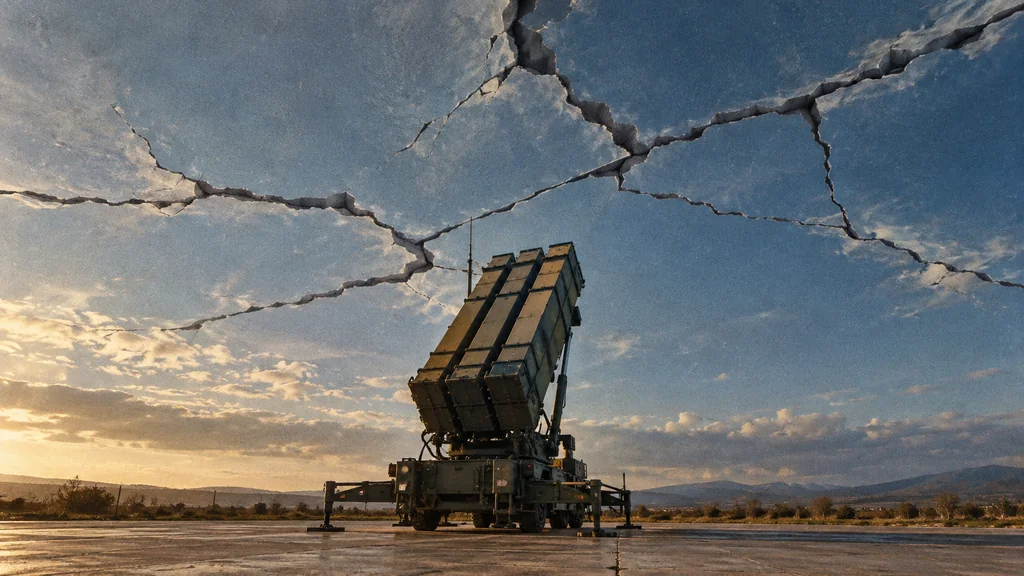
Image composition · tobriefPrime Minister Rob Jetten pledged €500 million for air defence and drones when Volodymyr Zelensky visited The Hague on 28 October (Ukrainian presidency). Neither leader named a weapon, a quantity or a delivery date. That leaves open whether the money reaches the shortage Zelensky calls most pressing: missiles that can shoot down ballistic missiles.
Zelensky used the visit to say that anti-ballistic interceptors are Ukraine's sharpest need (Ukrainian presidency). Dutch reporting found no sign that Patriot missiles were among the items identified. Jetten told reporters he did not want to give too much detail about what could be done on those missiles (NRC).
Neither government has confirmed Patriot missiles or ruled them out. Secrecy about air defence has a plausible military rationale. It also means nobody outside government can check whether the money fits the gap.
Budgeted money with a winter label
Jetten presented the package as protection for civilians and critical infrastructure while Russian strikes batter Ukraine's power grid ahead of winter (To Brief). The money itself is less new than the headline suggests. Dutch broadcaster NOS reported that the cabinet had already reserved it (NOS).
The Dutch budget already sets aside €2.980 billion in military support for Ukraine for 2026, with similar sums planned through 2029 (Dutch budget memorandum). On NOS's account, The Hague has given money it had already budgeted a winter purpose. The announcement, as reported, does not add to that total.
Why the type of missile matters
Different threats need different defences. US-made Patriot interceptors are among the main tools for stopping ballistic missiles, while drones and general air defence counter other threats without necessarily easing that particular shortage (Defense News).
The size of Ukraine's shortfall is less certain than the urgency of the requests. Recent reports of exhausted Patriot stocks rested on anonymous sources, and the Kyiv Independent said it could not verify the precise figure (Kyiv Independent).
Money is also only part of the bottleneck. On 26 October Zelensky said Patriot and other air-defence missiles had waited almost a month for US approval; US Secretary of State Marco Rubio acknowledged a batch might not have arrived but denied any political motive for the delay (Reuters).
Who controls the shipment
That complaint exposes how much of Europe's help works. Through a NATO programme known as PURL, European allies buy American weapons for Ukraine. Washington still decides when each shipment is released. Europe can pay for the missiles, but it cannot move them on its own schedule.
Nothing on the public record shows that the Dutch winter package will buy missiles through PURL. So the American hold-up cannot be said to delay this particular pledge. It does show why a European cheque, however large, does not by itself put interceptors in Ukrainian batteries.
The Netherlands also announced civilian aid the same day. In Kyiv, development minister Sjoerd Sjoerdsma set out about €1.2 billion for energy, drinking water and recovery over 2027–29 (Dutch government). That is a separate stream and adds nothing to the air-defence figure.
The verdict on the record is clear enough. The Dutch announcement identifies no delivery that resolves the interceptor shortage Zelensky named. One caveat applies: Jetten's reticence leaves room for undisclosed equipment inside the package. The Dutch defence ministry owes the answer. It needs to say what the winter money buys, through which channel, and when it arrives. If the answer turns out to be Patriot missiles bought from the United States, the final say on timing moves to Washington.
Details about this article
- Model:
- claude-opus-5-5
- Generated:
- 10/29/2026, 7:24:30 AM
- Pipeline run:
- eu_pipeline_20261029_005007
- Watermark:
- SynthID (Google's invisible watermark)
- Human review:
- None before publication